Light Rail Systems
| Al Safooh Light Rail, Dubai | ||

One of the world's fastest growing cities, Dubai is associated with high-profile developments. |
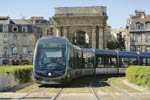
Alstom's proprietary APS ground supply system is being fitted throughout on the Al Safooh system. |
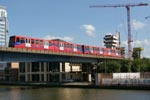
Consortium member Serco is service operator on the successful London Docklands Light Railway. |
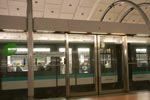
Widely fitted on metro systems, platform screen doors will be used on a surface tramway for the first time in Dubai. |

A high-capacity vehicle, the seven-module Citadis 402 can accommodate over 300 people. |
|
| Alicante Tram-Train | ||

Map of Alicante. |
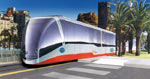
FGV ordered 19 tram-train vehicles from Alstom. |

A Siemens Combino tram was tested in Alicante while on hire from Halle in Germany. |
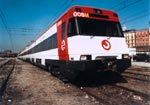
A new underground city centre station allows multi-modal interchanges between trams and RENFE main line and suburban trains. |
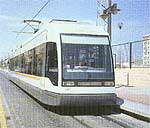
The Valencia three-section low floor trams are single-ended with doors on one side only. |
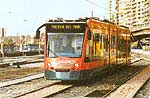
The Siemens Combino prototype at La Maina terminus. |
| Amsterdam Metro / Light Rail Network | ||
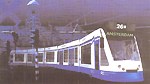
An artist's impression of the Siemens Combino, ordered by Amsterdam's light rail operator, GVB. |

Large windows give the Combino a light, airy appearance. |
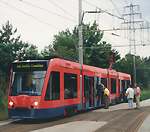
The wide double doors give easy access. |

Pushchairs, buggies and wheelchairs can be easily manoeuvred onto and off of the low-floor vehicles. |
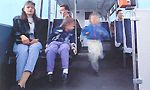
The low-floor interior and deep windows are shown in this view. |
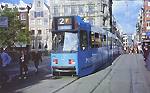
Trams have been a feature of Amsterdam's streets for many years. |
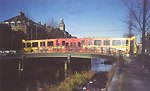
Amsterdam's trams travel over 1,500 bridges and many sharp bends. |
||
| Angers Light Rail System | ||
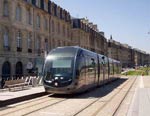
The centrally located third rail for ground power supply can be seen between the tracks in Bordeaux. It is entirely safe for pedestrians and other road users. |
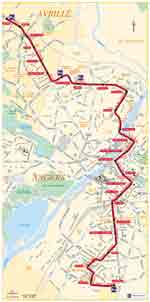
The route of Angers’ 12km second generation tramway. |
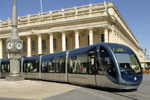
First introduced in 2003 in Bordeaux, Angers will have two sections using catenary-free APS system. |
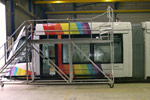
The APS-equipped Citadis trams for Angers are being constructed by Alstom at their La Rochelle plant. |
||
| Athens Trams | ||
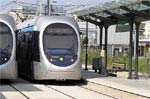
Current northern limit at Stadio Eirinis and Filias. A 2.5km extension will reach central Piraeus. |

The line reaches inland to Athens city centre from the coastal strip near Mouson. |

Opposite the Greek Parliament, the city centre terminus at Syntagma Square. |

A high capacity underpass to meet peak demands at Stadio Eirinis and Filias. |

Tramway features in residential areas are softened by trees and grass strips. |

Continuous low-floor Sirio trams offer ease of movement. |
| Auckland Rapid Transit System | ||

Proposed Regional Rapid Transit corridors. |
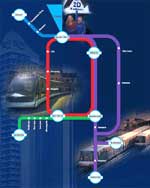
The four transit routes, with a central interchange at Queen Street. |
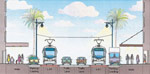
Cross-section through Queen Street, showing conversion of existing three-lane dual carriageway. |
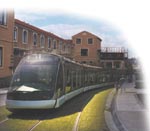
An impression of rapid transit vehicles. |
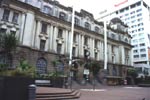
The old Post Office will become the new heavy/light rail/bus terminus. |
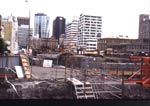
Construction of the cut-and-cover terminal, looking towards the new terminus. |
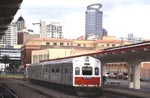
The heavy rail line's existing downtown terminus is served by two-car DMUs. |
||
| Baltimore Subway and Light Rail System | ||
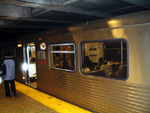
A westbound Baltimore Metro at State Centre station. |
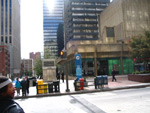
Exterior of the Charles Centre metro. |
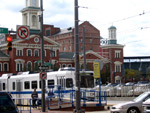
Light rail at Pratt Street. |
| Bangkok Skytrain Transit System | ||

A map of the Bangkok Light Metro route. |
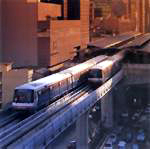
The new face of rapid transit in one of Asia's most crowded cities - the Bangkok Transit System. |
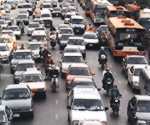
The level of traffic congestion which prompted city authorities to adopt a radical solution. |
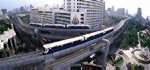
Aerial view of the interchange of the Silom and Sukhumvit lines, near Bangkok Central station. |
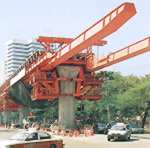
Viaduct construction was completed with as little disruption as possible to road traffic. |
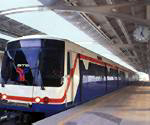
One of the three-car trainsets during testing. |
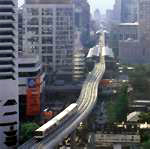
The line carves a path straight through some of the cities' most built-up areas. |

A busy scene as one of the trains undergoes passenger loading and unloading tests. |
|
| Barcelona | ||
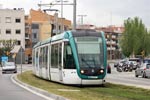
Much of the tramway coverage is of areas far removed from the tourist identity of Barcelona. |
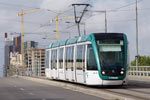
Tramways are playing an important role in redevelopment of former industrial areas. |

A long-term maintenance element was in the contract to create Barcelona's modern tramways. |
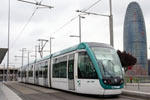
With a near-equal split between the two systems, the entire Barcelona fleet is composed of Alstom Citadis 302 trams: Glòries. |
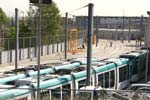
Each system has its own depot: Sant Adria de Besos (Trambesòs). |

Both systems involved a high level of environmental measures: T4, Wellington. |

Multi-use space is designed to encourage patronage. |

A common style applies to both systems, with most stops of the same design. |

Connecting the two systems would involve an extra 4km of line along the very busy Av. Diagonal: T1-T3 terminus, Francesc Macià. |

Pre-opening tests on the new line to form T6: April 2008. |
||
| Bergen Light Rail System | ||
The total cost of the project is €225m. |
The project is being financed by Bergen Municipality, Hordaland County Council and the state and citizens of Bergen through tolls. |
The average operating speed of of the system will be about 25km/h to 30km/h. |
The project will feature an integrated smart-card ticketing system with a one-ticket ride for all transport services. |
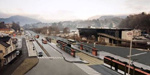
Trains will operate on 5min headways in each direction during peak traffic periods and 10min headways during off-peak periods. |
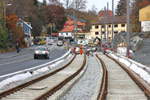
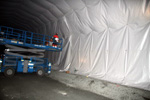
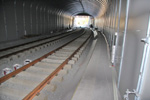
The initial portion of the 10km railway section will feature four tunnels with a total length of 2.5km. |
Major stations on the light rail system will include parking facilities to encourage a park and ride system. |
A light rail system was proposed in 2000 and approved in 2002. |
|
| Berlin Hauptbahnhof and North-South Tunnel | ||
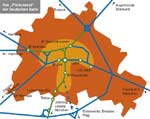
The mushroom configuration at the centre of re-working Berlin’s surface rail services. |
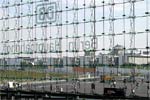
The Hbf southern façade overlooks the River Spree and government buildings including the Reichstag. |
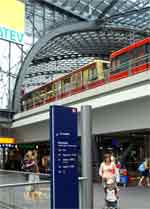
The Hbf upper level carries the east-west Stadtbahn with segregated tracks for S-Bahn and other DB services. |
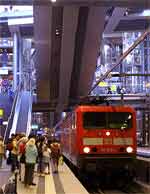
Many DB Regio and Fernverkehr services now using low level (‘Tief’) Hbf platforms were previously routed east-west on the then-congested Stadtbahn. |
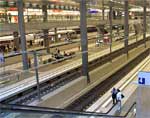
Low level Hbf platforms and mezzanines accommodate retail and catering outlets. |
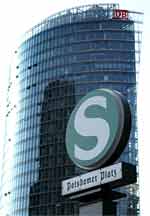
DB’s corporate HQ above Potsdamer Platz station. Developing this war-damaged area created Europe’s largest construction site. |

Re-routing DB Regio and Fernverkehr services like this ICE approaching Alexanderplatz has greatly reduced traffic levels on the Stadtbahn. |
||
| Bern Urban Rail and Tram Bern West Project | ||

Bern is the centre of Switzerland's second-largest S-Bahn: BLS Nina units at Thun. |
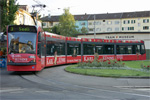
After a long history including system cutbacks, Bern's tramways are being boosted by Bern Tram West, due to open in 2010. |
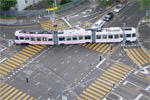
Public transport dominates the roads in the centre of the Swiss capital: Guisanplatz terminus. |
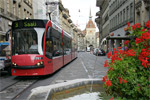
Bern's old town area is covered by all three Bernmobil tram routes. |
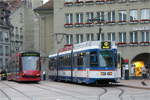
Currently terminating at the city centre's edge, RBS route G is due for greater integration with Bern's tramway. |
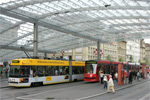
Bahnhof Bern tram/bus stop was part of a bigger redevelopment project officially opened in May 2008. |
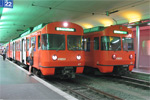
RBS metre-gauge city terminus, Bern's regional station no longer offers sufficient capacity and is to be replaced. |
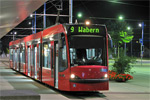
Supplier of Combino trams (as pictured at Guisanplatz), Siemens will deliver 21 very different Combino Classics to Bern from 2009. |
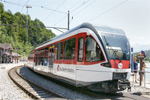
Similar to this Zentralbahn unit at Brienz, Stadler is to supply new trains for RBS suburban lines from Bern. |
| Braunschweig Tram-Train Scheme | ||
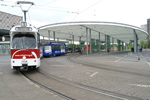
The tram/bus interchange outside Braunschweig Hauptbahnhof is already fitted with dual-gauge tracks. |
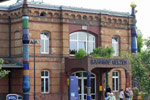
The northern limit of the RSB network at Uelzen will provide interchange with Hamburg-Hanover mainline services. |
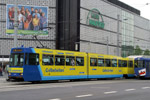
Central Braunschweig will be served directly by RSB tram-trains covering a large area of eastern Niedersachsen. |
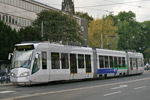
Produced within the RSB area at Salzgitter, the Alstom Regio Citadis may become the network's motive power as it is now on the Kassel counterpart. |
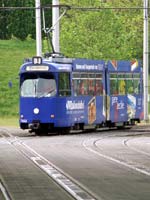
The southern access to heavy rail tracks will be beyond the current tram turn just west of Braunschweig Hauptbahnhof. |
|
| Bremen | ||

With new stock on order, Bremen's 1970s-vintage high-floor tram fleet will be further reduced. |

High-profile operator BSAG has been at the forefront of applied low-floor technology with its bus and tram fleet. |

Bremen's tramway mainly radiates from the Hauptbahnhof interchange. |

Few international airports have such easy access to a light rail system. |
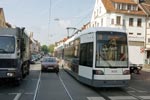
Bremen has a high proportion of the network shared with road traffic. |
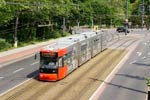
The 78 GT8N type form the largest part of Bremen's fleet. |

Gröpelingen depot adjoins the tram terminus and bus interchange. |
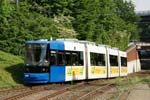
Railway-type tracks feature on some sections beyond the central area. |

Two new extensions will be built from the present Roland-Center terminus. |
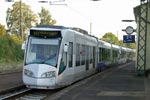
Bremen is a candidate for deployment of hybrid tram-trains as per the Kassel system. |
||
| Bristol Tramway | ||

The Bristol tramway project has now been shelved. |

The trams along Bristol docks have now closed. |

The tramway was designed to solve Bristol's traffic congestion. |

Proposed route map for the now-cancelled Tramway project. Map courtesy of the Light Rail Transit Association. |
||
| Caen Tramway | ||

The artist's impression of the Caen system and trams was remarkably similar to the finished network. |

The rubber-tyred system allows access to the historic heart of the city of Caen. |
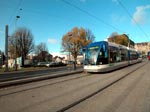
The reserved tramway, prohibited to cars, is around 6.5m (22ft) wide. |
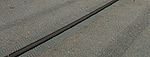
Close up of the centre return current rail and guidance system, with marks made by the rubber tyres also visible. |
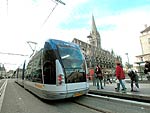
The vehicles are single-ended and cannot work in multiple. |
|
| Central Corridor, Minnesota | ||
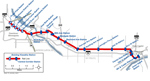
Map of the Central Corridor line. |
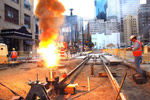
Work in progress to connect the Hiawatha LRT line to a shared station with the Northstar commuter rail line in downtown Minneapolis. |
The LRT will have a total of 20 stations. |
| Coast-to-Coast Light Rail Project, | ||

The Coast-to-Coast Rail Project is a 2.8km extension from Victoria City to Adelaide Entertainment Centre. |

The tram stops have seating and pedestrian control crossings. |
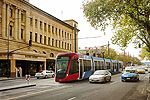
The Alstom Citadis tram operating the Coast -to- Coast Rail. |
| Cologne Light Rail | ||

City tram routes and interurban routes were amalgamated in 1968, and the vast, 15-route tram system was upgraded. |
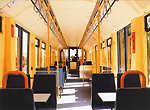
The new vehicles have been designated the 4000 series. The interior of a 4000 series light rail vehicle. |

The 5000 series light rail vehicle has low floors for two thirds of its length. |

The interior of the 5000 series. |

The 5000 series boast the latest technology in door systems. |
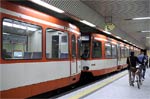
Most central routes have been relocated just below the surface: the two-level Friesenplatz station. |
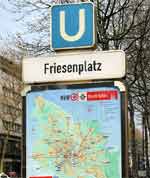
U-Bahn signage is found elsewhere in Germany to denote true metro operations. |
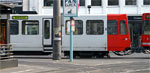
High-floor trams at Neumarkt, one of the few surface sections in the central area. |
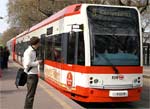
252 low-floor Bombardier Flexity Swifts have been delivered to KVB. |
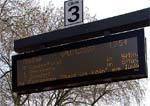
Multiple routes at stations call for comprehensive service information. |
Just north of the Hauptbahnhof, construction works for the new north-south line. |
|
| Craigieburn Rail Project | ||
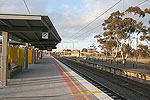
Terminus of the line at Craigieburn. |
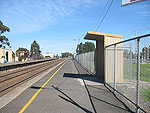
Platform 2 before the commencement of the Craigieburn electrification project. |
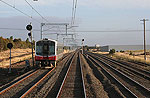
Victorian train travelling along the Craigieburn railway line. |

View from the new suburban Craigieburn platform. |
||
| Cross River Tram, London | ||

Beyond the south bank of the Thames, London's public transport is much less comprehensive than in north London. |
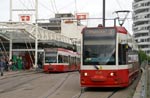
Croydon Tramlink provides a showcase for the benefits for light rail near the projected southern parts of CRT. |

CRT trams will meet modern expectations as with this Amsterdam Combino: easy access, low floor interior and rapid loading for large numbers of passengers. |

CRT would relieve crowding on London Underground and provide a reliable surface connection to other main heavy rail stations. |

CRT would cross the Thames at the bridge in the background, connecting with the heavy rail line (foreground) at Waterloo (to right). |

Like Croydon Tramlink, CRT would become part of TfL's multi-mode ticketing and Oyster card payment systems. |
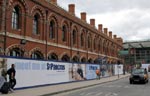
To avoid constraints on the Euston Road, the CRT terminus will be at this northern end of the King's Cross/St Pancras complex. |
||
| Croydon Tramlink | ||
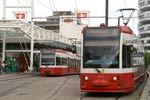
Tramlink routes converge at East Croydon, one of the UK's busiest heavy rail stations. |
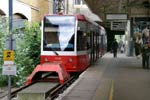
Raised track gives cross-platform access for low floor trams at heavy rail stations like Wimbledon, also Tramlink's only connection with London Underground. |

Tramlink features many permutations of infrastructure types, including street running. |
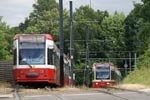
East from Sandilands, Tramlink uses former heavy rail infrastructure en route to three termini. |
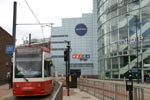
On a one-way single track section, Centrale became the 39th Tramlink stop in 2005. |

Croydon's CR-4000 trams have a 76% low-floor area, dedicated spaces for disabled passengers and on-board service information. |
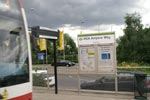
Tramlink stops carry Transport for London branding. This stop was renamed in 2006 to reflect the retailer's proximity. |
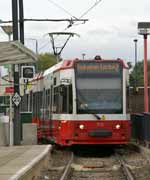
The Crystal Palace extension will join the system between Croydon and the main line interchange at Beckenham Junction. |
|
| Dallas DART | ||
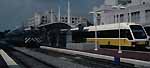
Light and heavy rail commuter trains pull into station. |
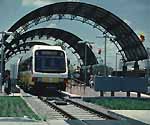
Westmoreland station showing the roof design that protects passengers from the strong Texan sun. |
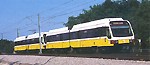
Sections of the former main line have been upgraded to allow the Dallas light rail vehicles to operate at speed. |
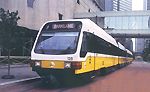
Light rail vehicles move through a traffic-free transit mall. |

The Dallas light rail system has received funding to start expanding its network. |
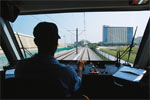
The driver of a DART LRT approaches a stop on the system. Soon there will be new route miles to learn. |
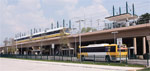
Interchanges between transport modes are an important part of DART’s flexibility. |
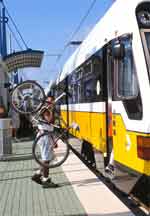
Passengers with bicycles can also be accommodated on DART light rail network trains. |

Map detailing the expansion of the network. |
| Docklands Light Railway Capacity Upgrading, | ||
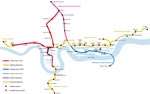
An extension to the DLR was built between King George V and Woolwich Arsenal. Another extension is being built from Canning Town to Stratford International. |
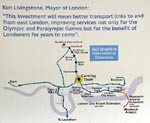
The next DLR extensions will play a key role in the 2012 Olympics. |
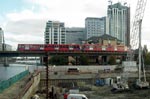
Intensive ground use means that much of the DLR is built on viaducts. |
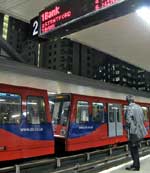
South Quay station is being relocated to accommodate the three-car/platform extension project. |
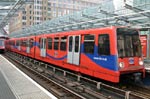
West India Quay station was refurbished in a $1.85m project completed in October 2007. |
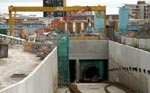
With a new twin-bore Thames tunnel, the Woolwich extension opened before its planned date of Janury 2009. |

King George V in North Woolwich formed the temporary terminus of the branch from Canning Town opened in 2005. |

The DLR fleet has undergone internal refurbishment and external livery changes. |
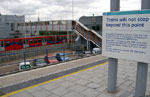
DLR maintains a high level of communications with its users. |
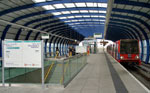
Like London City Airport which it now serves, DLR has grown from low profile origins into being a key part of the capital's transport infrastructure. |
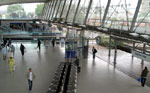
Low-level platforms seen here at Stratford Regional are being reworked for the Canning Town-Stratford International DLR extension. |
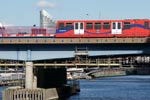
Platform extension and viaduct strengthening: West India Quay, 2008. |
| Dortmund and Düsseldorf H-Bahn Systems | ||
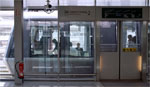
Automatic operation of station and vehicle doors. |
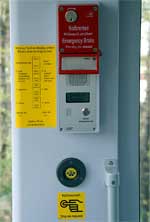
On-board emergency communications. |
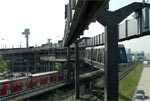
H-Bahns allow for crossing congested areas and multiple ground use. |
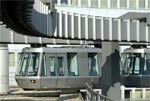
SkyTrain is part of Düsseldorf Airport’s main terminal and its operation. |
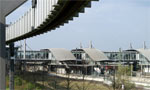
SkyTrain links the main terminal with DB’s main line railway station. |

H-Bahn junction and two-car vehicle at maintenance depot. |
| Dortmund Light Rail Developments | ||
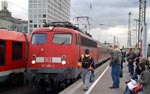
DB is a major provider of local services centred on Dortmund Hauptbahnhof. |
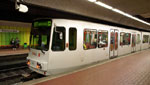
Kampstrasse: one of the central interchanges between Stadtbahn and tram modes. |
The busy Reinholdikirche interchange becomes wholly sub-surface during 2008. |
This section nearest the Hauptbahnhof (left, background) will relocate to the tunnel under central Dortmund. |
The eastern end of the new east-west tunnel near Lippestrasse. |

47 new Bombardier trams similar to this Kassel example will be delivered to DSW21 up to 2010. |
Near the landmark Union brewery, the new Unionstrasse stop shows the rebranding to trams to U/Stadtbahn. |

The two core Stadtbahn lines are linked in the south near Westfalenhalle. |
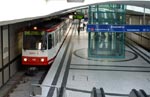
Westfalenhalle station is one of several serving the sports and entertainment area. |
| Düsseldorf Strassenbahn and Stadtbahn | ||
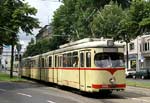
Düwag GT8 vehicles from the 1960's continue in service. |

Dating from 2000, the first of the Silberpfeil (Silver Arrows), the NF10 is the largest vehicle in the Rheinbahn fleet. |
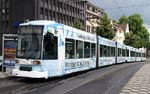
The NF6 can run in multiple, seen here near the northern end of the projected Wehrhahn route. |
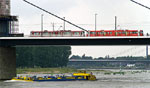
Stadtbahn services crossing the Rhein towards Neuss and the city of Krefeld. |
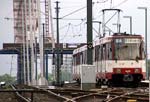
Away from the centre of Düsseldorf, the high-floor Stadtbahn vehicles mainly operate at street level. |

The new Wehrhahn line tram services will link with DB local services, including S-Bahn to the international airport, from Wehrhahn station, |
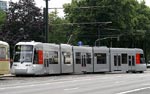
Delivered in 2007, a NF8U unit is seen at Graf-Adolf-Platz, beneath which the Wehrhahn line tunnel should be used from 2014. |
||
| Eagle P3 Commuter Rail Project, | ||
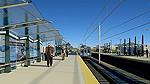
Graphical picture of the planned Colorado Railway Station in the East Corridor. |
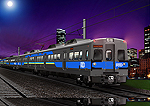
Exterior of the EMU. |
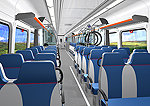
Interior of the EMU. |
| Edinburgh Tramway | ||

A fleet of 27 seven-module trams have been ordered from CAF in Spain. |

The busy thoroughfare of Leith Walk will be less dominated by motor cars when trams start running in 2011. |
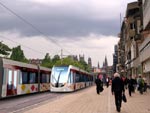
Newhaven will be the short-term northern limit of tram operation when the first phase is complete. |

Princes Street at the heart of the city centre will be provided with a frequent-interval service to both Edinburgh Airport and the Leith business and retail area. |

The most recent UK order for CAF products has been the 23 trains for Northern Ireland Railways from 2004. The Class C3K trains run in three-car formations. |

Map displaying the route of the new tramway in Edinburgh. |
| Epping-Chatswood Rail Link | ||
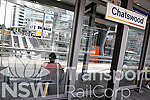
The Epping-Chatswood Rail Link connects underground stations Macquarie University, Macquarie Park and North Ryde. |
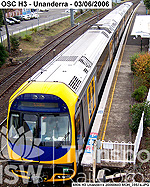
The OSCARS set H trains constructed by United Group Rail. |
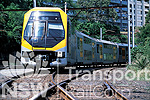
The OSCARS were used on ECRL route mainly because of the steepness of the tunnel. |
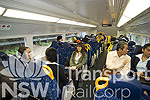
The ECRL accommodates an additional 12,000 rail passengers a day. |
||
| FrontLines 2015 Railway Lines Project, | ||

The FrontLines project should be complete by 2015, helping support the ever-growing population of Utah. |
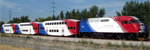
Front Runner or Front Runner South is the only commuter rail under the FrontLines project. |
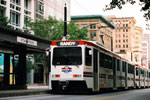
The Airport Trax is a six-mile light rail line being constructed. It is preferred for shorter distances and can accommodate a greater number of stops. |
| Gautrain Rapid Rail Link | ||

An artist's impression of the dynamic front end of the Electrostar vehicles for the Gautrain Rapid Rail Link. |
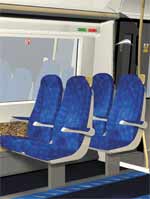
Modern spacious interiors will be provided for the Electrostars. |
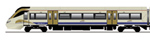
Bombardier's Derby works in the UK has been given the task of manufacturing the Electrostars for Gautrain, with final assembly taking place in South Africa. |
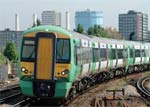
An Electrostar unit in service in the UK. |
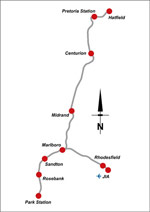
The Gautrain Rapid Rail Link network. |
|
| Geneva Tram Network | ||
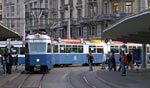
Unlike other major Swiss cities like Basle, Bern and Zürich (pictured), Geneva had largely dispensed with its tramways by the 1960s. |
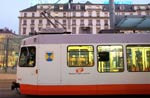
The larger part of the fleet is made up of two versions of German-based articulated trams delivered during the 1980s. |

Unlike the City Runner, the earlier and smaller trams are relatively basic and only partially low-floor. |
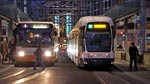
Operator TPG has a network that combines trolley buses, buses and trams. |
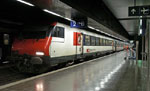
An SBB terminus already, Cointrin airport is a long-term target for a tram extension from central Geneva. |

Geneva's busy main railway station, Cornavin, is directly served by the TPG network. |

The Bombardier City Runner forms the more modern part of the TPG fleet. |

Bombardier City Runners, at 42m long, provide much-needed capacity on a system experiencing rising popularity. |
|
| Glasgow Airport Rail Link, Scotland | ||
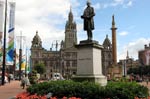
Of great economic significance, Scotland's largest city has a large concentration of the national transport infrastructure. |

Glasgow International destinations involve community 'lifeline' services, domestic, European and intercontinental flights. |

GARL services will become part of the Strathclyde Partnership for Transport rail network. |

GARL will be spur operation from an established nearby main line, similar to London's Stansted Express. |
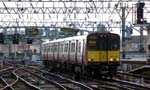
Part of the existing mainline south west from Glasgow Central will gain an extra track for GARL services. |
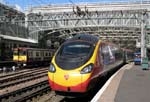
GARL passengers will have good connections at Glasgow Central, but not with north and east Scottish services from the separate Queen Street terminus. |
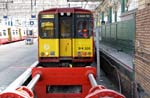
An extra full-length platform will be created for GARL services on this western side of Glasgow Central. |
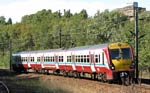
No decisions have been announced about GARL stock: Class 334s are SPT's most modern EMUs. |
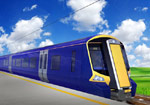
Stock for the airport line will be the new Siemens Class 380, due for delivery from 2010. |
| Glattalbahn Light Rail (VBG), Zurich | ||
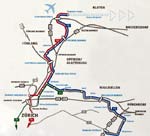
Phases 1–3 of the Glattalbahn. |
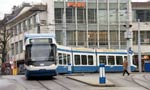
The Glattalbahn connects with the Zürich tram network at Oerlikon. |
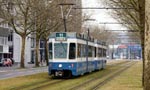
A Tram 2000 on the landscaped alignment along Thurgauerstrasse, part of Phase 1. |
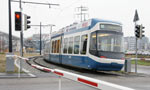
Glattalbahn's light rail characteristics contrast with Zurich's more traditional tram alignments. |
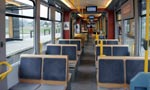
The interior of a Cobra tram, the type to be the rolling stock of the Glattalbahn. |
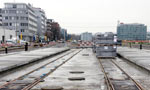
Developments like the Kraft Food offices (right) require availability of high-capacity public transport: Phase 2 construction towards Lindbergh-Platz: April 2008. |
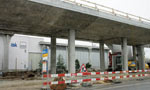
Viaducts will keep Phase 2 clear of road traffic around the intensively developed airport area. |
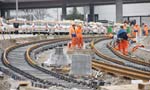
Construction between the airport passenger terminal and the Phase 2 terminus in the freight area: April 2008. |
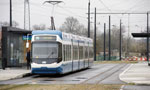
Phase 3 will extend beyond the present Auzelg terminus from a point behind this Cobra tram. |
| Grenoble Light Rail System | ||
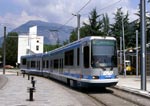
A short-lived but important design, the TFS is the numerically dominant type in the TAG fleet. |
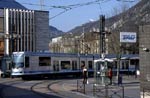
A TFS near Grenoble's SNCF station in the early years of the tramway's operation. |
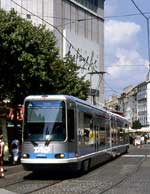
Contrary to views expressed by tramway opponents, removing cars has brought more activity back to the city centre. |
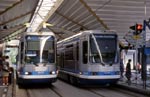
This elaborate Line A structure also incorporated a bus interchange and serviced demand from an adjacent suburban shopping centre. |

TAG's latest fleet additions are 100% low-floor Alstom Citadis vehicles. |
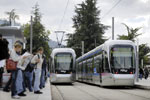
Routing the tramway past the SNCF station, shopping centres, large hospitals and universities ensures a high take-up of services. |

The second batch of Alstom Citadis 402 trams ordered by Grenoble under construction in La Rochelle in 2008. |
||
| Hamburg S-Bahn | ||

HVV represent all forms of rail service in the Hamburg area. |
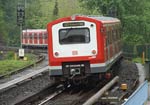
The distinctive Class 472 is now the oldest Hamburg S-Bahn rolling stock. |
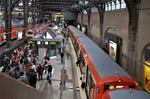
Hamburg Hbf has two of its four S-Bahn tracks inside the train shed. |
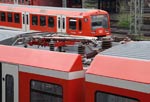
Class 474 overhead current collection is encouraging system expansion. |
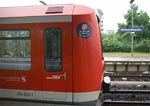
Hamburg-Neugraben to Stade is the longest single S-Bahn extension. |
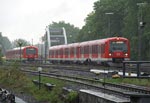
The new junction north of Ohlsdorf will take the S-Bahn to Hamburg Airport. |
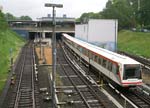
U-Bahn routes complement the S-Bahn as Hamburg's urban rail service. |
||
| Hamburg-Köln Express | ||
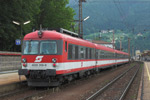
The Hamburg-Köln Express will use Class 4010 EMUs. |
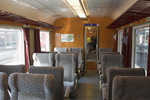
Interior view of a 6010 first-class carriage. The 6010 cars are the steering units of the class 4010 electric express multiple units. |

Over €100m will be spent by Locomore in the rolling stock for the Hamburg-Köln Express project. |
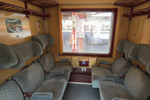
Interior of a 4010 second-class compartment. |
||
| Hampshire County Council with Portsmouth City Council - | ||
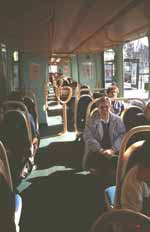
The interior of a tram intended for South Hampshire. |
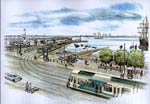
Artist's impression of the new South Hampshire system. |
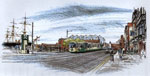
How the intermediate Gillespies stop might look. |
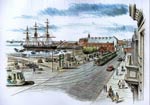
Another view of the new line, showing Portsmouth Harbour. |
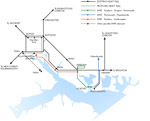
Plan of proposed changes in South Hampshire. |
|
| Honolulu High-Capacity Transit Corridor Project, | ||
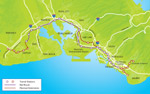
Route of the Honolulu high-capacity transit corridor project, which will link West Oahu with downtown Honolulu and Ala Moana Center. |
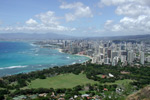
The city of Honolulu has a population of 905,034 and is growing steadily – hence the need for an improved transportation system. |

A large-scale solution was needed to reduce the number of vehicles on the road and to cater to the growing transportation needs of Honolulu. |
| Houston MetroRail System | ||
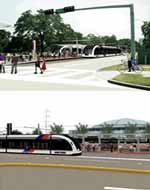
The Astrodomain and Herman Park. |
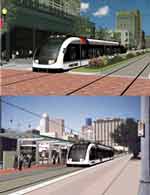
Downtown and midtown views of the rail system. |
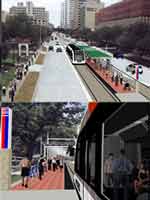
Texas medical centre and museum district. |
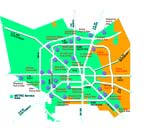
Metro park and ride location map. |
In spite of high patronage and popular acceptance, MetroRail expansion seemed doomed until a 2007 policy change. |
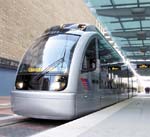
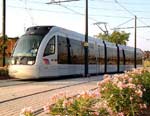
Eighteen US-built Siemens S70 Avanto units maintain all services on Houston's current sole light rail line. |
| Hudson-Bergen | ||
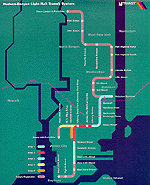
Map of the Hudson-Bergen Light Rail system. |

A tram passes Essex Street near Exchange Place. |
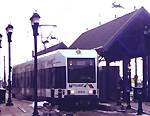
A tram stands at Exchange Place station. |
Four-aspect colour light signals control the trams, as seen here at Marin Blvd. |
The current terminus of the Bayonne branch, beyond which there are plans to extend to 22nd Street. |
Two pre-production trams were used for testing before services began. |
A tram calls at Essex Street station. |
||
| Hyderabad Metro | ||
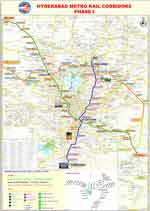
The rail corridors of the Hyderabad Metro. |
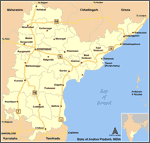
The population of Hyderabad is expected to increase from 7.8 million to 13.64 million by 2021. |
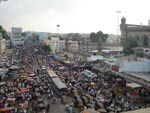
Journeys by public transport are estimated to be 42% of all motorised trips made per day. |
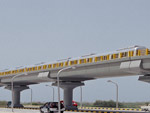
The Hyderabad Metro will be an elevated system with a 9m-wide bridge structure. |
||
| Islamabad Express | ||

The station has been renovated and renamed Islamabad Railway Station. |

The express service has two trains running in either direction from Islamabad and Lahore. |
The express service is operated by Pakistan Railways, a state-owned railway company. |
| Jerusalem Light Rail Project | ||
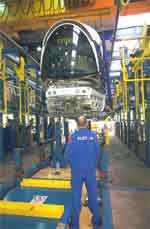
The Alstom Citadis light rail vehicle has been chosen by Jerusalem. The vehicles are being built in France for delivery in 2007–08. |

The Citadis concept has been chosen by many European cities, but Jerusalem is the first city in Israel to embark on a light rail project. |

Jerusalem is due to take delivery of 23 two-car LRVs from Alstom, similar to those in service in Lyon. |
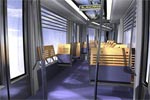
The interior design of the Citadis is flexible. |

From ancient origins, Jerusalem has grown rapidly and become traffic stifled in recent years. |

The Lion emblem of Jerusalem will be incorporated into the livery of the city's Alstom trams. |
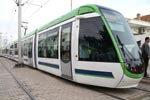
Jerusalem will join pioneering Tunisia in a growing number of Mediterranean countries using light rail to solve urban transport problems. |
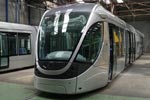
Well in advance of the delayed opening, the first Citadis for Jerusalem was delivered in September 2007. |
|
| Karlsruhe Light/Heavy Rail | ||

The City 2015 plan for tunnels in central Karlsruhe. |
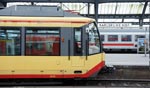
Karlsruhe Hauptbahnhof is the focal point of a long-distance network largely running over DB metals. |

KVV tram-trains are compatible with systems used by DB main line services. |
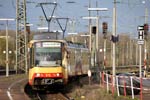
Seen at Rastatt on the DB main line to Basel, this S41 to Freudenstadt is also routed through Karlsruhe city streets. |
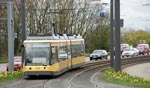
An extension of the S2 line to Spöck was a 2006 addition to the network. |
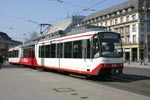
Seen outside Karlsruhe Hbf, two-system unit 845 was one of several equipped with a buffet facility, now used only for special services. |
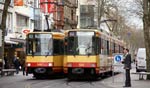
The very success of Karlsruhe's rail network has created congestion in the centre which has become a limit to service expansion. |
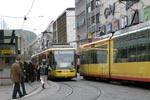
Under the City 2015 plan, Europaplatz (pictured) in central Karlsruhe would have stops for surface tram routes and in-tunnel 'S-Bahn'. |
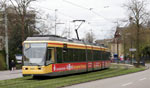
The ramp to the southern arm of the projected city centre tunnels would begin just north of the Augartenstrasse stop. |
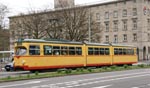
One of Karlsruhe's few surviving high floor units: central tram routes would remain at grade under the City 2015 plan. |
||
| Kassel Tram Trains | ||
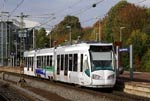
Tram-train services are operated by a 28-strong Alstom Regio Citadis fleet. Under diesel power, unit 757 enters Kassel-Wilhelmshöhe. |
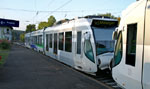
Seen in the rural Baunatal, these diesel units drew power from the Kassel tram overhead supply until switchover at the Hauptbahnhof. |
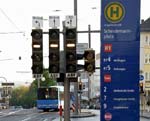
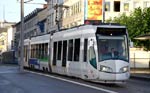
Tram-type signals are used for tram, RegioTram and buses at junctions. |
Progress along the route, next stops and some fare zone boundaries are shown on illuminated on-board displays. |
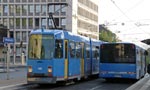
RegioTrams and RBK trams share tracks in Kassel. Two-system electric unit 718 is seen at Königsplatz in the city centre. |
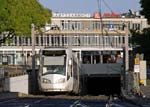
The RegioTram-only tunnel between Scheidemann-Platz to Kassel Hbf is the link between heavy rail and tram networks. |
As well as at DB stations, RegioTram offers interchange with 9 tram and 28 bus routes in Kassel. |
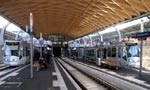
New low-level platforms have been added for RegioTram services at Kassel Hbf. |
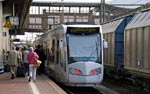
Supplementing tram and DB regional services, RegioTrams have added to links between principal station Kassel-Wilhelmshöhe and the city centre. |
| Korea Busan Gimhae Light Rail | ||
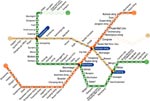
Busan-Gimhae Light Rail was preferred to extending Busan's metro further west and to the international airport. |
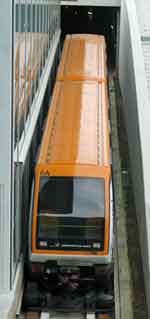
Unlike the VAL system being installed at Uijeongbu, Korea, Busan-Gimhae is using steel wheels on steel rails for its driverless light rail system. |
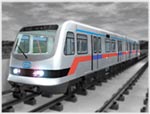
Hyundai Rotem is due to have applications of its automatic rail technology enter service in Korea and Canada during 2010. |
| Kuala Lumpur | ||
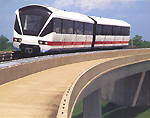
The Malaysian capital Kuala Lumpur, one of the fastest-growing cities in the world, is in the process of being furnished with a state-of-the-art metro system. |
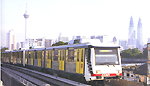
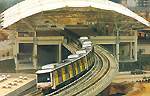
A Star trainset running along an elevated section of the Kuala Lumpur metro network. |
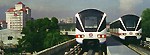
An elevated section of the Putra Metro undergoing test running. |
Bukit Jalil station receiving a Star Train. |
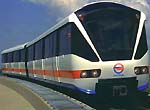
An ART MK 2 Advanced Rapid Transit Vehicle, one of seventy to be supplied. |

Artist's impression of Setiawangsa station. |
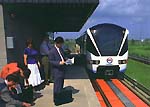
A Bombardier Transportation ART MK 2-vehicle alongside a station platform of the Kuala Lumpur Metro. |

Star Trains operating on the Kuala Lumpur network. |
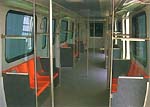
The interior of an ART MK 2 Advanced Rapid Transit Vehicle. |
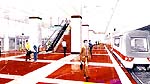
Artist's impression of Benteng station. |
||
| Kuala Lumpur Monorail | ||
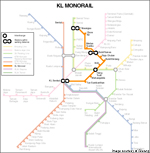
The urban intercity KL Monorail is an 8.6km track. |
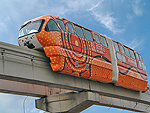
The monorail runs permanently coupled two-car trains. |
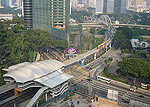
The KL Monorail transports 3,416 passengers per hour per direction. |
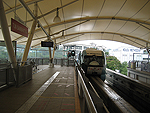
The monorail stations, such as Tun Sambanthan, have been designed to accommodate longer trains. |
||
| Lagos Rail Mass Transit System | ||
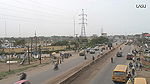
Lagos today. |

An artist's image of Lagos with the new rail system. |
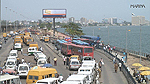
Lagos marina at present. |

An artist's image of the new Marina station. |
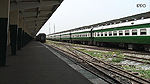
Iddo station now. |
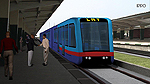
An image of the planned Iddo station. |
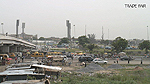
The Trade Fair today. |
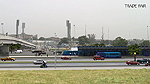
An artist's image of the Trade Fair with the new rail system. |
|
| Las Vegas Monorail | ||
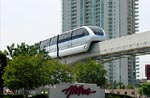
Since mid-2004 monorail trains have been in passenger service over the 6.4km Las Vegas line. |
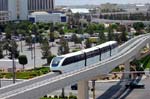
The Bombardier trains can reach up to 50mph on the elevated concrete sections. |
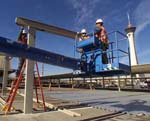
Beginning demolition work at a Sahara hotel parking lot, the future site of the strip monorail maintenance facility. |
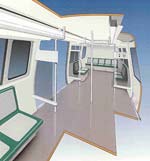
Artist's impression of the interior of the monorail carriage. |
||
| Leeds Supertram - | ||
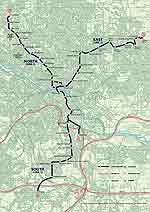
Map of the Leeds Supertram network. |

Artist’s impression of how the trams could look passing through Castle Square in the city centre. |
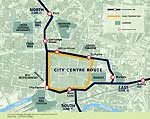
Map of the planned city centre routes. |
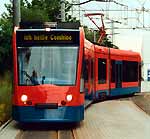
Siemens Combino trams were candidates for Leeds. |
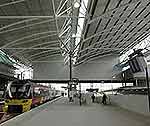
Leeds' ideas are modelled on nearby Sheffield, whose Supertram system opened in 1994. |
|
| Light Rail Developments | ||

Like most Citadis applications, including many in France like Bordeaux and Valenciennes (pictured), Algeria's tramways will be integrated systems. |
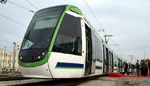
Algeria will follow Tunis (pictured) as the second operator of modern low-floor trams in North Africa. |
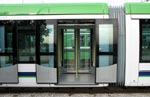
The appeal of modern light rail includes the ease of rapidly loading and loading far more at one time than buses can achieve. |
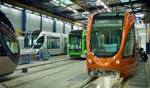
The 80% common content of all Citadis vehicles leaves the operator with the opportunity to specify many aspects that best suit their needs. |
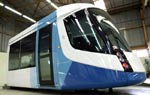
A design mock-up for the Algiers trams. |
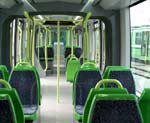
The speed, comfort and space of trams will be welcomed by Algerian commuters currently relying on crowded buses. |
| Light Rail Developments - Stockholm | ||

The modern Tvärbanan and its A32 vehicles have encouraged support for more light rail in Stockholm's public transport provision (Liljeholmen). |
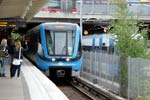
The southerly curving route of Tvärbanan (right) includes a busy interchange with SL Tunnelbana Green Line at Gullmarsplan. |
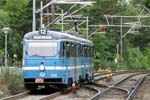
Infrastructure investment is apparent on the Nockebybanan western suburban line. |
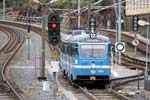
Nockebybanan Alvik terminus is between Tunnelbana Green Line platforms and above those of the current Tvärbanan western terminus. |
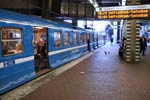
Experiencing heavy loadings, the Saltsjöbanan is a free-standing suburban heavy rail system (Slussen terminus). |
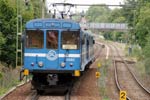
Current infrastructure limits Saltsjöbanan services – conversion to light rail would give greater capacity and frequency (Nacka). |
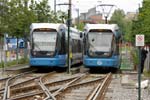
Extension from Tvärbanan eastern terminus Sickla udde (pictured) would lead to a Saltsjöbanan connection. |
||
| Liverpool Turnback Project, | ||
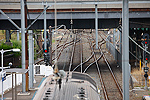
The train stabling facilities will be reconfigured to increase capacity and reliability at Liverpool Station. |
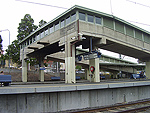
The existing footbridge will be extended and stairs constructed to provide access to the new Platform 4. |
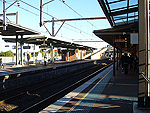
The existing three platforms at Liverpool Station. |
| London Olympics Transport Upgrade | ||

Stratford is already an important transport hub – the future Olympic Park to the right in this view. |

Key modes for final access to many Olympic venues, TfL Underground and DLR are both subject to high levels of investment. |
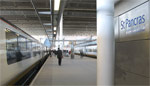
St Pancras International will fill a key role for continental arrivals by Eurostar and the Olympic Javelin shuttles. |
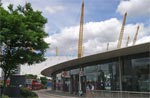
Linking central London and Stratford, the Jubilee Line also has North Greenwich station adjacent the 'Dome' Olympic venue. |
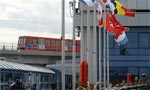
The DLR line past City Airport (pictured) will have reached Olympics venue Woolwich in advance of 2012. |
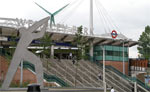
Transport facilities for venues like London's Wembley Stadium are already used to handling large numbers. |

Long distance, regional and suburban rail services will cater for much of the demand for reaching south-east England's Olympic venues. |
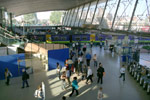
Due to open in 2101, Stratford Regional low-level platforms will become part of the DLR Stratford International-Canning Town extension. |
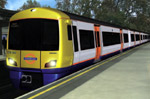
TfL London Overground will be equipped with new Bombardier Class 378 trains by 2012. |
| Los Angeles LRT Expansion | ||
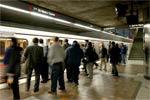
Despite its short length, the Metro Red Line is heavily used. |
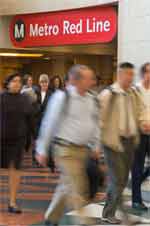
Underground and light rail services became part of Los Angeles transit system in the early 1990s. |
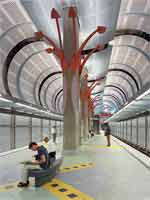
Modern stations are being built as part of the Exposition Line programme. |
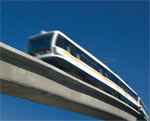
As well as running at grade and through streets, Los Angeles’ light rail system has some elevated sections. |
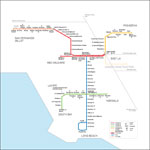
The Los Angeles Underground (red) and Light Rail Lines. |
|
| Luas Light Rail Network, | ||
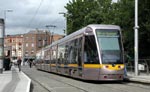
Green Line terminus St Stephen's Green: a planned extension will cross the Liffey and link with the Red Line at O'Connell Street. |
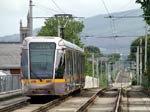
At the south a former heavy rail alignment; substantial structures carry the Green Line onto city streets. |
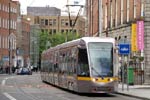
Stylish Alstom Citadis trams blend with elegant buildings near Harcourt, Green Line. |
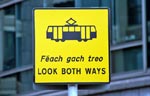
Use of English and Irish is a distinctive feature of track signage and on vehicles. |

An extended Red Line tram enters Connolly, interchange for IE main line and suburban/DART services. |
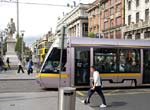
Red Line crossing O'Connell Street is the most prominent presence of Luas for Dublin's many visitors. |
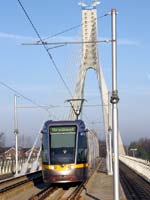
The largest single Luas structure is the William Dargan Bridge on the Green Line at Dundrum. |

The Red Line terminus by the Tallaght Cross development is close to proposed southern end of the Metro West project. |
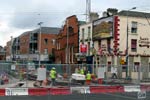
A delta junction added near Connolly and Busáras (pictured) in 2008 will provide for the addition of the Red Line C1 extension. |
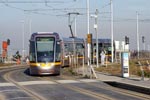
An extended Red Line tram on the new alignment created to the east of the Red Cow stop to reduce conflict with road traffic. |

Works in 2007–2008 at Sandyford have prepared for the B1 extension and enlargement of storage capacity at the Green Line depot. |
|
| Lyon Light Rail System | ||
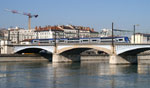
A focal point of SNCF operations, limited local services could not match Lyon's growing demands for local transport. |
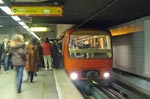
Lyon's metro predated the light rail network: the automatic Line D at Bellecour. |
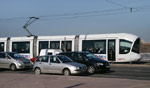
To avoid delays in Lyon's notorious traffic, much of the network has reserved running. |
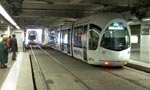
T1 linked SNCF's new main station, Part Dieu, with the earlier one at Perrache (pictured), also a metro terminus. |

As well as for T3, Part Dieu will become the terminus for the Rhô nexpress tram-train service to the airport. |
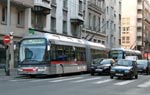
Of intermediate capacity between buses and light rail, Lyon's trolley buses are prone to going off-schedule in traffic jams. |
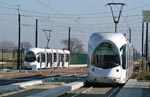
Central tracks at some stops will allow Rhô nexpress services to pass T3 trams on the shared line. |
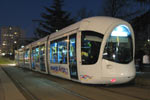
Grange Blanche is one of several large mode interchanges outside of the city centre. |
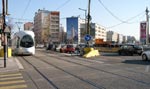
Work in progress at Jet d'eau on the new T4 line (to right) due to open in 2009. |
| Macau Light Transit System | ||
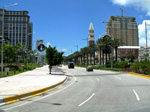
Macau Light Transit System is a rapid mass transit system being developed in Macau Special Administrative Region, China. |
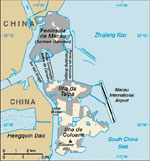
The system will start operating by 2014. |
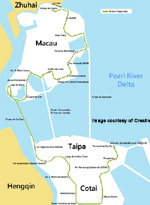
MLTS will be the first rapid transit system in Macau. |
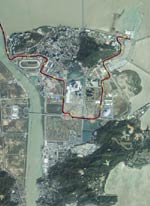
The 2009 final alignment for the Phase 1 light rail transit system in Macau. |
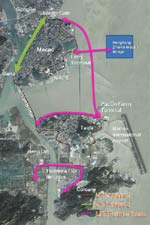
The conceptual plan of the long-term dual-axis-dual-circle Macau light rapid transit system. |
|
| Madrid Light Rail System | ||
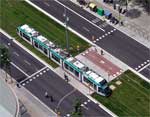
Madrid is now following the example of other European cities by building a new light rail system. |
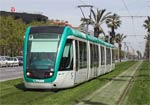
Madrid will use five-section Alstom Citadis cars, similar to these in use in Barcelona. |

A large part of T1 of the Madrid LRT will be underground, but the rest of the system will be at grade segregated from road traffic. |

To make sure everything works first time, a five month trial period is planned on the three-line system. |
||
| Major Interchange Hub Projects | ||

A hub for European services, Luxembourg's significance in rail operations is out of proportion with the country's small size. |
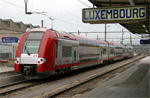
Re-equipment and higher capacity rolling stock in the 21st century indicates the commitment to rail for transport needs. |
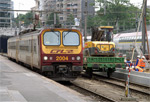
Luxembourg's main station is being rebuilt in advance of new heavy rail lines due under the Mobil 2020 plan. |

The new light rail scheme will reduce reliance on buses in connecting main city areas, as between the centre and station. |
||
| Mallorca Rail Development | ||
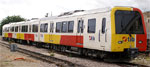
CAF two/three-car diesel-hydraulic units operate Mallorca’s heavy rail services. |
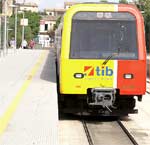
Unballasted track at the rebuilt Sineu station on the Manacor extension. |
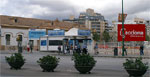
The cleared site for the three-level Estación Intermodal de Plaça d'Espanya, Palma. |
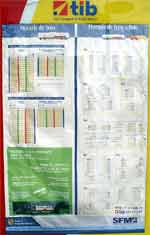
Co-ordinated rail and bus services by Transport de les Illes Balears. |

Successful in the tourist market and with a new Metro link, Ferrocarril de Sóller’s original role has been eroded by road improvements. |
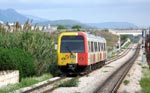
A projected new line to serve Palma de Mallorca Airport would also provide Manacor with a second route to Palma. |
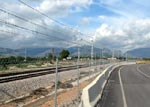
Metro Line 1 at Son Sardina is on the brief surface section, with a park and ride site and interchange with the adjacent Ferrocarril de Sóller. |
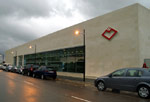
Seen during the 2007 suspension of Metro services due to construction problems, the terminus at Universitat de les Illes Balears (UIB). |
|
| Manchester Metrolink | ||
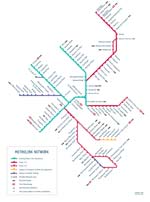
Metrolink is expanding massively in the coming years following announcement of a new funding package. This map shows the existing, planned and proposed alignments of the system. |
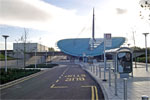
The £36.5m bus and tram interchange at Central Park was completed in advance of the Manchester-Oldham-Rochdale link. |
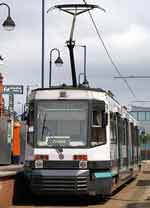
Featuring shielded couplers and bogies, 2006, the final T-68a tram at Eccles terminus. |
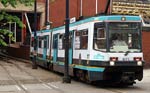
Metrolink leaves the heavy rail alignment from Bury at Manchester Victoria station. |

Light rail has helped redevelopment of the former Manchester Ship Canal docks: Salford Quays. |
The Droylsden line will extend from the present Metrolink terminus beneath Piccadilly station. |
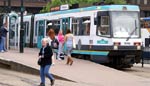
Tram and bus routes converge in central Manchester at Piccadilly Gardens - high platforms are a feature of Metrolink. |
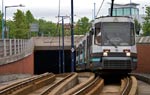
After a long shared road section, Metrolink reaches Eccles through a reserved underpass. |
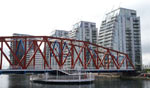
Anticipated demand from the mediacity development has prompted orders for more trams for the new extension. |

Due to open in 2010, the mediacity branch will leave the Eccles line just west of Harbour City, |
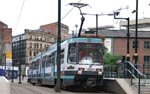
New services to Rochdale and Oldham will add traffic to this city section near Manchester Victoria and Shudehill. |
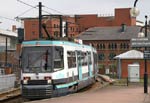
To handle traffic generated by new extensions, a long-term aim is to add a central area bypass line from GMex to Victoria. |
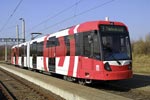
Part of the Bombardier Flexity Swift family, Metrolink's next generation of low-floor trams is based upon Cologne's K5000. |
||
| Mandalay Bay Cable Liner | ||
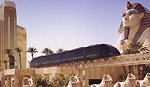
Drawing on the latest cable-drawn transport technology, the system is, in effect, a rail-borne ski-lift, which is fully automated. |
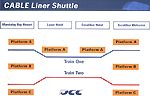
Diagram showing how the system operates. |
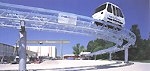
A test centre has been developed jointly by Doppelmayr and Siemens at its plant in Innsbruck, Austria, which demonstrates the application of the cable liner to potential customers. |
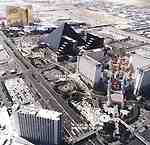
An aerial view of the stations and cable drawn system in Las Vegas. |
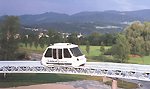
The Cable Liner shuttle has been carefully integrated into the surrounding, extremely distinctive, skyline. |
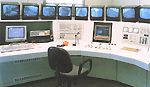
The Mandalay Bay control centre complete with television monitoring systems. |
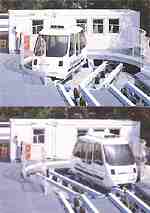
The Mandalay Bay system has a novel method for turning its trains, which is in effect, a mini turntable. |
||
| Manila Light Rail | ||
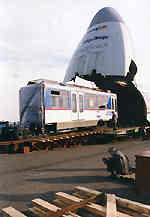
The first of the Praha-built LRVs is despatched to the Philippines via a Russian heavy-lift aircraft. |
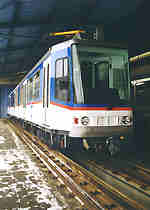
Twenty-eight new LRVs are being delivered to operate on the new lines. The new LRV fleet is being built by CKD Tatra of the Czech Republic, with civil engineering contracted to Mitsubishi Heavy Industries. |
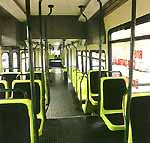
The tram's two + one seating configuration and low-floor section are apparent in this view. |
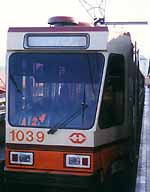
One of the new Manila LRT vehicles. |
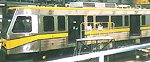
The light rail vehicles under construction at the Hyundai plant. |
|
| Marmaray Railway Engineering Project, | ||

The Marmaray Project includes the world's deepest immersed tube tunnel. This is a section of tunnel being floated into position for the Oresund link in Denmark – similar processes are being used in Istanbul. |
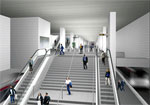
The high-capacity commuter route will have 37 rebuilt stations, all with a modern feel. |
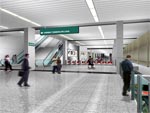
Stations are being rebuilt in metro style to meet the needs of a high-capacity transit system. |

Three new stations are being built as part of the project. |
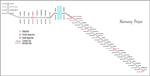
The route of the new east-west corridor, showing the Istanbul Strait which will be crossed by a new 13.6km tunnel. |
|
| Metro do Porto | ||
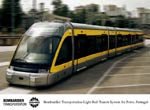
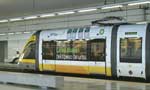
The Bombardier Eurotram has won design awards. |
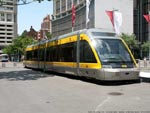
Seven modules provide total flexibility of movement. |
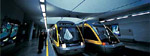
10km of the route is in tunnel. |
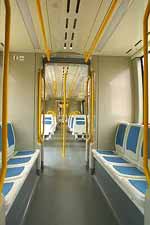
Interior of the Eurotram. |
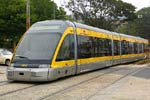
The first tram after delivery from the Amadora factory. |
|
| Miami-Dade Metrorail Transit | ||
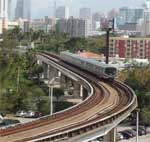
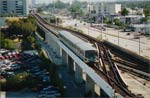
The Miami Metrorail route takes an elevated alignment for the majority of its journey. |

Six-car trains operate at peak times to cope with passenger demand. |
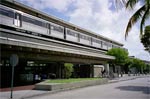
Crossovers are the only sections of the route to be signalled. |
The North Corridor Metrorail will add another 15km to the current network. |

A map of Miami Metrorail, showing the planned Orange Line and other future routes. |
|
| Midland Metro | ||

Midland metro map, with proposed extensions. |

Property development near Snow Hill terminus includes infrastructure that will take Metro onto Birmingham's streets. |

The city extension would take the Metro along Broad Street to the Five Ways intersection and onto Edgbaston. |

Present-day heavy rail services diverge from Metro at Hawthorns, where it continues along the former Great Western alignment. |

For heavy rail interchange and coping with football crowds, Hawthorns is one of the system's largest stations. |

Only around 2km of the Metro involves sharing with road traffic: the Royalty stop. |

Information displays at stops were replaced by 2007. The entire T69 fleet is another replacement candidate if the system is to expand. |

Metro Central at Wednesbury is the system's headquarters, control centre and maintenance depot. |

The first of the trams in Network West Midlands promotes greater multi-mode use of public transport. |
| Milano Metro | ||
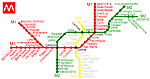
The system opened its first line in 1964, and over the next 30 years it grew to comprise three lines, serving 84 stations. |
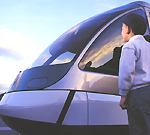
Milano is the latest city to adopt the striking Eurotram design as its newest light rail vehicle. |
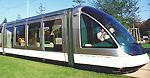
Large areas of glass and steeply-raked windscreens afford excellent all-round views. |
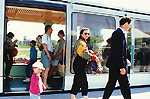
The wide single sliding doors make entrance and exit easy. |
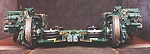
A Eurotram bogie. |
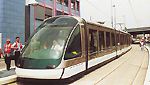
Milano follows Strasbourg in choosing Eurotram. |
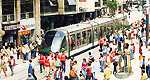
The trams have proved popular wherever they have been seen. |
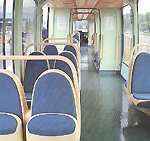
The view shows clearly the airy interior, produced by the large glass doors and deep windows. |
|
| Montpellier Light Rail Network | ||
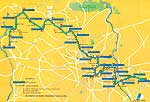
The route map of the Montpellier Tram system. |
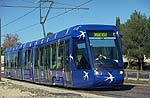
The Citadis tram from Alstom is a European standard design. |
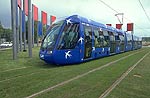
The tram livery encapsulates the brightness of this go-ahead city. |
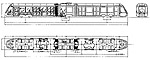
All trams are articulated with wide doors for easy access. |
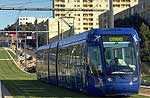
The segregated track has been grassed over to improve the environment. |
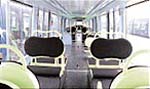
The trams' interiors have an equally bright appearance. |
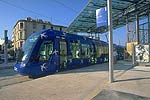
The trams serve the Le Corum exhibition centre, north of the city centre. |
||
| Mulhouse Light Rail and Tram Train | ||

Projected tram-train and tramway extensions to Mulhouse's initial light rail system. |

The two-route system connects at a brief four-track section at the Porte Jeune stop in central Mulhouse. |

As seen at Tour Nessel, the double arches on Line 2 have become a symbol of the Mulhouse system. |
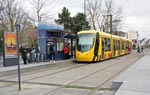
Currently Line 1's northern terminus, Rattachement will be the starting point of an extension due to open in 2009. |

Line 2 terminus Coteaux terminus serves a huge modern residential development. |
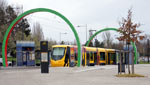
Université stop has one of the two park-and-ride sites on the Mulhouse system. |

As here at Daguerre, much of the system is segregated from road traffic. |

Tram-trains will gain access to central Mulhouse via a new connection from near this main line overbridge on Line 2. |

Advent of tram-train means that services on the Thann line will also reach the SNCF station through the Mulhouse streets. |
| Nantes Light Railway | ||
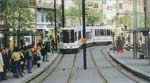
Low-floor tram designs mean that platforms are easily accessible to all. |
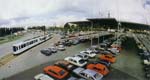
Park-and-ride facilities are used by up to 7,000 cars per day. |

2000's new lines and extensions were seen as good news. Public surveys had shown approval ratings for the metro as high as 93%. |
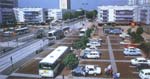
Nantes is an excellent example of how different modes of public transport can be integrated. |
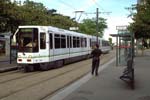
A 1992-builttram in service on Line one. |
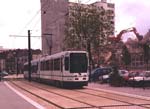
A similar vehicle, at Place Viarme in the city centre. |
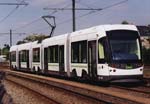
One of the new Incentro-derived trams from Adtranz undergoing tests during summer 2000. |
||
| New York Airtrain | ||
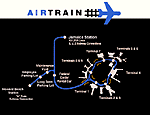
Map showing the main routes of the New York Airtrain. |

Kennedy Airport, the biggest international gateway to the American city of New York, is to get a fast, new direct link with the city centre, which promises to dramatically slash journey times. |
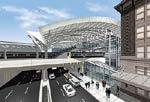
When the Jamaica interchange opens in 2003, passengers will be able to change from AirTrain onto Long Island Railroad and Subway services into central New York City. |
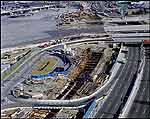
Cut and Cover tunnels have been built to take AirTrain underneath the runways and taxiways of JFK airport. |
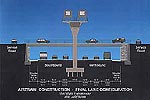
AirTrain services will run above the Van Wyck Expressway. |
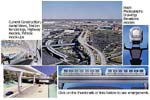
This montage of images shows how the line will run into the heart of the airport and what the new trains look like. |
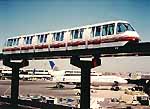
The new monorail began passenger service at Newark in 1996. A new rail link system at JFK will be operational by 2001. |
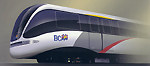
The Bombardier-built Vancouver Skytrain, the forerunner of New York's Airtrain. |
|
| New York PATH Railway Upgrade | ||
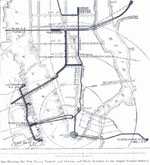
The PATH rapid transit system, having originally operated since 1908, is undergoing an upgrade. |

The line connects the US states of New York and New Jersey with 13 stations and over the Passaic River. |
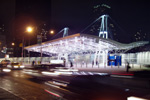
Station platforms will be expanded along the Newark to World Trade Center line to accommodate ten-car trains. |
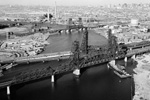
The upgrade includes new railcars and new signalling systems to increase ridership by 20%. |
||
| Nice Tramway | ||
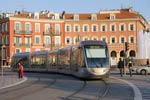
The Nice project is notable for the use of on-board battery power for operation without an external power supply: Place Masséna. |

After crossing Place Garibaldi, trams raise the pantograph at Cathédrale-Vieille-Ville for traction current and to re-charge batteries. |
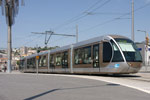
Like most modern French tramways, Nice opted for the Alstom Citadis. |
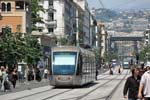
With landscaping and traffic restrictions, Avenue Jean Médecin is a main thoroughfare transformed by the tram project. |
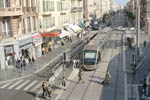
A few hundred metres separate Nice-Ville SNCF station from the nearest tram stop, Gare Thiers. |
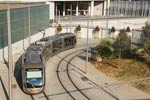
Combining the Las Planas terminus and a park and ride, the depot complex uses a spiral track layout on a very restricted hillside site. |
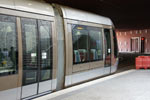
At Las Planas, trams continue towards the depot before setting back for the next southbound service. |
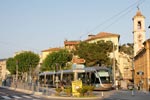
The line's eastern arm skirts the Old Town: trams join a brief overhead supply between Opéra-Vieille-Ville (pictured) and Cathédrale-Vieille-Ville. |
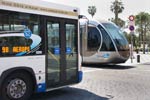
The projected line along the western sea front would greatly improve public transport to Nice Côte d'Azur Airport and the business district. |
| Norfolk Orbital Railway | ||
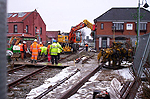
Volunteers clearing the snow at Sheringham and Holt Crossing. |
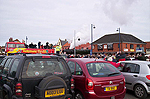
The locomotive Oliver Cromwell arriving at Sheringham and Holt Crossing on 21 March 2010. |
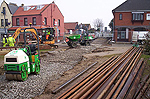
Track restoration work on the Sheringham Crossing, Norfolk Orbital Railway. |
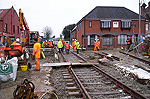
Work at Sheringham Crossing was completed by volunteers in just two days. |
||
| Norfolk Southern Heartland Corridor Project | ||
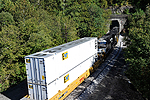
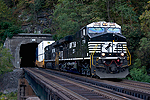
Freight trains carrying double stack containers through the renovated tunnel. |

Heartland Corridor project became operational in September 2010. |
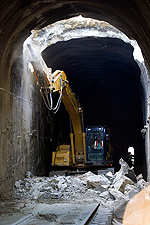
The tunnels are being renovated to accommodate double stack freight trains. |
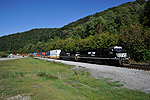
The Heartland Corridor Project connects the line from Port of Norfolk to Chicago. |
The new line reduces the journey from three to two days. |

The Heartland project was built through public-private partnership. |
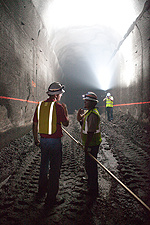
Hatch Mott McDonald carrying out the field investigations and preliminary design engineering. |
||
| Northstar Commuter Rail | ||
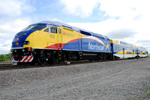
The Northstar trains are operated by Metro Transit. |
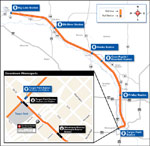
The first phase of the Northstar Commuter Rail Line will connect Big Lake and downtown Minneapolis. |
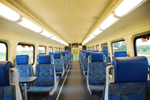
The Northstar passenger cars will have seating for about 140 passengers each. |
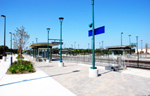
The train will stop at six stations including one at Anoka. |

The trains have been supplied by Bombardier and built by Motive Power Industries. |
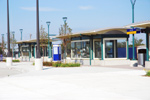
Time for travel from Big Lake to Minneapolis is estimated to be 45 minutes. |
| Nottingham Express Transit | ||
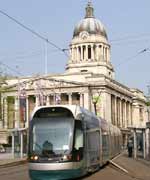
Trams have become a modern symbol of Nottingham, as seen at Old Market Square. |

Line 1's northern section is largely based upon heavy rail alignments, as at Bulwell. |
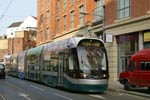
The formerly run-down Lace Market is one of many areas regenerated by NET. |

NET has maintained a policy of using staff for ticketing aboard trams and at some stops. |
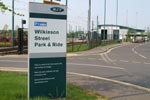
The incorporates the maintenance depot, control centre and a free park-and-ride facility. |
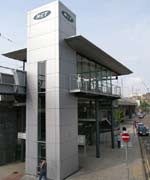
Present terminus Station Street tracks are at a level to provide clearance of Nottingham station for the southern extension. |

NET will proceed from here over the station to a new interchange before divergence of the two Phase 2 lines. |

The Hub transport interchange project will retain the historic Nottingham station frontage: NET Phase 2 will pass behind and to the far right. |

NET Phase 2 requires the present fleet size of Bombardier Incentro vehicles to be doubled. |

Map displaying the routes of NET Phases 1 & 2. |
||
| Oakland Airport Connector, | ||
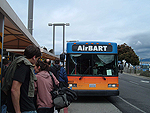
AirBART buses currently serve the airport. |
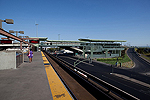
Graphical presentation of the future Coliseum Airport Station. |
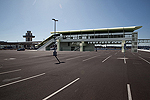
Graphical presentation of the future airport. |
| Orleans-val-de-Loire Tramway | ||
A fleet of 22 Citadis TGA 301 trams are in operation on Line A of the Orleans-val-de-Loire system. |
Line B will use the Alstom APS ground power supply through the historic centre of the city. |
Inside the Citadis trams present a modern interior. |

Maintenance is carried out at a dedicated facility. |
||
| Oslo Metro and Trams | ||

Combining new build and pre-existing lines, Oslo T-bane extends well beyond the city and into rural areas. |

A 1300-class two-system unit at the former Majorstuen terminus, now the western end of the city centre tunnel. |

Seen east of central Oslo at Brynseng, this type of stock dating from 1966 is due for replacement as MX3000 deliveries continue. |

Due for delivery up to 2010, Siemens MX3000 units entered revenue service in Oslo during 2007. |

Nine doors per side and a spacious interior give ease of movement for passengers on MX3000 units. |

Jernbanetorget is on the intensively served city tunnel section and adjoins Oslo S, Norway's busiest railway station. |

By Oslo S and near metro and tram routes, Trafikanten is the principal information and ticketing service for Oslo's public transport. |

A member of the older and numerically superior tram type, an SL79 on the harbour front Line 12 by the Nobel Peace Centre. |

An SL95 seen at Stortorvet, a focal point of tram operations in central Oslo. |

The tram track layout near Oslo S/Jernbanetorget has been undergoing modification. |
||
| Ottawa Light Transit System | ||

View of Ottawa from McKenzie King Bridge. |
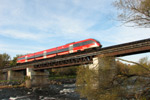
The O-Train over Rideau River. |
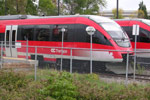
The existing light rail line utilises three Bombardier Talent DMU trains. |
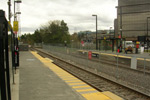
Line 1 connects Greenboro to Bayview through Carling, Carleton and Confederation. |
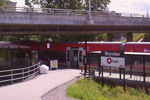
Bayview station, a terminal station of line 1. |
|
| Paris Suburban Light Rail Developments | ||
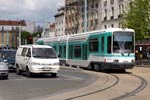
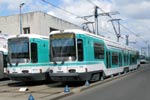
The first modern Paris tramway upon opening in 1992, TFS-operated T1 has many features of traditional urban systems (Saint-Denis). |
From the present Noisy-le-Sec terminus (pictured), an extension would assist in the creation of a Paris light rail orbital line. |

The development commercial of La Défense is in part underpinned by a concentration of rail links, soon to grow with the northwards T2 extension. |

Even with increasing tramway features, the heavy rail origins of the T2 route are evident. |
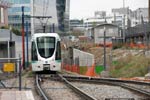
Works at the Issy Val de Seine terminus in 2008 are in connection with the T2 extension to Porte de Versailles. |
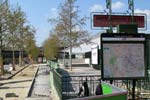
The eastern T2 extension will cross the Paris city boundary, providing Metro and T3 interchanges at Porte de Versailles. |
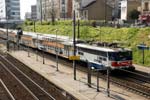
Two stops on the northern T2 extension will give an interchange with SNCF Transilien services here at La Garenne Colombes. |
Still more a train than tram operation, SNCF based the T4 project on an under-used heavy rail line between Bondy and Aulnay-sous-Bois (pictured). |
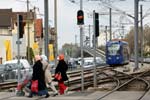
The principal intermediate T4 stop is at Gargan where the station and street crossing has been opened out for easier movement by all users. |
| Paris T3 Light Rail | ||
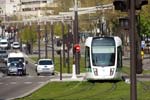
A bold aspect in the routing of T3 was that it took the space from an established road traffic artery. |
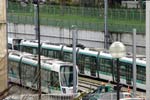
Unlike much of Paris' public transport which is disfigured by vandalism, trams are protected by overnight secure storage: T3 depot. |
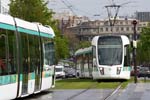
To succeed as a credible alternative to private transport, high frequency services are essential: four-minute headways apply at peak on T3. |
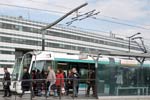
An extension from the western terminus pont du garigliano would route T3 across the Seine. |
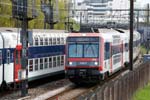
With many more to come on future extensions, T3 already has interchanges with Paris's high-density RER suburban heavy rail services. |
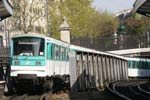
Seven Méero interchanges are available on the present 7.9km T3 route. |
The first interchange between Paris tram routes will be created with the opening of the T2 extension to T3 at Porte de Versailles. |
||
| Portland MAX Light Rail | ||
The modern interior of the vehicle. |
Sunset Transit Centre is an interchange for buses and cars. The unit's electrical equipment, including air-conditioning, is roof mounted. |
Washington Park MAX station is the deepest in North America at 260ft below ground. |
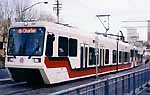
Tri-Met ordered 46 low-floor LRV's for the Westside MAX project. |
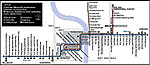
Map of the Portland MAX network. |
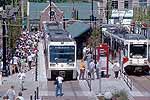
The Hillsboro terminus with both types of LRV. |
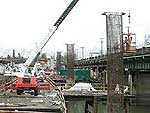
Construction of a bridge on the Yellow Line extension. |
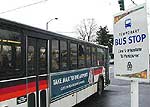
Temporary bus stop for Line 5. Passengers are issued with special flashing lights to flag-down buses at night during construction work on the adjacent Yellow Line. |
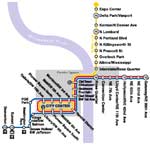
Map showing detail of Yellow Line extension. |
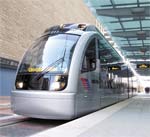
A fleet of 21 Siemens S70 Avanto LRVs will enter service in 2009 on the I-205/Portland Mall extension. This is an S70 in service in Houston, USA. |
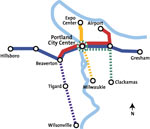
Green Line is currently under construction, and due to open in 2009. |
|
| Porto Light Rail | ||
On the former narrow gauge terminus site, Trinidade is at the intersection of all first phase Metro lines. |
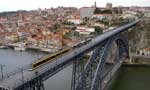
Metro Line D crosses the Douro gorge on the Ponte Luiz 1, part of Porto's designated World Heritage Site. |

An unconnected junction on the Line A formation at Matosinhos Sul. |
The only Metro section south of the Douro, Line D under extension from João de Deus. |
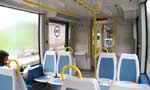
Eurotram interiors are spacious and versatile, with very wide doors. |
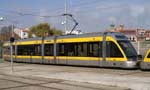
A terminus of the system's longest route, Póvoa de Varzim, will be served by new Flexity Swift trams from 2008. |
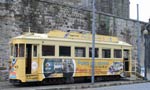
Recognising heritage and tourist demand, traditionally operated lines have been brought into service. |
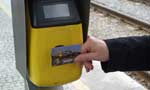
Andante branding covering an extensive ticket range is used throughout the system and on STCP bus and CP rail services. |
|
| Potsdam Light Rail | ||
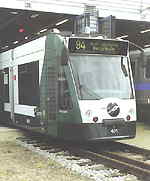
Potsdam is the first German city to order the Combino Tram. Designed and developed by Siemens. The fleet will amount to 48 units. |
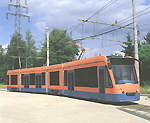
The 22nd of October 1998 saw the first rolling stock production unit in operation with Potsdam. |

Around 17 million passengers use Potsdam's trams and light rail vehicles each year, services generally operating between 04:30 and 22:30 each day, and using 34 tram sets. In addition, there is one route which operates around the clock, and along with a night bus network, this means the city has a round-the-clock public transport system. |
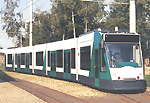
The Potsdam vehicles consist of five sections, designed for unidirectional operation, and with a low floor. The height of the door sills from the ground is just 300mm along the vehicle's entire length. |
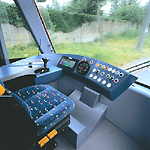
Siemens have provided simple and uncluttered cab layout. |
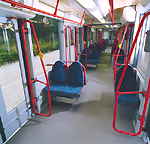
Major interior differences include increased passenger legroom, a different cab layout and changes to the passenger information system. |
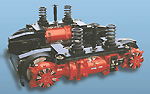
The Combino rolling stock powered running gear. |
||
| Potsdam rail network | ||
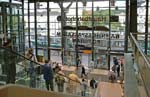
Situated away from the city centre, the modern Potsdam Hauptbahnhof is a large public transport hub. |

Seen at the Hauptbahnhof, one of the Combino fleet in the livery of transport operator, ViP Verkehrsbetrieb Potsdam. |
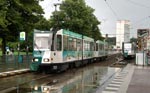
Platz der Einheit is the focal point for tram operations in Potsdam city centre. |
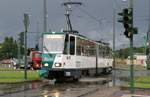
The Tatra tram, working in pairs, forms the larger part of the Potsdam fleet. |
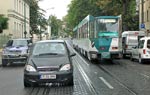
There is a mix of street running and reserved track on the Potsdam system. |
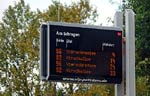
Throughout the network, passengers are kept informed of service operation. |
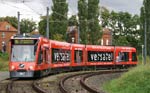
Potsdam’s single-ended trams are turned on a 'Y' circuit as seen here at Viereckremise, the latest system extension built for the BUGA 2001 exhibition. |
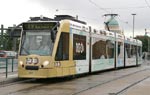
100 years of Potsdam’s electrified tramway (1907-2007) is celebrated in the livery of Combino 407. |
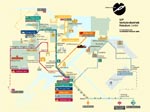
Map of the city. |
| Randstadrail | ||

Elevated platforms carry RandstadtRail and HTM tram services over the Den Haag Centraal concourse. |

Netkoos viaduct carries RandstadRail lines 3 and 4 through Den Haag’s business district. |

A map of the RandstadRail system as it will be in 2008. |

RandstadRail Den Haag-Zoetermeer public services were reinstated in autumn 2007. |

Track sharing: RandstadRail Line 3 service to Loosduinen terminus ahead of an HTM tram in central Den Haag. |
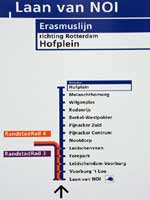
The former Hofpleinlijn now has RandstadRail Erasmuslijn branding in advance of incorporation with Rotterdam Metro's line of that name. |

On RandstadRail lines 3 and 4, Beatrixkwartier station is built into the Netkoos viaduct. |

Completed in 2008, the Boortunnel will connect RandstadRail with Rotterdam Metro. |
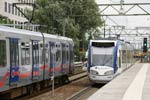
With low and high-floor vehicles in use, the shared section of Randstadrail has stations with twin-height platforms, as here at Laan van NOI. |
| Regional Rail Express, | ||
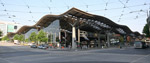
The RRE will run from West Werribee to Southern Cross station (pictured) in the state of Victoria, Australia. |

The State Government of Victoria has allocated $800m towards RRE's V/Line service. |
The existing track connecting Sunshine (pictured) to Kensington will be duplicated as an express route that will be operated by V/Line. |
| Saint Petersburg Nadzemny Light Rail | ||
A vital transport resource, Saint Petersburg's metro does not provide enough coverage for the city. |
Nadzemny Express is seeking proven light rail equipment. |
It is likely that rolling stock will involve an established European or Far Eastern supplier. |
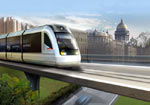
Nadex will run clear of the type obstacles that represent one of the difficulties experienced by the city's large tramway system. |
||
| San Juan Tren Urbano | ||
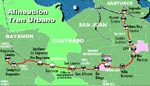
Map of the Tren Urbano route. |

The vehicles are built at Siemens’ Californian plant. |
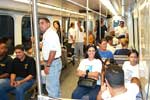
The interior of one of the Siemens built vechiles. |

The driving position with all controls in easy reach. |
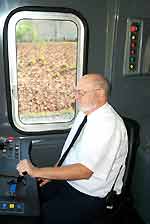
The driving position allows full forward and side views. |
|
| Sao Paulo | ||

The system uses modern control panels supplied by ALSTOM. |

The Sao Paulo metro is an extensive one. |

The new Sao Paulo line will use Metropolis™ rolling stock supplied by Alstom. |
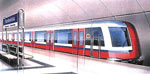
This is the Metropolis 700, a smaller version of the same ALSTOM rolling stock family. |
||
| Seaford Rail Extension | ||

Ariel view of Seaford Rail project. |
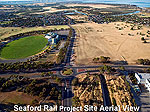
The Seaford project will break ground in January 2011. |
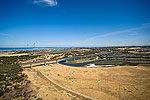
Seaford aerial bridge towards coast. |

Seaford aerial viaduct towards coast. |
||
| Seattle Link | ||
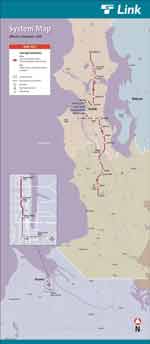
Map of proposed Seattle light-rail link. |
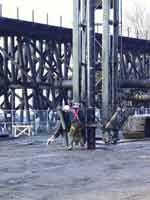
Workers constructing the new Seattle light-rail link. |
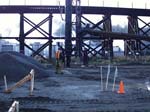
The construction site in February 2001. |
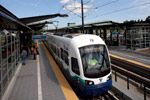
The Central Link features a mile-long tunnel with an underground station at Beacon Hill. |
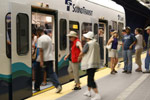
The Central Link light rail is expected to carry 21,000 passengers every day except on weekends. |
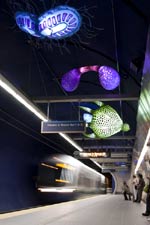
The Central Link is a 13.9-mile route from Tukwila International Boulevard to Downtown Seattle Transit Tunnel. |
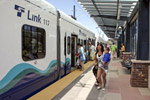
The Central Link vehicles have low floors for easy boarding. |
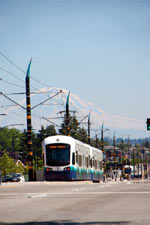
The Central Link light rail's extension to the east will connect Seattle and the suburb of Redmond. |
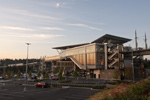
The entire route linking north, south and east to central Seattle is expected to be complete by 2030. |
| Sheffield Supertram | ||
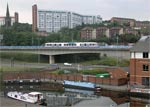
Supertram has contributed to Sheffield’s urban regeneration. |

Refurbished Supertram in use for driver training at the depot. |
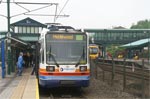
SYPTE’s Meadowhall Interchange links heavy rail, bus and tram services. |

The three lines converge at the triangular junction near Park Square. |

Park Square Bridge, built to carry tram tracks over a busy road junction. |
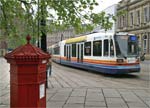
An intensive on-street service operates through the city centre. |
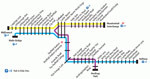
System map. |
||
| Sheppard East Light Rail Transit | ||
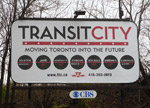
The Toronto Transit City Light Rail Plan includes the construction of seven LRT lines in Toronto. |
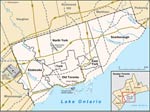
The SELRT line network connects the regions of Finch Avenue, Eglinton Avenue, Jane St and Don Mills Road. |
The proposed project involves the construction of a new line on Sheppard Avenue East, connecting Don Mills Station with Meadowvale Road. |
| Singapore Light Rail | ||
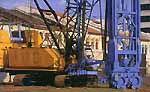
These eight-storey diaphragm wall machines were used to construct the diaphragm walls of stations on the North East Line. |

Artist's impression of the new look. |

Artist's impression of the new station showing the Singapore Expo (right) linked to the station by a covered walkway next to a lush garden. |
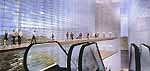
An artist's impression of the glass atrium interior of the new Changi airport station. |

An artist's impression of fare gates leading to the trains at platform level, and linked by escalator to the mezzanine bridge. |

One of the new generation of units built for Singapore MRT by Siemens. |

The vehicle interiors have been designed to cater for large numbers of passengers. |
||
| Sonoma-Marin Rail Transit Project, California | ||
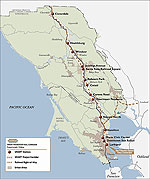
The Sonoma-Marin rail link will connect Cloverdale in Sonoma County with Larkspur in Marin County. |
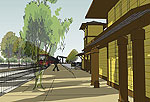
The proposed design of Windsor rail station. |
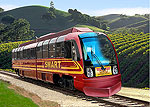
A commuter train that will be operating on the new rail line. |
| South Island Line (East) | ||
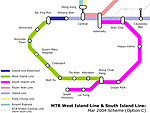
The Pink Line shows the revised South Island Line (East). |
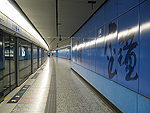
Admiralty Station Platform on the South Island Line. |
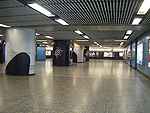
The Interchange course at Admiralty station. |
| Stirling-Alloa-Kincardine (SAK) Project, | ||

Construction of the rail track from Sterling heading towards Alloa. |
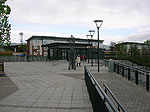
Alloa Station. |

The Forth Rail Bridge. |
| Stockholm City Line | ||
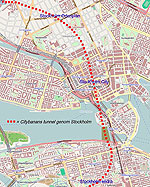
Map showing Citybanan tunnel located in Stockholm. |

Commuter traffic from Stockholms main line will be diverted to the new tunnel upon completion in 2017. |
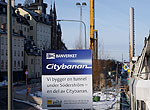
Progress of Citybanan tunnel construction in March 2009. |
| Strasbourg Light Rail | ||
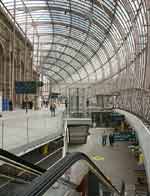
For many the gateway to Strasbourg's tram system is via the entrance beneath the new SNCF station extension. |

Services are operated by two types: Bombardier Eurotram (left) and Alstom Citadis. |

Both tram types have utility areas and afford passengers ease of movement and rapid loading (pictured: Eurotram). |

Four of the five lines pass through the Homme de Fer stop in the city centre. |
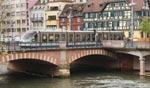
By reducing road traffic, the tram system has helped maintain the attractiveness of Strasbourg's centre. |

Opened in November 2007, a Line E extension serves the European Community buildings in north-east Strasbourg. |
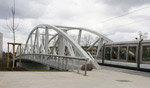
The bridge at Elmerforst, part of the Line B extension, opened in January 2008. |

With keen fares on an extensive integrated system, CTS provide a service that is geared to discouraging private vehicle use. |
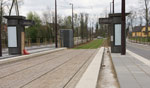
Showing characteristic reworking of road space and decorative plantings, Borie stop on the Line B extension, due to open in summer 2008. |
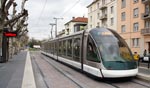
An extension east from Line D terminus, Aristide Briand (pictured), to Kehl would add an international aspect to the Strasbourg system. |
||
| Stuttgart Light Rail Developments | ||
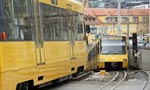
Accounting for less than 20% of the route length, most of the in-tunnel sections are beneath the city centre. |

The two-level platforms are a legacy of Stuttgart's transition from tram to modern light rail. |
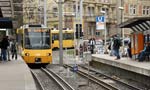
The modern fleet requires access from high platforms, a feature of Stuttgart streets. |
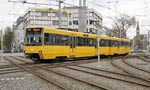
This elaborate street level junction is at Bad Canstatt, home of the new SSB tram museum to open in 2008. |
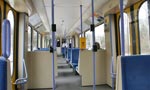
Specified by the operator, the DT8 fleet has an uncluttered and bright interior. |
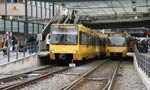
Some Stadtbahn sections carry several lines, thus providing a very intensive service. |
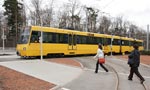
The rebuilt high-level stop at Ruhbank features a turning circle for heritage trams using the scenic U15 route. |
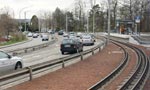
Freedom of conflict between road and rail traffic remains a guiding principal of the light rail project. |
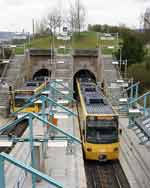
As here at the Pragsattel Stadtbahn interchange, many tunnel sections are opened out to provide open-air stops. |
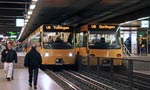
The Hauptbahnhof Stadtbahn station is one that will need complete reconstruction to accommodate work on the 'Stuttgart 21' project. |
||
| Suvarnabhumi Airport Link | ||
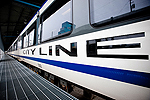
The SA City Line provides services parallel to SA Express. |

The SA Express is a non-stop service. |

The Makkasan station. |

The SARL has nine train sets. |
The SARL runs on standard gauge. |
The rail system gas eight stations. |
The trains are operational from 6am to midnight. |
||
| Sydney Metro Light Rail | ||
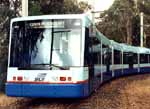
The Variotram pictured before delivery from its builder Adtranz. |
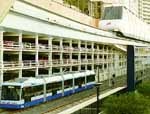
A Variotram alongside a Darling Harbour monorail train. |
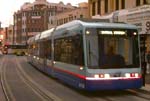
Tram stops in Capitol Square, Sydney. |
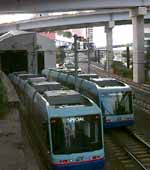
The Sydney LRT maintenance depot with trams ready for services. |
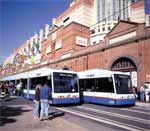
Trams pass on the street in Sydney. |
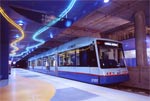
A Variotram pauses at one of the underground stations. |
| Tel Aviv Light Rail Metro | ||

Mass transit is seen as the way forward for Tel Aviv, which has a growing population. High frequency services are planned. |
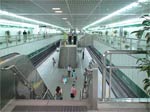
There will be ten underground stations on the Red Line. Modern mass transit stations are now bright and airy affairs. |
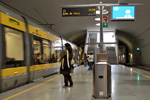
Consortium member Soares da Costa was involved with the Porto Metro, also a mix of in-tunnel and surface light rail operations. |

Den Haag-based HTM has been involved in the Tel Aviv project. |

The rolling stock consortium member is Siemens, with recent light rail products including the Combino series and the S70/Avanto. |
|
| Tenerife Light Rail System | ||
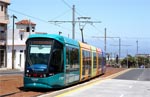
Tenerife's Citadis variant has all axles powered to deal with the line’s extreme gradients |
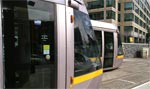
Like Dublin's Red Line, increasing demand may lead to extension of the version originally delivered. |

The striking livery features a different colour for each module. |
| Thai-Laos Rail Link | ||
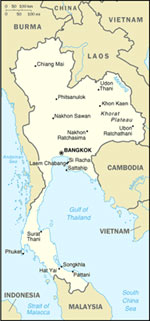
The Thai-Laos rail link is the first line connecting the two countries and is seen as a mutually beneficial venture. |

Laos exports agricultural products and timber to Thailand, and imports construction materials and consumer products from Thailand. This will be made significantly easier through the construction of the rail link. |
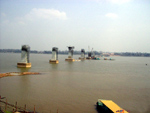
The first phase of the Thai-Laos rail link was completed in March 2009, with the second phase, as an extension of the railway line, under review. |
| Thessaloniki Metro | ||

The forerunner of Thessaloniki's new automatic trains, a London Docklands Light Railway unit. |

Although the trains are automatically operated, staff are often used for added passenger security. |

The absence of driving controls means passengers can have an uninterrupted forward view. |

The panel which operates the Seltrac automatic control system. |

A diagram showing how the Seltrac system operates. |

Staff in the central system management centre monitor all train movements. |

Like London's, Thessaloniki's twin-car trains can be coupled together for added capacity in peak periods. |

AnsaldoBreda will supply vehicles for Thessoloniki metro – they may resemble that company's products for Copenhagen's driverless system. |
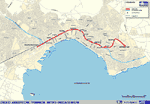
System map. |
| Toronto Streetcar | ||
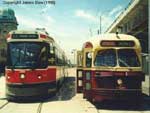
A modern Toronto LRV stands alongside an older PCC car. |
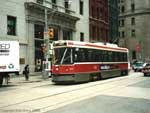
An eastbound LRV at King and Yonge in 1999. |
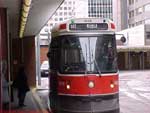
A CLRV car calls at St Clair station. |
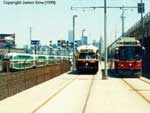
Two TTC streetcars are passed by a GO suburban train. |
||
| Tram-Train Trials | ||
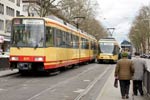
The first and most comprehensive tram-train network, Karlsruhe has mainline approved stock running alongside trams through city streets. |
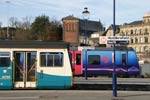
Northern end of the designated trial line, Huddersfield's main traffic is on the busy Manchester-Leeds route. |
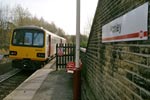
New tram-trains are due to replace the mainly Pacer-operated Huddersfield-Sheffield line. |
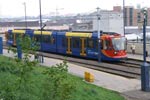
Sheffield's Supertram network may be used in a second trial phase, but a physical connection here at the mainline railway station is not envisaged. |
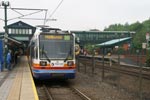
The Huddersfield line enters Sheffield to the far right of this view of Meadowhall Interchange, ruling out a Supertram connection for the trial period. |
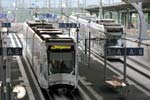
Although not running services over two systems, the UK trial will feature the diesel hybrid mode as used for part of the Kassel network. |
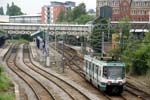
Some commentators feel a more useful trial would be through services from Chester to Manchester, joining Metrolink here at Altrincham. |
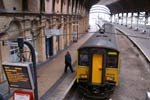
Initially anticipated as the first UK tram-train application, supporters are pressing for York (pictured) to Leeds via Harrogate to gain the format. |
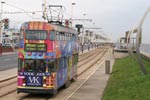
With a connection built at Starr Gate (south of this view), dual mode vehicles could provide greatly improve coverage by Blackpool-Preston services. |
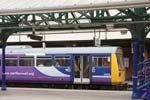
Project partner Northern Rail is seeking a supplier of tram-trains suited to UK infrastructure. |
||
| Tunis Light Rail Development | ||
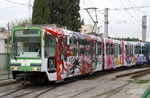
Part of the light rail project's inception, the 134 Düwag units are the mainstay of Tunis Métro services. |
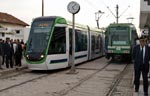
Transtu's bus routes carry many more passengers than their rail services. Line extensions will increase the number of mode interchanges. |
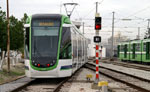
Line 1 to Ben Arous (pictured) saw the introduction of Citadis units to revenue service in September 2007. |
The two vehicle types on Tunis Métro operate side-by-side on the network. Some line modifications are required for Citadis operation. |
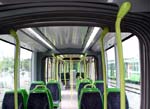
Modifications for local conditions include heat-resistant roof panels, window coatings, added dust protection and livery in the operator's colours. |
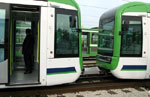
The uni-directional Citadis units operate as pairs with a combined capacity of 668. |

Seen at Tunis Marine depot, Citadis units like M410 mark a new era of passenger accommodation on the Métro network. |
||
| Turin Metro | ||
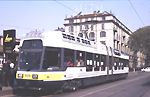
To maximise interior space, the vehicles’ propulsion and electrical equipment is mounted both under the floor and in the roof. |
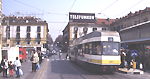
The newer light rail vehicles have low floors to make entry at street level easy. |
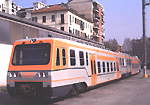
Experiments have been carried out with other partial low-floor designs. |
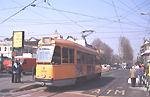
The modern vehicles can be seen close to some of their much older predecessors. |
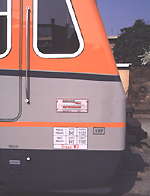
Close-up of the lower cab section of one of the low-floor vehicles. |
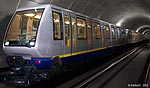
46 VAL 208 trains are on order from Siemens for the Turin Metro. |
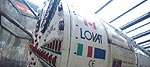
Three Tunnel Boring Machines are at work to ensure tunnels are completed for the 2006 Winter Olympics. |

55 Alstom Cityway Light rail vehicles are being introduced on upgraded routes. The seven-section LRVs can carry 273 passengers. |
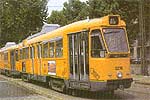
Many older trams will be retired as Alstom Cityway LRVs come into service on upgraded routes. |
| Valenciennes Tram System | ||
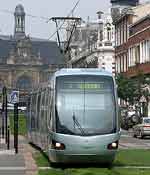
Clemenceau tram stop. Extensive use is made of grassed track alignments to control noise and soften the visual impact. |
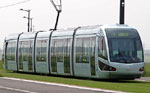
Both of the original terminals in semi-rural surroundings. |
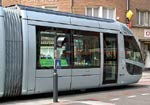
The system's many road crossings are signalled for priority to trams. |
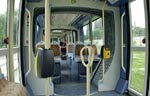
Low floors and easy access makes the Citadis 302 ideal for frequent stops. |
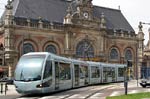
Trams serve the busy and impressive Valenciennes railway station. |
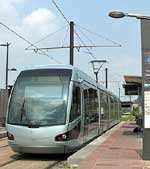
The stops include a shelter, information points and real-time indicators. |

Two Citadis trams pass on the new Dutemple to Denain extension, a former mineral railway alignment. |
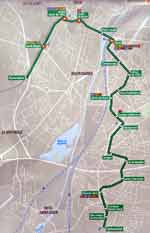
A map of the modern tram network. |
|
| Vasona Light Rail | ||

The Vasona Light Rail project. |

The Vasona Light Rail in service. |

The line will use low-floor Light Rail Vehicles (LRVs) and will be fully accessible for the disabled. |

VTA and local officials mark the start of construction in March 2001. |

The site where the light rail will run at San Jose Diridon station. |

The service will be enhanced with these low-floor LRVs. |

Chart showing the project schedule and cost. |

On Contract C345, this is a cut-and-cover tunnel being built at Cahill street, east of Diridon station. |

Union Pacific’s track is being relocated and rebuilt in Campbell. |
| Waterloo Railway Terminus | ||
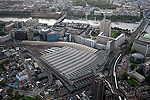
Waterloo station aerial view. |
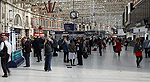
Waterloo Station's main concourse. |
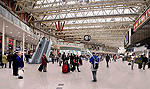
Artist's impression of the proposed new balcony of the Waterloo station. |
| Willesden | ||

Willesden Junction is at the heart of the rail network in north west London. |

The work on the west coast mainline goes well beyond Willesden Junction. |

The signalling equipment on the line is in great need of replacement. |

Part of the intention is for the new line to be able to use tilting trains. |
||
| Zurich Tramway Developments | ||
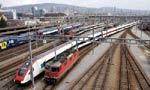
Travel by rail around Zurich is an inescapable aspect of life and the landscape. |

Popular regard for the network is indicated by the 'Birthday Tram' carrying messages by the public celebrating 125 years of system operation. |
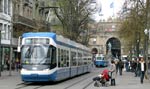
On two occasions Zurich's citizens voted to retain and publicly finance surface-running trams over a metro alternative. |
A relic of the abandoned metro scheme, the tram tunnel portal at Milchbuck. |
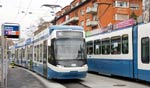
After troubled project development, the Bombardier/Alstom Cobra is in mainstream operation and will be delivered at least to 2010. |
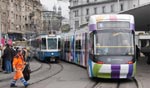
Bellevue: one of several large stops providing interchanges for passengers on Zurich's tram network. |
Escher-Wyss-Platz will be the eastern connection to the network for the forthcoming Zurich-West extension. |
South from Escher-Wyss-Platz, the Zurich-West line will parallel an existing freight link to the heavy rail system at Bhf Hardbrücke. |
The Auzelg line opened in 2006 indicates the type of light rail projects that will further extend the reach and capacity of Zurich's network up to 2025. |