Metros
| Al Mashaaer Al Mugaddassah Metro Project | ||
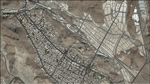
The Al Mashaaer Al Mugaddassah Metro Line project will connect the holy cities of Mecca, Arafat, Muzdalifa and Mina. |
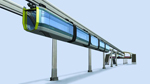
The monorail project consists of five-car train sets with separate areas for men and women. |
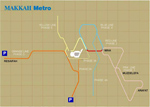
The Mecca metro project is under construction in several phases, and should be complete by 2011's Hajj pilgrimage. |
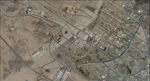
The first phase of the project includes the four-line loop with a network of pick-up and drop-off stations between Mina and Arafat. |
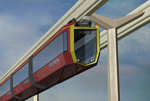
The five-car sets for the monorail are being supplied by UK firm MonoMetro. |
The Mecca project is aimed at easing congestion in times of pilgrimage as well as providing extra transport for Saudi residents. |
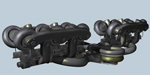
The vector bifurcation bogie is articulated at the vertex between either side with steel wheels running on steel rails. |
||
| Amsterdam Metro North-South Line | ||
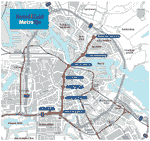
North/South Line will connect the residential area in the north of the city to the office locations in the southern part of the city, the missing link in the present subway system. |
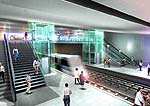
The North/South Line will run every four minutes during rush hour, every five minutes during the day and every ten minutes in the evening. |
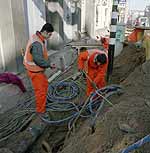
Both new and innovative, and tried and tested construction techniques are being employed in the development of the North/South metro line. |
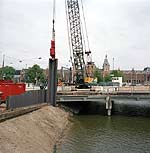
The TBM will be put together in the construction site located in the water of the Damrak. The TBM has a diameter of 6.5m as well as a length of 40m. |
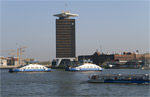
Line 52 will pass under the River Ij, currently served by GVB ferries. |
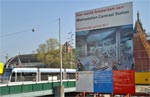
Amsterdam Centraal is a construction site for Metro and other transport improvements. |
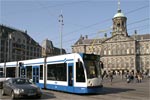
The busy Dam Square will be served by the Metro at Rokin station. |
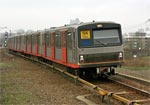
Vehicle order will cover Line 52 and replacements for first generation Metro stock. |
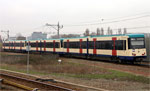
Line 52 will link with Line 50 and many other transport services at the important Zuid NS interchange. |
| Ankara Metro | ||
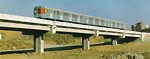
The 36 trainsets were supplied by Bombardier, the trainsets comprise of three cars. |
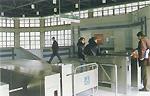
The ticketing system performs with multi-ride magnetic cars. |
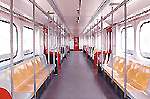
The interior of the new metro passenger vehicles. |
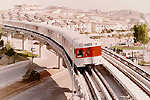
A heavy-metro trainset running across one of the many elevated sections of the new Ankara heavy metro. |
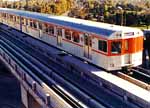
Elevated sections of the new heavy metro line are essential to allow the smooth running of the city's existing road traffic. |
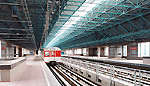
New stations are considerably larger, lighter and more spacious than previously. |
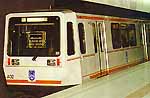
An Ankara light-metro train, supplied by Breda of Italy. |

This map shows the extensions that are under construction in 2006, together with the extensions to the Ankaray network that are planned. |
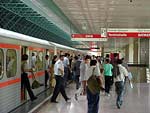
The Ankara Metro has proved popular, and is efficient through the use of automatic trains. |

The Ankaray light rail system is independent of the Metro system, with trains built by Italian firm AnsaldoBreda. |
||
| Athens Metro | ||
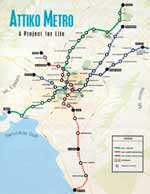
Map of the Athens metro. |
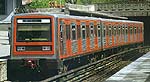
A five-car train built in the 1980s for use on the Athens-Piraeus route. |

A train pulls into a crowded underground station. |
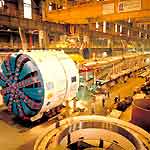
One of the machines used to bore the extensive tunnels on the Athens Metro. |
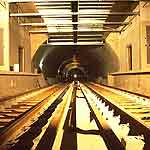
Athens metro tunnel. |
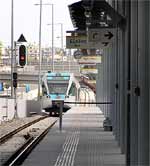
Neratziotissa is an interchange between Metro Line 1 and the suburban railway for the airport and Athens’ main heavy rail station. |
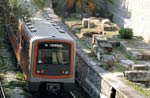
A Line 1 train in central Athens near Thiseio station. |
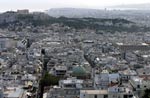
Public transport has helped unclog congestion on the densely packed streets of Athens and adjoining Piraeus. |
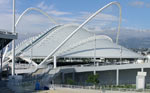
The Athens Olympic main complex is served by Eirini station on Line 1. |
| Atlanta Metro Rail Project | ||
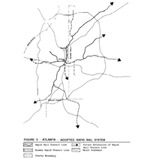
The initial plan of MARTA rail system from the 1970s. |

MARTA buses connect to all 38 stations. |
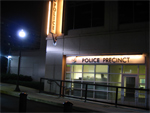
MARTA's 300-strong police department is the ninth-largest in Georgia. |
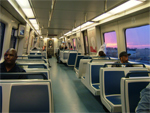
The interior of a Marta CQ312 car. |
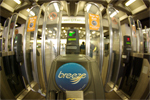
Fish-eye Breeze fare gates. MARTA converted to 100% SmartCard technology with Breeze in 2006. |
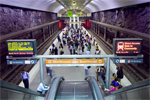
Peachtree Center station was carved out of solid gneiss rock and lies 36m underground. |
| Bangkok Metro | ||
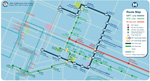
Bangkok Metro has 18 stations so far and is 20km long. |
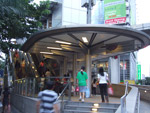
The metro was officially opened 3 July 2004 by HM King Bhumibol and Queen Sirikit. |
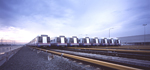
19 three-car trains have been supplied by Siemens. |
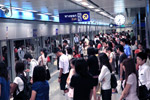
There are three types of platforms within the Bangkok MRT System. |
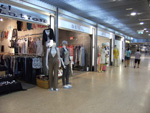
Some stations on the line have a retail area level. |
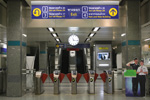
An average of 2,000,000 passengers use the metro each day. |

The Operations Control Center controls and commands the whole system including the stations and trains. |
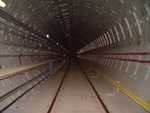
The metro system is set to be extended with a number of added lines. |
|
| Beijing Olympic Village Rail Link Construction | ||
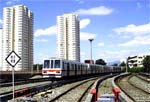
The 2008 Olympic Games saw massive investment in the Beijing Metro. |
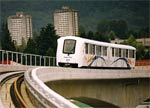
A brand new driverless route is being built to serve Beijing Capital International Airport using Bombardier ART Mk II vehicles, like these on the Vancouver Sky Train, Canada. |

Video feed screens allow drivers to keep a close eye on station activity. |

A varied selection of rolling stock designs are in service on the Beijing Metro, including these modern units. |
||
| Beijing Subway Development | ||
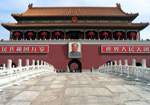
China and its capital have transformed their identity and economic standing radically in recent decades. |
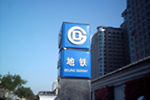
A relative latecomer to rapid transit, Beijing's Subway is in part now seen as a way to handle city expansion and provide more reliable journey times. |
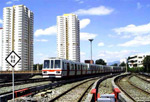
Beijing Subway has a large variety of rolling stock in operation on the various lines. |
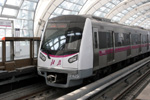
Opened in 2007, Line 5 is representative of the modern expansion of the system. |

Paper-based ticketing has given way to revenue control by barriers activated by cards and magnetic ticket strips. |

Stimulated by the 2008 Olympic Games, Beijing looks set to become the world's biggest metro system. |
| Berlin U-Bahn Upgrading | ||
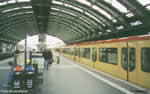
Connections with the S-Bahn and DB networks are made at stations such as Berlin Ostbahnhof. |
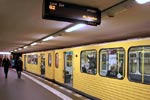
Kleinprofil Type G stock at Potsdammer Platz on U2, a line restored after Berlin's reunification. |
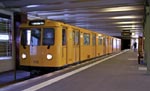
Sub-surface Rathaus Schöneberg station on Kleinprofil U4, Berlin's shortest U-Bahn line. |

A legacy of the system's evolution, the small Kleinprofil trains are better experienced when not crowded. |
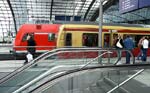
Showpiece interchange Berlin Hauptbahnhof will not receive U-Bahn trains until the opening of U55, now due in 2008. |
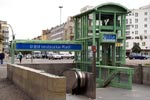
Like many stations, Innsbrucker Platz shows signs of improved access for travellers. |

The extensive U55 (to be U5) workings have become a long-term feature on Unter den Linden near the Brandenburg Gate. |

To help public relations during the U55 disruptions, explanatory notices and observation panels are provided around the workings. |
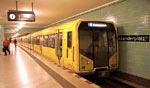
Grossprofil Adtranz/Bombardier Type H at Alexanderplatz, one of the system's biggest interchanges and one end of the U5 extension project. |
| Bilbao Metro | ||
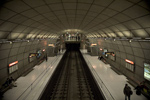
The metro is completely underground, with 38 stations and nine substations currently in service. |
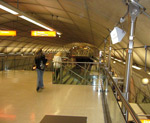
About 86 million passengers used the Bilbao Metro in 2007. |
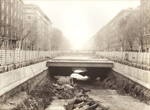
The ridership drastically increased during 1998 to 2002 as the network was expanded. |
| Boston 'T' Metro | ||
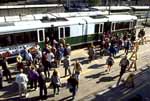
'T' services are particularly busy, exemplified by Fenway station. |
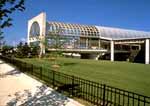
The futuristic exterior of Ruggles station. |
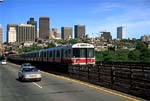
'T' suburban services are clearly segregated from local road traffic. |
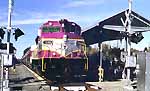
The $530m old colony restoration is a model of contemporary commuter rail technology. |

Haverhill is a terminus of commuter rail lines from the city centre. |
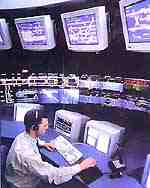
The 'T' System's new operational control centre. |
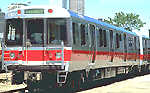
Bombardier Transportation red line number three rapid-transit car for Boston, United States. |
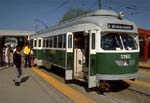
Classic PCC trams are still in evidence, as seen at Mattapan Halt. |
|
| Brasilia Metro | ||

The Brasilia metro system is made up of two lines, Green and Orange, which run alongside each other until breaking apart at Aguas Claras. |
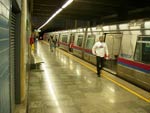
Operator Metro-DF is planning further expansion of the system, with a new rolling stock contract agreed with Alstom and plans for extensions and modernisation. |
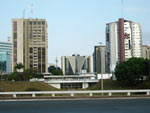
Residents of Brasilia's 'satellite cities' depend on public transport, so smooth running and upgrades of the metro system are essential. |
| Bremen S Bahn | ||
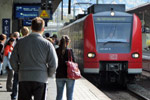
Created in Germany and widely adopted, the S-Bahn format can raise the profile of local rail provision and give more service consistency. |
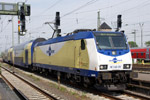
Bremen and Niedersachsen have interests in the Metronom company which has replaced DB on some regional express routes in these states. |
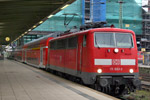
Under new branding and with new stock, this Bremen-Vegesack service will join route S1of Bremen S-Bahn. |

NordWestBahn (NWB), operator of the forthcoming Bremen S-Bahn, already has a presence in north-west Germany. |
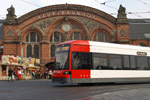
The hub of the new S-Bahn will be Bremen Hbf, providing long-distance rail connections and interchanges with the local bus and tram network. |
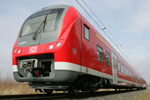
The selection of the Alstom Coradia Continental marks a departure in the type of stock used on Germany's S-Bahn networks. |
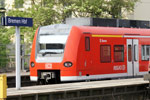
Transition from DB local services to the S-Bahn format will start in 2010. Operation by NWB is contracted until 2021. |
||
| Brussels Metro and Tram Network | ||
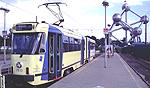
New orders in 2008 for more Bombardier Flexity Outlooks will remove high-floor PCC trams from the system. |
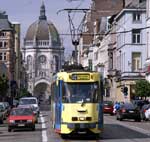
Trams are a long-standing part of the Brussels street scene – a high-floor PCC approaches Botanique. |
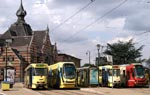
Schaerbeek station in north Brussels, an important interchange between bus, tram and heavy rail services. |
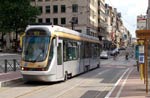
Specially designed for Brussels, the T2000 series was the city's first low floor stock. |
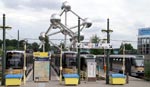
PCC and the new seven-unit Bombardier trams in 'art-nouveau' livery are seen at Heizel terminus by the 1958 World Fair site. |
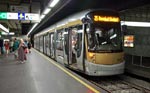
The central 5.5km pre-metro section is due to have fewer tram routes but more services by modern stock like this 3000-series Flexity Outlook. |
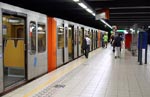
Extensions like that to Roi Baudouin at the north of Line 1A have characterised the evolution of Brussels’ Metro. |
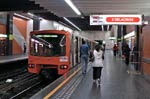
Seen at Simonis, Line 2 will be the next Metro extension to Gare de l'Ouest. |
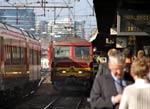
Infrastructure work has started to enable the creation of a high-frequency cross-city RER network. |
| Bucharest Metrorex | ||
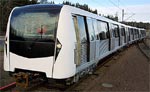
An additional six trains have been ordered by Metrorex from Bombardier Transportation. They will be built to the Movia design. |
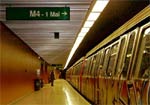
The Bucharest Metro first opened in 1979 and has been regularly extended since. |
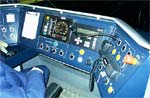
The drivers control desk of a Movia set on the Metrorex system. |
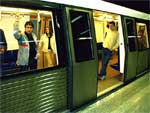
The metro system moves around 800,000 passengers each week. |
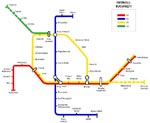
A four line metro system crosses Bucharest city centre. |
|
| Budapest Metro Four | ||

The route of the new Budapest metro line. |
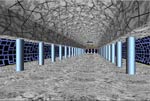
A Budapest station platform on the new route to DBR Metro's virtual reality projection. |

Construction at the Budapest site. |

Budapest has an extensive tram network. |
||
| Buenos Aires Metro | ||
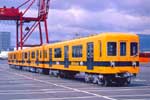
One of the new Japanese trains for Line D shortly after delivery. |
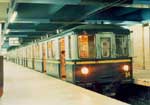
An older Siemens-built car on Line C. |
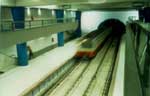
Olleros Station on Line D. |
| Cairo Metro | ||

With the first two lines of the Cairo Metro already completed, Line 3 is now underway to increase capacity. |
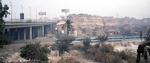
Operational since the late 1990s, Lines 1 and 2 run from north to south and north to south-west respectively. |
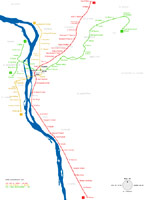
Line 3 will be 33km long with 29 stations, with an estimated capacity of 1.8 million passengers per day. |
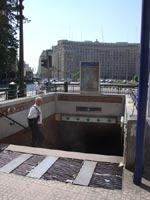
Another three lines are expected to be added to the Cairo Metro by 2020. |
||
| Capital Metro, Texas | ||
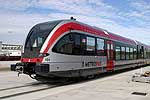
Six stadler GTW 2/6 diesel light rail vehicles will transport an estimated 2,000 passengers per day. |
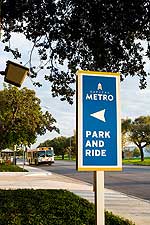
One of the goals of the Capital Metro is to reduce the number of cars commuting into the city every day. |

The Capital Metro currently only has one line between Austin and Leander in Texas. |
| Caracas Metro | ||
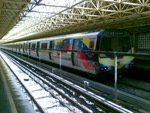
The Caracas metro system incorporates four lines. |
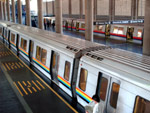
Las Adjuntas station on line 2 of the Caracas Metro. |
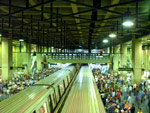
Plaza Venezuela on line 3. |
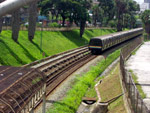
The Caracas Metro began operations in January 1983. |
||
| Chengdu Metro Project | ||
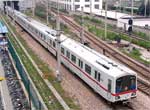
The Chengdu network will ease congestion and pollution in the city, and aid regeneration. |
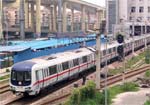
A fleet of 22 three-car trains is expected to enter service when Line 1 operations begin in October 2010. |

The construction of the metro will bring mass transit to Chengdu's 11 million population. |
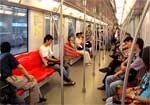
The Type B rolling stock supplied by the Changchun Car Company are 2.8m wide and 19m long. |
||
| Chennai Metro | ||

Chennai Metro Phase 1 is based upon has two corridors providing cross-mode interchanges. |
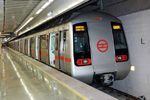
Delhi Metro Rail Corporation is highly influential in the development of the Chennai system. |
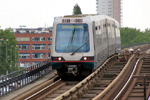
With interests in the Indian market and an established metro supplier, Bombardier is a potential supplier to Chennai. |
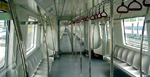
Chennai metro stock is likely to feature high density layouts to maximise the system's capacity. |
||
| Chicago Transit System Capacity Enhancements | ||
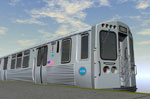
An artist’s impression of the exterior of the new Chicago Transit cars from Bombardier. |
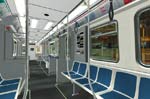
The internal layout has been changed to allow more passengers to stand at peak times. This is an artist’s impression of the new car interior. |

The Chicago Metro has a history stretching back more than 100 years. Although some of the original infrastructure is still in use, modernisation is taking place. |
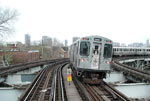
The elevated nature of the Chicago Metro has earned it a landmark status within the city. |

The Chicago Transit Authority is responsible for the city’s metro, which is the second largest in the USA. |

Chicago's growth was greatly stimulated by the railways. Rail retains a strong freight and passenger presence. |
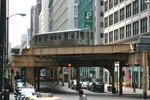
Subject to a long-term upgrade, the Brown Line is one of the routes using the Downtown Loop. |
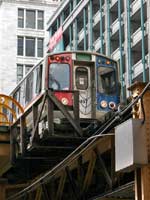
A westbound Green Line train on the Chicago Downtown Loop. |
|
| Citybanan Metro - Stockholm | ||
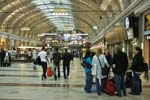
The original Stockholm Central trainshed was outgrown and put to other uses. Citybanan will restore capacity for mainline use on the present platforms. |

The present approaches to Stockholm Central are used by freight, long-distance and the numerically dominant commuter trains. |
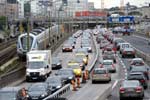
Stockholm's islands create challenges for handling modern traffic levels. |
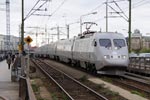
All platforms at the southern throat of Stockholm Central converge on two tracks as they have since 1871. |
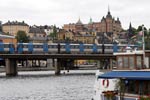
Stockholm's metro uses dedicated tracks and a different system to that of the national network that accommodates the commuter lines. |
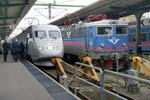
Capacity limits and delays in Stockholm can affect the national network, as at the second city of Gothenburg. |
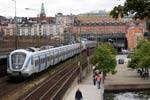
SL commuter trains like this X60 approaching Sodermalm island will be rerouted via Citybanan. |
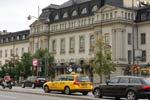
The new Station City on Citybanan will be 40m below the surface on this city centre side of Stockholm Central. |
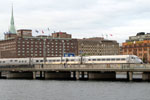
Longer distance services like the premium X2000 and its successors will continue to use the surface route to Stockholm Central. |
| Copenhagen Metro | ||
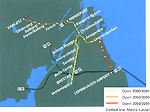
Route map of the Copenhagen metro network. |

Ansaldo Trasporti built the trains for the Copenhagen metro. |
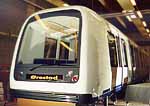
The futuristic face of rapid transit in Scandinavia. |

Underground surveying and navigation methods are based on laser technology. |
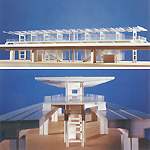
A model showing an elevated station with a cross section. |
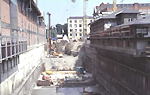
The cut-and-cover section of metro line squeezing past the original Fredriksburg Station. |
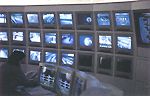
Platforms are monitored via CCTV from each station's control room. |
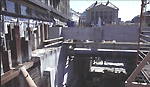
Excavation works for the station box of the city centre station at Kongens Nytorv. |
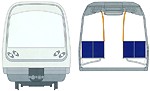
The train front and cross section. |

The 34 three-car trains were designed in Italy by Giugiaro. |
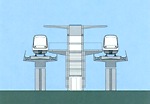
A cross section of elevated track and station. |
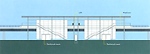
An artist's impression of the elevated station in Orestad. |
| Delhi Metro | ||
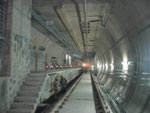
A large percentage of the Delhi Metro is underground because of space constraints. |

Most of the four-car trains were constructed in Korea. |
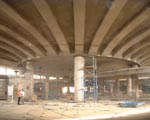
Stations have been designed by a variety of world companies, including Mott Macdonald. |
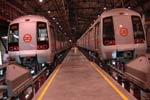
Purpose-built maintenance facilities ensure high fleet availability. |

Information systems are in Hindi and English, and a tactile yellow line on platforms marks the safety limit. |
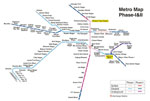
Delhi Metro map, phases 1 and 2. |
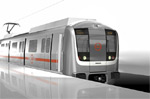
To be assembled in India, new Bombardier units represent a change of rolling stock supplier for the Phase 2 development. |
||
| Diabolo Project, Brussels | ||

Turning the present terminus into a through station, the Diabolo Project is aimed at encouraging rail use by passengers and staff at Brussels Airport. |
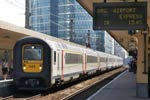
Current services to Brussels Airport are a mix of extended national routes and more Brussels-based services (Brussels Nord). |

Brussels' northern motorway ring and junctions near the airport are prone to traffic hold-ups. |
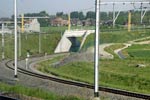
Part of Diabolo, the Nossegem Curve allowing for direct services to/from the Leuven direction opened in late 2005. |
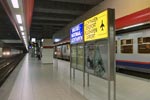
Tunnels to the north-west will put the airport station on a through route connecting with a new Brussels-Mechelen/Antwerp Line25N. |
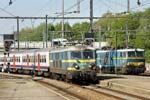
Line 25N will leave the present route north of the dense railway installations at Schaerbeek. |

Platform extensions will allow for longer formations like Inter City trains to serve the airport station (Brussels Midi). |
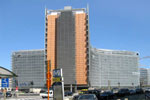
The European Quarter should gain rail direct connections with Brussels Airport and beyond (EC Berlaymont and Schumann Metro). |

Diabolo infrastructure would allow for access by high-speed trains like Paris-Brussels-Amsterdam, although no plans are published (Thalys, Brussels Nord). |
| Doha Metro | ||
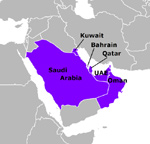
Qatar is surrounded by the Persian Gulf and bordered by Saudi Arabia in the south. |
Doha Metro railway lines will run through tunnels, overhead railways and at the ground level. |
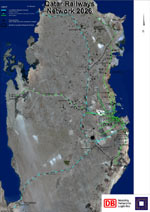
The master plan involves development of the metro railway system in Qatar and long-distance and freight lines connecting the emirate with rest of the Gulf Cooperation Council. |
| Dubai Metro | ||
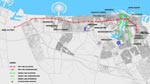
Dubai metro is one of the most advanced urban rail systems in the world and will be a catalyst for tourism, financial and economic growth. |
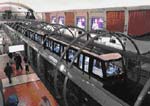
All stations will have platform doors to increase safety and allow a more comfortable, climate controlled environment for passengers. |
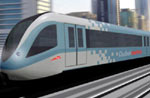
Artist’s impression of a Dubai Metro train |

The trains have a three-class layout and sections of open floor space. |
||
| Dublin Metro North and Metro West | ||
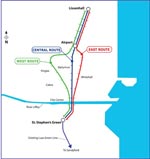
The three proposed routes for Metro North. The ‘Central’ axis is the preferred option for the new line which is to open in 2012. |

Luas Green Line terminus, St Stephen's Green, will be southern end of Metro North and a stop on the projected DART Interconnector. |
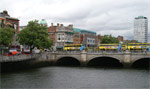
O'Connell Bridge Metro North station will serve a Dublin retail and tourist hotspot. |
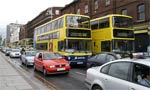
Dublin Metro is a key part of the Transport 21 programme for a comprehensive system to reduce pollution and reliance upon roads. |
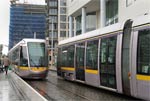
Already served by Luas, Tallaght will become southern terminus of Metro West. |
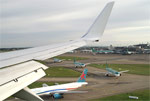
Both Metro lines will benefit passengers using Dublin's rapidly expanding airport. |
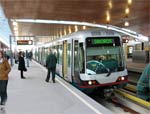
Design studies indicate a train-like operation for Metro North (as here), with Metro West more akin to modern tram services. |
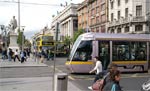
Metro North will pass under this part of O'Connell Street near the Luas Red Line Abbey Street stop. |

Like Alstom with Luas, fellow would-be Metro North supplier CAF is already in Dublin with its commuter DMUs. |
| East London Line Extension (ELLX) | ||
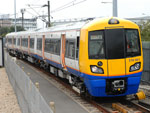
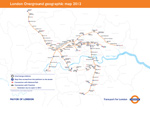
The East London line extension is part of the new London Overground network aimed at providing an orbital railway link around London. |

The ELLX was officially opened to the public by London Mayor Boris Johnson on 27 April 2010. |
Bombardier supplied 23 new four-car Class 378/1 Capitalstar trains. |
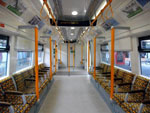
The total investment of the first phase of the ELLX project is £1bn. |
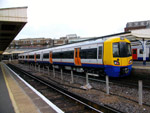
London Overground will connect 20 of London's 33 boroughs. |
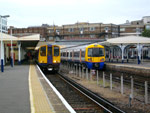
A further extension of the line from Dalston Junction to Highbury & Islington is scheduled for completion in 2011. |
| Gare du Nord, Paris | ||
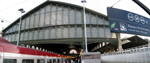
Gare du Nord station as seen from the Thalys platform. |
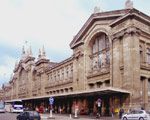
The front of Gare du Nord railway station. |
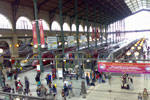
Gare Du Nord interiors. |
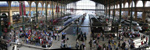
Panoramic view of the Gare du Nord arrival hall. |
||
| Guangzhou Metro | ||

Guanghzou metro route map. |
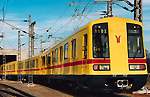
Rolling stock was supplied by Siemens-AEG of Berlin. |
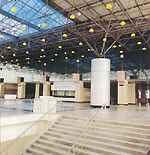
The concourse at Xilang station on line one of the Guangzhou metro. |

North of Keng Kou Station line one goes underground and passes the Pearl River north of Fang Cun Station. A road tunnel, which was opened to the public in 1994, has been constructed together with the metro tunnel. |
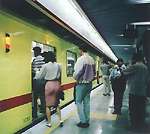
Huang Sha station on line one of the Guangzhou metro. |
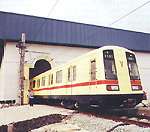
A Guangzhou metro train leaving a maintenance depot. |
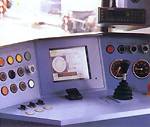
The driver's console. |
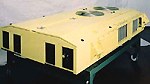
Air conditioning units for the Guangzhou metro trains were supplied by Faively transport. |
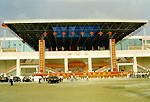
From Xi Lang Station, line one runs northbound along Hua Di Road for approximately 2km. On both sides of Hua Di Road new housing and commercial facilities are under construction or have recently been completed. |
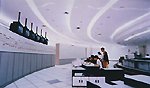
The Guangzhou metro control centre. |
||
| Gurgaon Rapid Metro Rail Project | ||
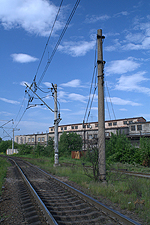
Gurgaon Metro Rapid Rail Project is a 6.1km long rail route that will connect the Delhi Metro Line 2 with the Gurgoan Metro. |
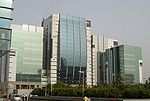
DLF Phase 3 Cyber Greens. |
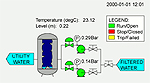
Graphical presentation of a typical SCADA system. |
| Hanoi Metro | ||

The metro project is part of the Vietnam Ministry of Transport's master plan, which aims to reduce the use of private transport and enhance the urban environment. |
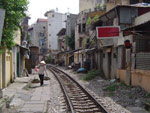
The feasibility study for a Hanoi metro pilot route / line was completed in October 2005. |
The project is being coordinated and financed by several organisations including the World Bank and the Asian Development Bank. |
| Helsinki Metro Expansion | ||
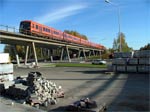
Bombardier built the M200 trains in 2000–2001 for the Helsinki Metro. |
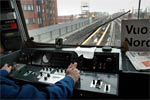
Helsinki City Council is aiming to equip the metro for driverless operation by 2011. |

The M100 trains were built in 1977–84 and are still in daily service. |
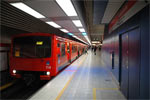
The Helsinki Metro is the most northerly system of its kind in the world. |
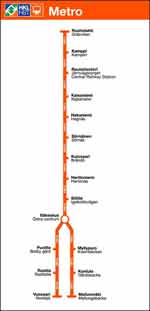
The Helsinki Metro system. |
|
| Istanbul Metro | ||
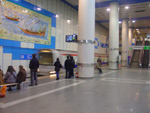
The metro is entirely underground and has a curved shape. |

The upgrade project includes extensions to the northern and southern ends of the metro's European side. |
The Metro is located in Istanbul, Turkey. |
| Kaohsiung Metro | ||
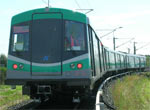
The first of the new Siemens-built trains for Kaoishung on test. |
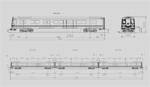
Diagram of the arrangement of the motor car and train formation for Kaoishung Metro. |
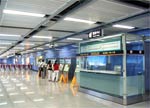
Automatic fare collection will be a feature of the Kaoishung Metro, together with automatic train operation. |
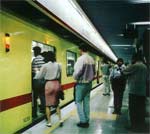
Massive population growth has driven the need to provide Kaoishung with a high-capacity metro system. |
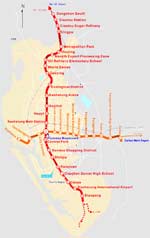
A map of the first two lines – Red and Orange – showing their alignments and stations. |
|
| Kolkata Metro East-West Corridor | ||
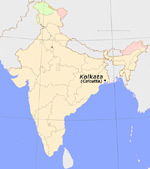
Kolkata, or Calcutta, is located in the northeast of India in the state of West Bengal. |
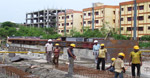
The Kolkata East-West corridor is expected to be fully operational by 2014. |

Included in the first phase of the project is an elevated section which is expected to open in 2012. |
| Kuwait Metro System, Kuwait City | ||
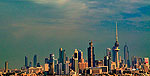
In 2007 Kuwait's population of 3.5 million contained two million non-nationals. This growth in immigration has contributed to the city's traffic problems. |
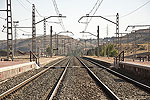
The 171km Kuwait Metro Rail line will run across the city and is part of the $25bn GCC railway project, which begins at Kuwait and ends at Muscat. |
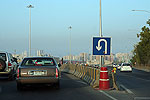
The Kuwait Metro Rail Project will help ease Kuwait City's traffic congestion problems. |
| Lahore Rapid Mass Transit Rail | ||
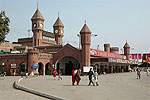
Lahore Railway Station. Phase 1 of the LRMTRP involves the construction of Green and Orange Lines while phase 2 constitutes construction of Blue and Purple Lines. |
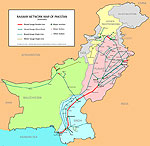
The rail network of Pakistan. The LMRTRP was first considered in the early 1990s by the Japanese International Cooperation Agency (JICA) to resolve the transport issues. |
The Lahore rapid mass transit rail project involves the construction of 97km rail lines staggered in two phases. |
| Lausanne Metro m2 | ||
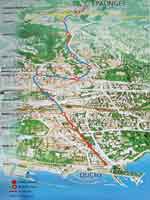
Designed to encourage multi-mode journeys, m2 will be the spine of the Lausanne public transport system. |
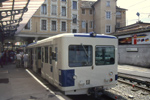
Although suited to handling extreme gradients, the Ouchy-Flon rack railway was limited in coverage and in need of equipment renewal. |
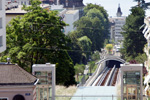
As viewed from SBB-CFF-FFS Lausanne, Grancy station and the m2 section to the southern terminus at Ouchy. |
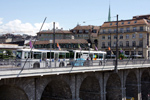
As near the new Flon station, trolley buses form a significant part of Lausanne's public transport. |
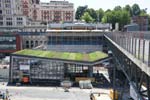
The new Lausanne-Flon interchange (centre) for m1, m2 and the LEB line is at low level near the former metro terminus (background). |
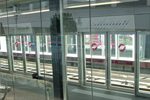
Stations feature platform screens with doors that automatically coordinate operation with those of the train. |
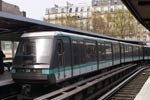
Lausanne will use a specially developed variant of the Alstom MP89 – a manually driven version on Paris Métro Line 1. |
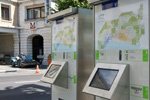
Part of Transports publics de la région Lausannoise, m2 will be covered by the Mobilis card for Vaud canton (Ouchy terminus redevelopment). |
|
| Lille VAL | ||
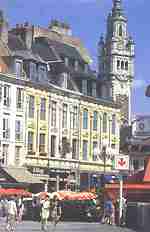
Lille was the first city in the world to adopt a new form of fully automated urban metro. |
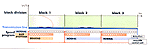
The VAL system operations schematic. |
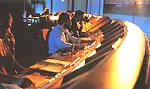
Controllers at work in the system's nerve centre. |
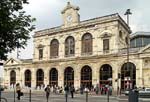
VAL lines meet local and regional SNCF services at Lille Flandres and TGV/Eurostar at the nearby Lille Europe |
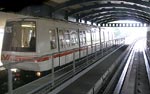
The earlier VAL206 vehicles operate all Line 1 services and operate Line 2 (shown here) with VAL208. |

Platform edges are covered by screens, with doors opening to coincide with those on the trains. |
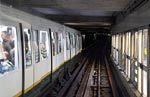
Just under a third of Lille VAL is underground, mainly in the central area. |
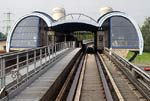
Like many VAL stations, Les Prés on Line 2 is built on a viaduct. Permanent way combines guidance, power and control systems. |
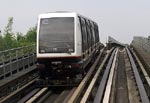
Like many VAL stations, Les Prés on Line 2 is built on a viaduct. Permanent way combines guidance, power and control systems. |
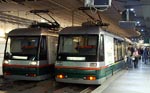
VAL links with the long-established ‘Mongy’ tramway at several points, including (seen her) Lille Flandres. |
||
| Line 14 Automatic Metro, Paris | ||

Not only effective public transport, the Metro is part of the visual identity of Paris. |
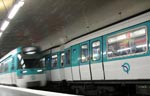
The core network and visual features of the Paris network were largely established between 1900 and 1935. |
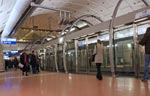
Original northern terminus, Madeleine, illustrates the very different look introduced by Line 14. |
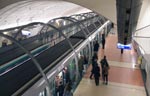
Differing from elsewhere on the system, platform edge doors and more circulation space feature on Line 14 stations. |
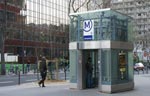
As at Olympiades, newest Line 14 station, low-level platforms require access via lifts and escalator flights. |

Line 14 operates at twice the average operational speed elsewhere on Paris Metro. |
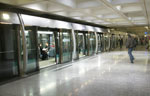
Automatic operation includes alignment for safe operation of platform edge doors: St-Lazare, the first extension of Line 14. |
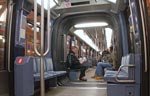
Line 14 trains are gangwayed throughout their length. |
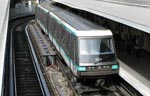
Already changed to the rubber-tyre format, Line 1 is due to be converted to automatic operation. |

Developed under the METEOR acronym, Line 14 is now represented as any other on the Paris Metro. |
||
| London Underground Jubilee Line | ||
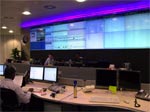
Tube Lines now operates the Jubilee, Piccadilly and Northern Lines. This is the control centre for the Jubilee Line. |
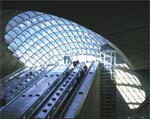
Canary Wharf station has an almost cathedral like feel with its high roof. |
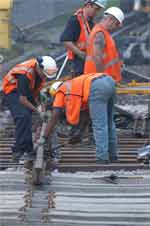
Jubilee Line operator Tube Lines is investing heavily in track improvements as well as station and rolling stock. |
| London Underground Major Regeneration Scheme | ||
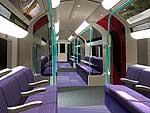
New trains will have bright, airy interiors. |
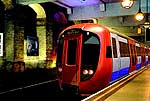
190 new trains will be built for the larger profile sub-surface lines. |
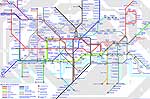
London has one of the most extensive metro networks in the world. |
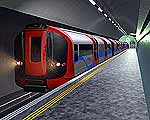
Metronet plans to completely replace the Victoria Line train fleet by 2009. |
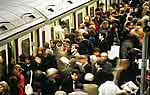
Around three million journeys a day are made on the 12 Tube lines. |
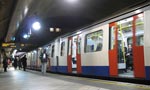
Regenerating London's Underground includes sections of the world's oldest metro system. |
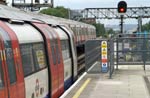
Over half of London Underground operations are above ground, using a combination of 'tube' and full-size stock, as here at Willesden Green. |

A rebuilt Wembley Park station helps to cope with crowds at the nearby football stadium, also a 2012 Olympics venue. |

One of the few to be built in the public sector era, Victoria Line infrastructure is being renewed and original stock replaced. |
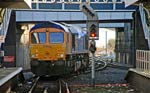
Maintenance and renewal was placed with two private sector companies. Metronet entered administration in 2007. |
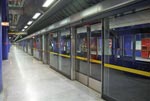
Including the modern extension to Docklands and the future Olympic site, the Jubilee Line is part of the Tube Lines contract. |
|
| Madrid Metro | ||

The impressive new Mar de Cristal station, under construction. |
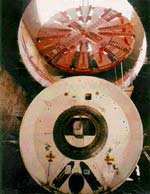
One of the boring machines that has driven the massive expansion of Madrid's metro network. |

One of the Series 6000 trains being built. |

One of the Series 6000 trains delivered from Adtranz-CAF during 1998-99. |
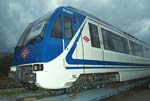
Another of the new trains. |
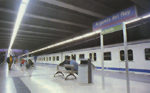
Arganda del Rey Station is modern, bright and spacious. |

Cab design is ergonomic, and the curved windscreen gives a good forward view. |
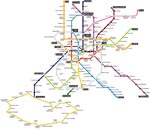
Map of the Madrid Metro. |
|
| Marseille Tramway and Metro Development | ||
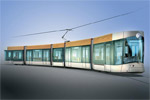
Artist's impression of the exterior of the new Bombardier Flexity Outlook trams for Marseille. |
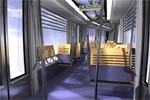
The interior of the new trams has been designed to fit in with the maritime and Mediterranean feel of Marseille. |

A line drawing of the new Flexity Outlook trams for Marseille. |

A Bombardier tram in service in Erfurt, Germany. The Marseille vehicles are based on this type of tram. |
||
| Milan Urban Transit | ||

'Peter Witt' tram by La Scala – the Ventotto is the numerically dominant type in the ATM fleet. |
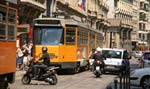
Often impeded by traffic, the tram network intensively covers the city centre. |

Deployed on long-established lines and the faster Metrotramvia sections, Ansaldo units are ATM's most modern tram. |
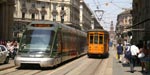
Eurotrams (retrospectively classified as Bombardier Flexity Outlook) were Milan's first low-floor trams. |
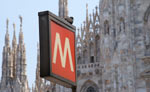
Two of Milan's three metro lines interconnect at the much-visited Duomo (cathedral), Galleria and La Scala area. |
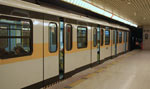
Expanding Milan's Metro coverage is vital if the public transport system is to realistically reduce car use. |
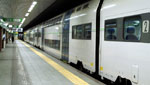
Many years in planning and creation, the cross-city Passante carries some of Milan's suburban rail traffic. |
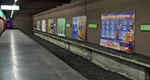
Providing interchange with suburban services and the Passante, the new Metro Line 5 will terminate at Garibaldi. |

Unlike Milan's larger airport, Malpensa, the older Linate is part of the city and will be Line 4's eastern terminus. |
| Moscow Metro | ||
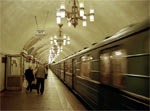
The Moscow Metro has many ornate stations on its 278km network. |
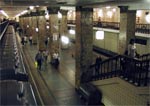
The majority of metro stations are underground, with a handful above. |
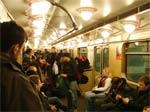
Severe overcrowding is a major reason for building the new ring line. |
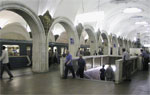
Passengers arrive at one of the elaborately designed stations. |

The Moscow Metro network. |
|
| Mumbai Metro | ||
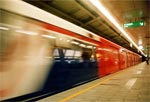
High-frequency rapid transport is coming to Mumbai. A 146.5km network of metro lines is planned. |
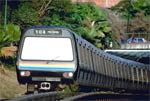
Rolling stock builders from around the globe may tender to build the new metro trains. This is an Alstom product. |
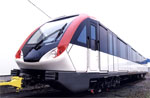
Mumbai is one of 26 Indian cities currently proposing to build metro railway networks following the experiences of Delhi. |
| Namma Metro, Bangalore | ||
Now India's third-largest city, Bangalore includes s a concentration of IT-related industry of world importance. |
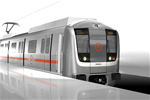
A success story of Indian urban transit, Delhi Metro Rail Corporation is involved in the development of Bangalore's system. |

The first phase of the Bangalore metro is for two intersecting routes totalling 33km. |
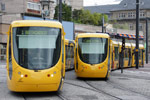
Spanning urban (as Mulhouse, pictured) and high-speed rail networks, Bangalore is the third Indian metro involvement for the Systra consultancy. |
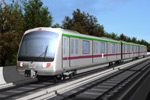
Bangalore's metro will use three-car trains on a 1,435mm gauge with third-rail power supply. |
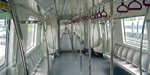
Trains on the Bangalore metro routes will have a high-density layout for up to 1,000 passengers. |
| Nanjing Metro | ||
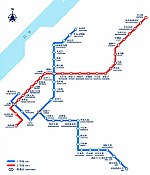
The Nanjing Metro Rail Line in 2010. |
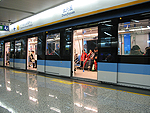
A train at Zhangfuyuan station on Line 1. |
A typical carriage serving Line 2 of the Nanjing Metro. |
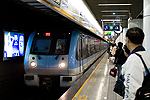
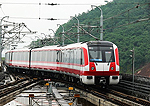
The CSR PuzhenRail cars operate on the Nanjing Metro. |
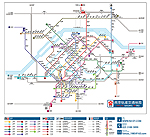
The Nanjing Metro Plan for 2030. |
|
| New York City Subway | ||
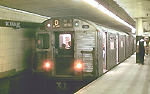
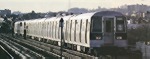
The R32 cars, dating from 1964, are among the most numerous on the New York City subway. |
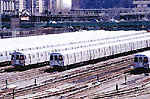
The Coney Island yard, F trains in the avenue X yard. |
The R110B new technology test-train prototype on which the new R142 railcars from Bombadier Transportation will be based. |
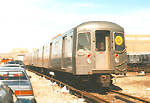
A 1986 car designated R68, at Coney Island yard. |
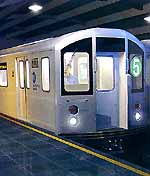
Computer generated images of the new Bombardier R142. |
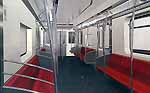
The spacious interior of the Bombardier R142 |

Front-end view of the mock-up of the new-generation tram, designated R143. |
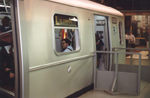
Side view of the mock-up of the new-generation tram, designated R143. |

The interior LED display in the R143 prototype |
| Nuremberg Automatic U-Bahn | ||
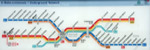
Map. |
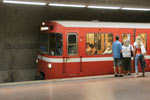
Opened in 1978, Lorenzkirche on U1 is one of the few stations to serve Nuremberg's historic centre. |
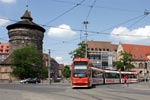
With main line trains, buses, trams and the three U-Bahn lines, the Hauptbahnhof is Nuremberg's main transport interchange. |
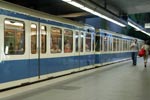
Kept in original livery, a small batch of ex-Munich U-Bahn stock helped increase capacity from 2004. |
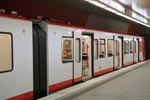
Continuing the two-car formation pattern, the DT3 class introduced gangwayed connection between vehicles to Nuremberg. |
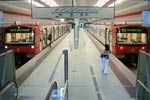
Official opening of U3 was on 14 June 2008: Maxfeld terminus. |
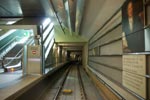
Data is transmitted between the DT3 trains and Control via the wires installed between the rails: Maxfeld terminus. |

A single DT3 unit being manually operated over line U1during driver training. |
A large section already shared with U3, line U2 is due for conversion to automatic operation: Flughafen/Airport station. |
Line U3 is being extended beyond the present northern terminus of Maxfeld. |
||
| Perth to Mandurah Railway | ||
Perth Station. |

One of Transperth’s EMUs in Perth Station. |
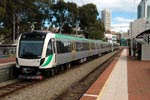
B-Series EMU – the new line will be served by these trains. |
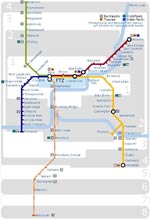
Map of the Transperth Railway Network. |
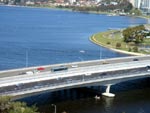
Narrows Bridge and the Kwinana Freeway. |
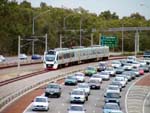
B-Series EMU en route to Perth. |

Mount Henry Bridge which underwent significant modification during the project. |

A-Series EMU. Transperth lines have used electric trains exclusively since they were electrified in the 1990s. |
|
| Prague Metro | ||
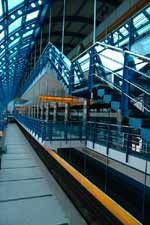
Plans are in place to build a completely new line – Line D (blue), which would connect the city centre to the southern parts of Prague. |
The existing e-series trains on the Prague Metro system needed significant improvement. |

Siemens PA135 system, which provides automatic train speed control. |
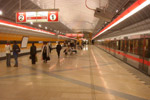
Prague metro extension continued in 2004 with a northern expansion to Line C, which included the construction of new tunnels under the Vltata River and two additional stations; Kobylisy and LádvÃ. |

In 1978, operations began on the second metro line (A) in the section Leninova (today Dejvická) to Námestí Míru, which included deeply situated three-tunnel stations. |
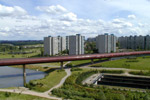
Prague Metro bridge between Lužiny and Hurka. |
| RhônExpress, | ||
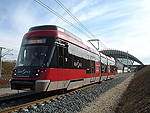
The RhônExpress connects downtown Lyon and Lyon-Saint Exupery airport, France. |
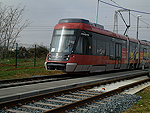
The line runs for 22km. |
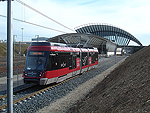
The line has four stops. |
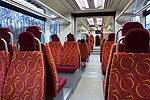
Interiors of the RhônExpress rolling stock. |
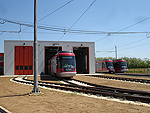
The operations maintenance centre. |
|
| Rio de Janeiro Metro | ||

Rio de Janeiro's metro network is undergoing a more than $1bn upgrade, to be complete by 2015. |
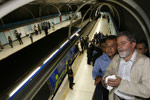
President Luiz Inácio Lula da Silva and governor of Rio de Janeiro, Sérgio Cabral, at Cantagalo station. |
The upgrade will benefit regular commuters and also prepare the city of Rio de Janeiro for the 2016 Olympic Games. |
| Rome | ||
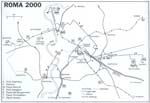
Map of Rome's tram, metro and light-railway routes. |
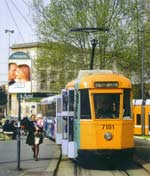
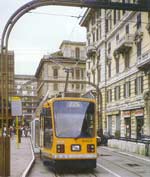
The old order - a 1952-vintage Stanga tram at Piaza di Porta Maggiore |
The intermediate stage between old and new - a SOCIMI low-floor tram built in 1990. |
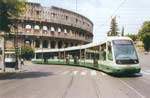
The first FIAT-II 100% low-floor tram posed in front of the Colosseum ruins. |
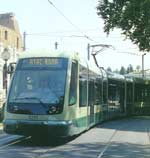
The FIAT-II tram is a 100% low-floor vehicle. |

A FIAT-II tram under construction at Fiat's Savigliano workshops. |
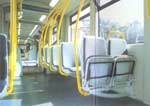
The interior of a FIAT-II tram. |
||
| Rotterdam Urban Transit Developments | ||
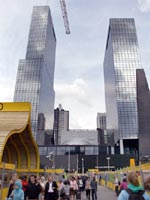
Reconstruction has been a feature of the convergence of tram, metro and heavy rail routes in Rotterdam's business district for several years. |
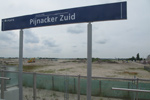
New stations and a more intensive service on the RandstadRail Erasmuslijn are encouraging development between Den Haag and Rotterdam. |
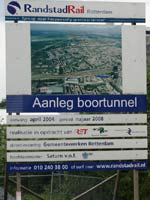
The new Statenweg tunnel will allow RandstadRail to use Rotterdam Metro infrastructure for through services to Den Haag. |
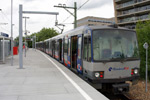
RandstadRail Erasmuslijn was launched with RET Metro stock. Immediately north of Rotterdam Hofplein will be abandoned when replaced by tunnel-routed trains. |

Deliveries under a July 2007 contract will make Rotterdam the largest Citadis operator. |
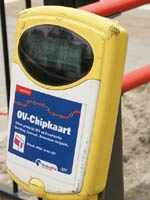
The electronic OV Chipcard is being implemented across Rotterdam's transport network. |
| Santiago Metro | ||

The new metro system route map. |
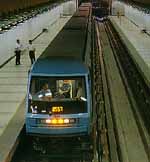
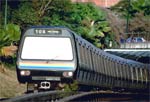
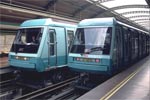
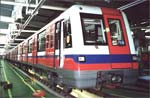
This train, one of the units designated NS93 based closely on the MP89 vehicles on the Paris metro, stands at one of the network's underground stations. |
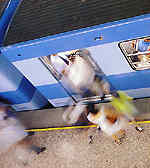
The new Santiago metro stations are closely monitored by closed circuit television. |
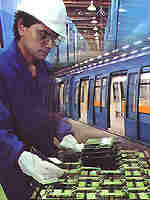
Maintenance underway on one of the heavily-used Santiago metro trainsets. |
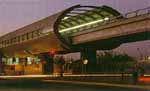
This low-angle view shows the dramatic design of the modern Santiago metro stations to advantage. |
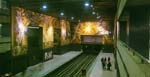
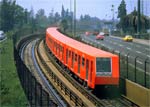
The architecture of some of line five's elevated stations is both dramatic and artistic. |
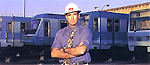
A collection of the rubber-tyred vehicles on the Santiago system. |
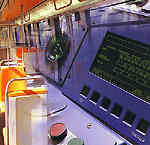
A Santiago metro-vehicle interior with superimposed instrumentation. |
|
| Santo Domingo Metro | ||
A mixture of underground, grade and elevated running forms Line 1 of the Santo Domingo Metro. |
In the near future, a third line is being planned within the city of Santo Domingo. |
The Alstom Metropolis has been chosen for Santo Domingo. This unit is in a workshop in Warsaw, Poland. |
The Dominican Republic's transport authority is aiming to reduce pressure on roads and other transport systems within Santo Domingo with the metro. |
||
| São Paulo Metro | ||
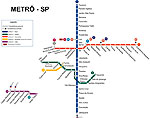
The São Paulo metro system consists of five colour-coded lines – Line 1-Blue, Line 2-Green, Line 3-Red, Line 4-Yellow and Line 5-Lilac. |
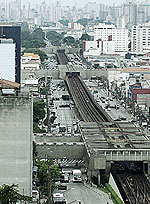
Though São Paulo has one of the largest metro services in the world, it does not cover all areas, and an increase in the number of cars on the roads has, in turn, aggravated the traffic jams. |
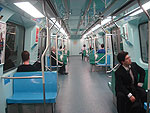
The São Paulo metro system carries 4.2 million passengers every day. |

There are 107 trains in the São Paulo metro network. By 2014, 47 new train sets will be added as a part of the expansion project. |

Most of the stations on all the São Paulo metro lines were constructed by the cut and cover method and have platforms measuring 136m-141m in length accommodating six-car trains sets. |
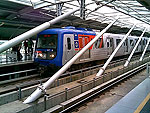
A passenger information system, a video surveillance and a train radio system will be installed on the São Paulo metro trains. |
| São Paulo Monorail System | ||
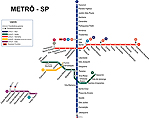
Map showing the five São Paulo Metro Lines. |
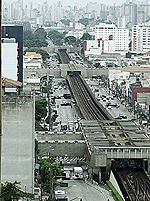
Bombardier's INNOVIA 300 system. |
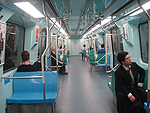
Tamanduateà is the latest station built on São Paulo Metro Line 2. |
| Seoul Metropolitan Subway | ||
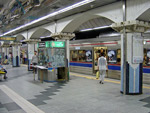
Seoul metropolitan subway in South Korea is the most widely used rapid railway transport system in the world. |
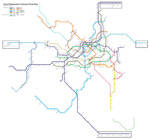
The Seoul metropolitan subway system serves nearly ten million inhabitants of the capital city, Seoul, and the provinces of Gyeonggi, Incheon and northern Chungnam. |
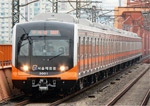
Train on the Seoul Metropolitan Subway system. |
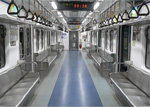
Interior of one of Seoul metro's trains on line 1. |

Station signs for the various subway lines. |
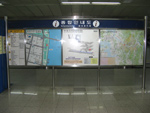
Information boards on Seoul subway's line 5. |
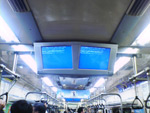
Information screens within the subway carriages. |
||
| Shanghai Metro | ||
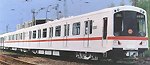
The trains for Line 2 were supplied by another consortium, the German Shanghai Metro Group, which, along with Adtranz and Siemens, also includes brake equipment manufacturer AEG Westinghouse and coach body builder Duewag. |
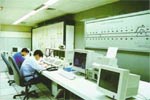
Signalling and control systems have been provided by Siemens and Alstom. |
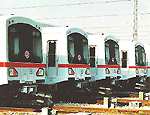
The vehicles were designed especially to meet specifications laid down by Shanghai Metro Corporation covering the anticipated passenger numbers per hour and direction. |

Station interiors are light and spacious with ample platform widths. |

The trains usually operate in formations of six cars, but these can be increased to eight cars. |
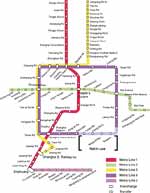
The current system on the Shanghai metro. |
| Shenyang Metro | ||
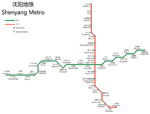
Lines 1 and 2 of the Shenyang Metro. |

Shenyang is in north-east China. |

Shenyang has a population of more than 7.4 million. |
| Singapore Northeast Line | ||
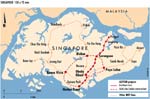
Map of the new Northeast Line in Singapore. |
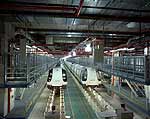
The new Singapore Northeast Line depot is purpose-built to service 25 trains. |
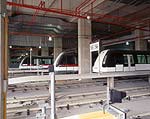
The Singapore NEL trains are on standby for immediate entry into service. |
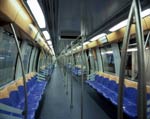
The trains hold 1,920 passengers, the highest density in the world. |
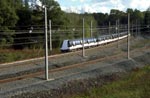
A new Singapore NEL train on test in Valenciennes, France. |
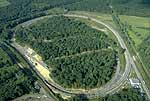
The purpose-built Alstom track in Valenciennes is used for exhaustive testing. |
| Sofia Metro | ||
Sofia Metro will include three lines, all intersecting at the city centre, but to date only Line 1 is running with 14 stations. |
Historical layers under the city of Sofia have caused delays on the project, such as at the station of Serdika. |
Construction of Sofia Metro is being financed by the European Investment Bank and the Japan Bank for International Cooperation. |
| Taipei Metro | ||

The light-rail system threads its way through Taipei's crowded skyline. When completed, its network will consist of four conventional, mainly underground, metro lines and one automated elevated light rail metro line. |

A busy scene on the opening day of Taipei's Mucha Line in 1996. Trains will carry up to 30,000 passengers per hour. |
Supervising the system from the control centre. The entire operation of the line is computerised, fully automated, and driverless. A built-in safety-orientation mechanism ensures passenger safety. |
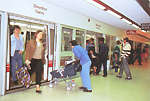
Underground stations have automatic sliding platform doors for safety. The 24km-long Nankang Panchiao Tucheng line has 21 stations underground. |
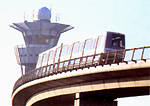
Nearly all of the network is on an elevated structure with reinforced concrete pavement to avoid affecting traffic flow at grade level. |
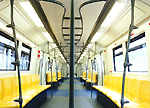
Each Taipei VAL train consists of two three-car units. Each car can accommodate 368 passengers (60 seats plus standing room for 308 persons). |
| Tehran Metro | ||
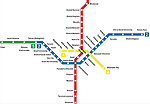
Map showing Tehran Metro Lines. |
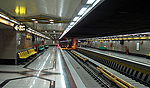
Tehran Metro is the cleanest subway system in the world. |

Interiors of the Tehran Metro Trains. |
| Toronto Transit Subway System | ||
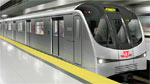
A fleet of 39 new trains has been ordered from Bombardier Transportation. |

A bright interior and sophisticated electronics are part of the new train package. |
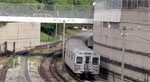
The Toronto Transit Commission operates a network of four lines over 70km of track. |
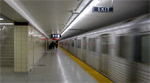
Stations are well kept, and new escalators are being installed across the network. |
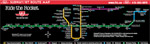
The Toronto Subway as it is today. |
|
| Toulouse Metro | ||
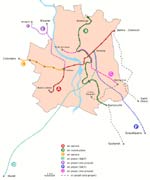
Toulouse metro map. |
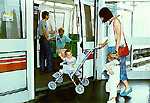
Platforms feature sliding doors which screen passengers from the edge, and open when a train halts. |
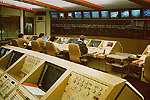
Staff monitoring the closed-circuit television screens in the network control centre. |
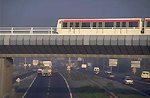
Metro trains feature a deep windscreen area at front and rear. |

Aerospace centre and France's fastest-growing metropolitan area, Toulouse uses a multi-mode approach to solving ground transport problems. |

A relative late adoption of modern tramways for a major French city, Toulouse has opted for the widely used Citadis 302 variant (Valenciennes version). |
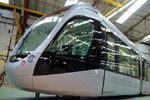
Consistent with the setting, the end design adopted on Toulouse Citadis trams is said to echo that of aircraft styling. |
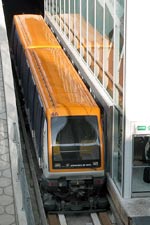
In shuttle mode, as here at Paris Charles de Gaulle or over long distances as in Toulouse, Siemens' VAL system delivers a high level of system availability. |
|
| Tyne & Wear Metro | ||
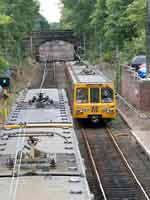
Aged basic infrastructure underpinning about 80% of Metrolink is due for attention under the Reinvigoration project. |
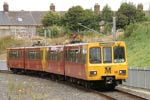
With more refurbishment due, the present Metrocar fleet appears set for service until 2023. |
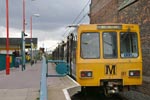
Funds will be sought to double track throughout to South Shields and for improving the terminus station. |
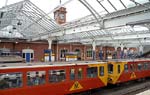
On the first-opened Metro route, Whitley Bay station upgrade was completed in 2007. |
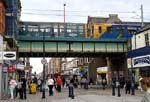
As seen here at South Shields, the Metro made extensive use of existing heavy rail infrastructure. |
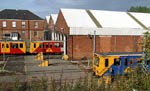
The Metro depot and control centre is at South Gosport near the junction for the coast and airport lines. |
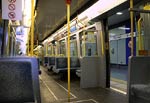
Rebuilt and refurbished since fleet introduction in 1980, the spacious Metrocars operate all Tyne and Wear Metro services. |

The most visible presence of the Metro in the central area is the Queen Elizabeth II Bridge, repainted and fitted with the ‘Nocturne’ light display in 2007. |
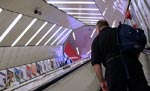
Private sector development at Haymarket will improve access and passenger surroundings for this underground station in central Newcastle. |
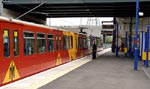
Added to the system in 2005, Northumberland Park in North Tyneside serves a large housing development and is an interchange with bus services. |
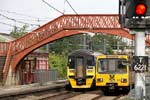
As seen at the Monkwearmouth Station Museum, from Pelaw to Sunderland, Metro shares tracks with heavy rail services. |
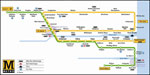
Map showing the new route of the Tyne & Wear Metro system. |
| VAL Mini-Metro Line, | ||
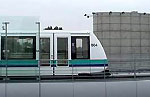
Rennes' VAL trains are controlled automatically. |

The line's southern terminus at La Poterie was designed by British architect Lord Foster. |
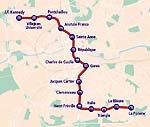
Map of Rennes' VAL mini-metro line system. |
| Vancouver SkyTrain | ||
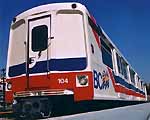
Over half the Skytrain fleet are of the original ART I type. |
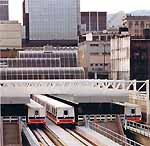
Stations have been incorporated amongst Vancouver's impressive high-rise buildings. |
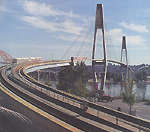
The 2020ft Skybridge has 404ft towers and carries trains 150ft above the Fraser River at the eastern end of the SkyTrain system. |
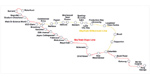
Map of the SkyTrain network as of 2008. |

Most of SkyTrain uses elevated sections made from pre-fabricated units. |

Bombardier's ART II passed its 600th vehicle order in 2008 with a new batch for SkyTrain. |
| Warsaw Metro | ||
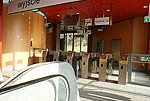
Entrance of Warszawskie. |
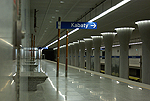
Platform of Warszawskie station showing the direction for Kabaty station. |
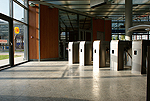
Entrance of the last station Młociny on Metro Line 1. |
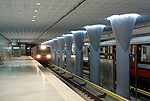
Metro trains inside the Młociny subway station. |
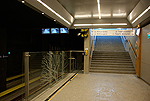
Last but third station on Metrol Line 1-Stare Bielany. |
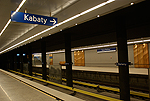
Interior of the Stare Bielany station. |
| Washington Metrorail, | ||

WMATA operates the Metrorail system in Washington, DC, with the first section opening in 1976. |
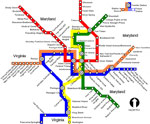
Washington Metrorail has six lines, but is expanding with the Silver line, connecting to Loudoun, Fairfax and Arlington counties and the District of Columbia. |
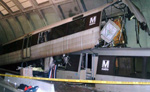
The Metrorail system consists of 1,130 railcars manufactured by Rohr, Breda, CAF and Alstom. The system operates six and eight-car trains only. |