Doha Metro, Qatar


|
Doha Metro in Qatar's capital city will be one of the most advanced rail transit systems in the world when it becomes operational in 2016. The emirate originally planned the metro in 2007, in a bid to host the 2016 Summer Olympic Games in Doha. The International Olympic Committee, however, chose Rio de Janeiro, Brazil, as the host city for the games. The city will still go ahead with the project in hopes of hosting future sporting events. 
Qatar has a well-developed road network including a highway system and expressways, with road travel being the extensive mode of transport. The public transport that does exist is mainly provided by Mowasalat, a state-owned integrated ground transportation company. The objective of the Transport Master Plan for Qatar is to develop attractive, efficient and reliable public transport in the country. The requirements led for the proposal of a comprehensive railway network for future development in the Greater Doha Area and in the state on the whole. The rail transit system is part of the Qatar Government's €130bn diversification and modernisation strategy involving public and private investments. The campaign also aims to reduce its dependency on natural gas exports. Plans for the metro are still in the early phases but it is reported that many contracts will be awarded by the end of the year. The metro will include an east coast link, a high-speed link and a link to suburban regions of Doha. "The objective of the Transport Master Plan for Qatar is to develop attractive, efficient and reliable public transport in the country."
Master plan Doha Metro is part of the larger railway network. The wide network design consists of five modern and flexible railway systems integrated across the Persian Gulf. They include the development of passenger and freight rail transport systems, along with fast rail links to the international airport based on the GCC feasibility study. The master plan involves development of metro railway system in Qatar and long-distance and freight lines connecting the emirate with the rest of the Gulf Cooperation Council (GCC). The GCC network, which is in the planning stage, will connect the six member states, Oman, UAE, Qatar, Saudi Arabia, Kuwait and Bahrain, with an estimated 1,940km rail network. In August 2008 Qatari Diar Real Estate Investment, the national development agency, appointed the German national railway company Deutsche Bahn to produce plans for a railway network in the country. DB International (DBI), the international wing of Deutsche Bahn, along with Qatari Diar prepared conceptual designs for a consolidated railway network development in Qatar. The project Qatari Diar and Deutsch Bahn signed an agreement in November 2009 to form a joint venture, Qatar Railways Development Company (QRDC), for implementing, developing and managing the concept design of the railway plan on the Persian Gulf. Qatari Diar holds 51% and DBI owns 49% shares in the JV company. QRDC, which is in the process of being formed, will implement the visionary railway transport and metro networks concept for the emirate. The total project is estimated to cost €17bn and the state has allocated a budget of €700m for the QRDC. DBI will contribute its expertise in setting up the railway infrastructure as well as providing consultancy services. "The metro will be one of the most modern railway networks in the world."
The Doha metro network is also based on the master plan and is expected to cost approximately €2bn. The metro will be one of the most modern railway networks in the world. The metro network will be built in phases. It will have four lines with an overall length of 300km and have 98 stations. As of December 2009, international tenders are being prepared and are expected to be released by the end of 2010. The project is expected to begin in early 2011 and be completed in 2016. Qatar invited the first bids for its planned express airport rail line in October 2009. Work involves building a railway station terminal for the express line. The line will connect the airport with railway networks and metro stations in downtown Doha. The project, called the Passenger Rail Station Box, will be overseen by UK firm Mace International. It is expected to be completed in 2011. Infrastructure The four lines of Doha metro will link all the major locations of the city such as the Education City and West Bay, Lusail urban development area, Doha airport and the business and conference centre. The railway lines and infrastructure will be through tunnels, overhead railways and at the ground level. The QRDC will build an east coast rail link between Ras Laffan and Mesaieed; a 180km high-speed link from Doha to Bahrain across the Qatar-Bahrain Causeway on which trains will have a speed of 350km/h; a 325km freight line, of which 270km will be used for passenger services, connected to the planned GCC rail network; a light rail network serving residential developments; a long-distance rail transport line of about 100km to Saudi Arabia with trains having speeds of up to 200km/h and the Doha metro network. |
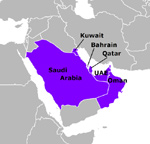  Expand Image Expand ImageQatar is surrounded by the Persian Gulf and bordered by Saudi Arabia in the south. |
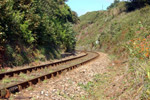 Expand Image Expand ImageDoha Metro railway lines will run through tunnels, overhead railways and at the ground level. | |
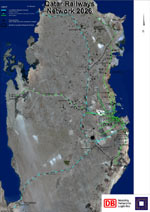 Expand Image Expand ImageThe master plan involves development of the metro railway system in Qatar and long-distance and freight lines connecting the emirate with rest of the Gulf Cooperation Council. |