High-Speed Railways
| Acela Express | ||
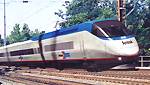
Bombardier and Alstom are in partnership to build new US high speed trains. |
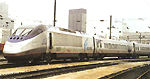
The second Acela Express high speed trainset delivered to Amtrak in October of 1999. |
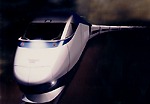
The initial design for the new high-speed trains for the Northeast Corridor between New York and Boston. |
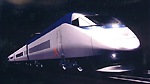
The French TGV design influence can be seen here in the US high-speed train design. |
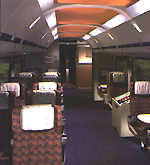
The interior of an American train first class compartment. |
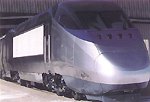
The ACELA express power car at Bombardier's Plattsburg works will be powered with Alstom's traction equipment. |
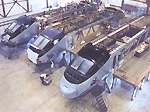
ACELA express power cars under construction. |
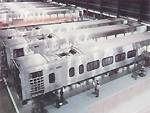
The ACELA express coaches being assembled by Bombardier at Barre, Vermont. |
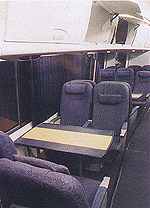
The ACELA express coaches feature airline style designs such as the overhead luggage storage racks. |

Configuration of Acela Express. |
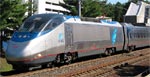
Acela Express at Baltimore/Washington International Airport Station. |
|
| Alaris Tilting Trains | ||

The ETR460, forerunner of Spain's latest tilting train. |
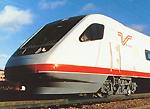
The first Alaris trainset after completion outside Alstom's Barcelona works. |
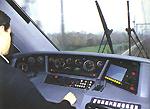
In-cab displays are designed to provide extensive running information to the train crew. |
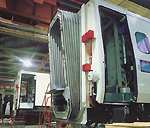
The Pendolino production line at Fiat's Turin assembly plant. |

Interior of a second class vehicle, showing the on-board video screens. |
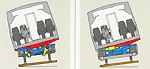
Diagram of a Pendolino train's tilting mechanism. |
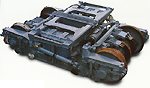
A Pendolino bogie, also showing the plate connecting it to the train's body. |
||
| Ankara-Istanbul High-Speed Train Project | ||
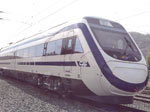
CAF was contracted to construct ten new high-speed trains for the Ankara-Istanbul project with a maximum speed of 250km/h. |

The new trains feature air-conditioning, like all other modern high-speed sets. |

While other high-speed railways operate at 300km/h, including in Germany, the trains can also run on conventional lines. The Turkish high-speed line will have a maximum operational speed of 250km/h. |

Overhead electric wires will supply 25kV AC power to the new trains between Istanbul and Ankara. |
||
| Argentine High-Speed Railway | ||

Spanish and French high-speed railway practice will be used for the 300km/h route from Buenos Aires to Rosario. |
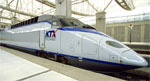
Construction of the high-speed line will connect three of Argentina’s main cities. |

Modern stations and trains will revolutionise rail travel in South America – the first high-speed line for the continent. |
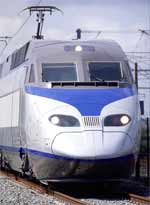
The future of Argentine rail travel? This is a Spanish high-speed set on which the new trains are likely to be based. |
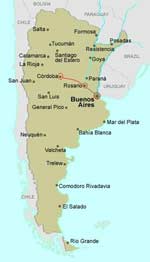
The main population centres of Argentina are served by the planned high-speed line between Buenos Aires and Cordoba. |
|
| Arlanda Express | ||
The Arlanda link comprises 20km of double-track railway. |

Seven new four-car electric multiple units have been built by Alstom. |
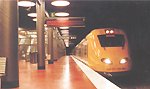
Arlanda Express opened in time for the new millennium. |
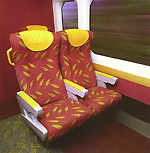
Spacious interiors and colourful designs along with wide windows allow for luxurious travel. |

CAD image of the proposed upgrading of part of Stockholm Central station. |
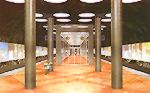
The airport station is utilised by SJ and airport train services. |
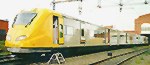
Services on Arlanda Express are operated by Alstom EMUs. |
||
| AVE | ||
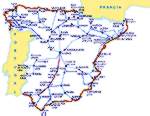
The first route chosen for modernisation was that between the capital, Madrid, and Seville. |

The trains comprise two power cars, with three first class and four turista (standard) class trailers, and a bar/buffet vehicle, and accommodate a total of 325 passengers. |

The AVE trainsets are made in France with some Spanish components. It derives directly from the French TGV. |
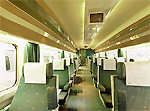
1st class accommodations onboard the AVE TGV. |
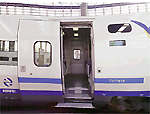
The Ave trainset boasts modern technology including the latest doors. |
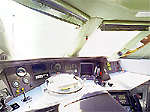
German technology is at the heart of the operational control system. A cab signalling system is coupled with a continuous speed control facility. |
A 25kV 50Hz traction power supply substation for the Madrid-Seville high speed line. |
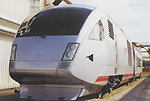
Talgo variable gauge power car for services running between 1,435mm and 1,668mm networks. |
|
| Bangalore High-Speed Rail Link | ||

The railway link will connect the city centre with the new Bengaluru International Airport. |
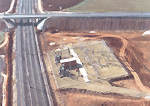
The construction of the new railway link is expected to reduce travel time from the city centre to the airport to 25 minutes. |

The MG Road and Hebbal stations will have check-in facilities for passengers. |
| Beijing-Shanghai | ||
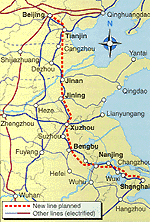
A map showing the Bejing-Shanghai high speed route. |
Construction of a dedicated high-speed Beijing-Shanghai line will alleviate conflicts with slower freight traffic. |
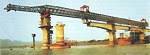
A machine for assembling pre-stressed concrete bridge segments, developed by Chinese engineers, and expected to be used on the Beijing-Shanghai route. |
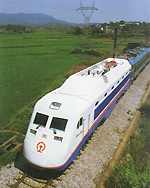
The prototype high-speed locomotive developed for Chinese Railways. |
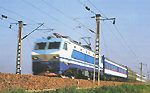
The rake of coaching stock assembled for high-speed testing shown during trials. |
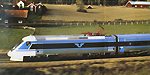
Sweden's X2000 train has been the model for some of the new Chinese high-speed train technology. |
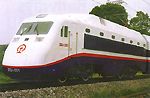
Chinese Railways' prototype high-speed train power car has undergone extensive tests. |
||
| Beijing-Tianjin High-Speed Commuter Link | ||
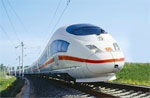
The 300km/h Beijing-Tianjin Railway uses Siemens CRH 3 high-speed trains based on technology first used in German Railway’s ICE 3s. |
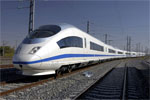
The CRH 3 trains are closely based on the Velaro units which entered service in Spain in 2006. |
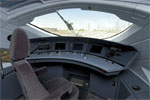
Inside the cab of a Siemens Velaro unit, on which the trains for China's first high-speed line are based. |
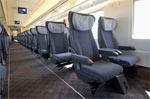
The Velaros feature a clean and spacious passenger cabin layout. The CRH 3 trains for the Beijing-Tianjin line seat 600 passengers. |
||
| Belgian High Speed Line Network | ||

Connecting with the French LGV Nord, Belgian HSL1 begins 17km west of Brussels. |
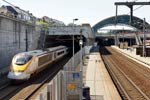
Just short of the HSL, dedicated tracks for high-speed trains pass to the south of Halle station. |
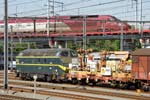
The Forest flyover avoids conflicting movements for high-speed trains using the west-side platforms at Brussels Midi station. |
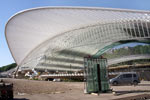
The new Liège-Guillemins station is between two stretches of high-speed track on the key Brussels-Köln route. |
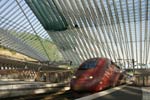
The Thalys fleet uses all three Belgian HSL arms: Liège-Guillemins, May 2008. |

The eastern end of Belgian HSL3 near Walhorn: journey times will halve between Liège and Aachen. |
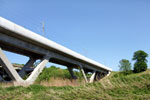
Seen from the original route, HSL3 takes a more direct path over and through the challenging terrain. |

Opened in late 2007, the second Buschtunnel in Germany between Aachen and the Belgian HSL3: the original tunnel (to right) will re-enter service. |
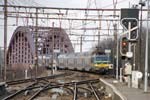
The complex and time-consuming Mechelen station area will be bypassed as part of the Brussels-Antwerp upgrading. |

Antwerpen Centraal (pictured) and the North-South Junction projects are part of the Brussels-Amsterdam improvement programme. |
||
| Botniabanan | ||

Heavier freight trains of up to 1,500t will be able to use the new line, improving the economics of cargo movement in the area. |
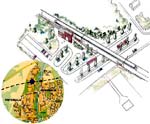
The proposed Hornefors station. |
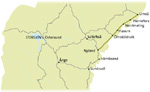
The entirely new line will radically increase capacity and timings over what has become part of a trans-European rail route. |
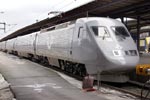
Likely to be concentrated in the more populous south, the tilting X2 class will remain the flagship Swedish motive power for several more years. |
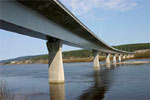
Seemingly due for completion in 2010, the Botniabanan project has been the largest on Swedish railways for several decades. |
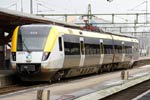
For delivery from 2010, a new 200km/h derivative of the Bombardier wide-bodied Regina range is likely to see service on the Botniabanan (X53 variant, Gothenburg). |
| California High-Speed Rail Network | ||

The Route 99 corridor and extension alternatives. |
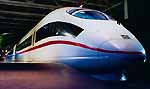
The latest variant of the Siemens high-speed train. |
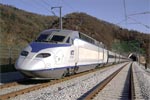
An Alstom TGV for Korea. |
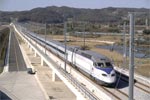
Viaducts will be incorporated into the new line to keep the gradient profile as flat as possible. |
A Siemens built Velaro high-speed train for service in Spain, on which the future trains of the California high-speed line may be partially based. |
|
| Class 390 Pendolino Tilting Trains | ||
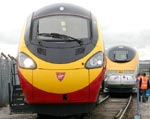
UK's fastest trains: Eurostar (right) mainly uses dedicated high-speed lines, unlike the Class 390 on the WCML. |
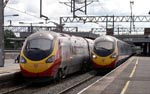
WCML high-speed services are entirely operated by Class 390 Pendolinos. |
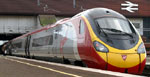
As at Birmingham International with adjacent airport and National Exhibition Centre, the business market is important for Virgin Pendolinos. |
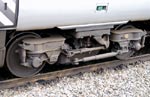
Originating from SIG/Fiat, a Class 390 tilting bogie. |
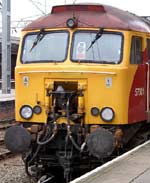
Dellner coupler-fitted Virgin Class 57 for Pendolino and Voyager haulage. |
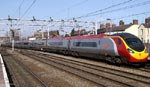
Subject to funding and platform lengthening, Pendolino capacity may be increased with extra coaches. |
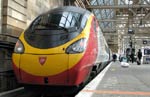
Pendolino competition with airlines is at its fiercest on the 400-mile London-Glasgow (pictured) route. |
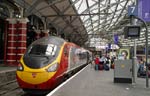
Liverpool is one of many destinations due for accelerated WCML services. |
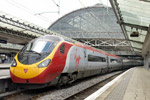
By the end of 2012 new and enlarged Pendolino sets should be serving key WCML markets like London–Manchester. |
| East Coast Main Line | ||
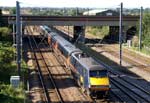
A tradition of high-speed operation on the ECML has been encouraged by long sections of straight track and gentle gradients. |
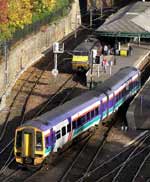
Edinburgh is the northern end of the ECML, although the long-distance franchise operator has services west and north from the Scottish capital. |

An important interchange, Network Rail-managed Leeds station has been radically remodelled. A marked growth in passenger numbers is forecast to continue. |
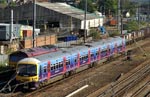
After years of decline, freight has recovered on the southern ECML section, also heavily used by First Capital Connect services south of Peterborough. |

Extra platform faces scheduled for Peterborough will help alleviate conflicting movements at this busy station. |
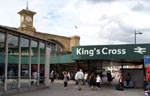
The King's Cross improvement project will run up to 2013. This southern concourse in front of Cubitt's façade will be replaced by a larger one to the west. |
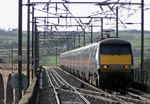
National Express East Coast will inherit GNER HST and Class 91/Mark 4 trains pending replacement under the Intercity Express Programme from 2012. |

Hull Trains Class 222 (seen at Biggleswade) is joined on the East Coast by another open access operator, Grand Central, from 2008. |
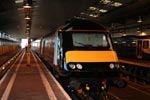
Grand Central is planning to start its new Sunderland-London service from the beginning of 2008 with newly-refurbished High Speed Train sets. |
| Evergreen Line Rail Project, | ||
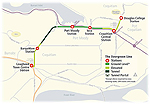
The Evergreen Line connects Lougheed to Cequitlam and Douglas College. |
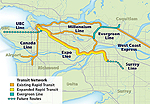
The transit network in Vancouver. |
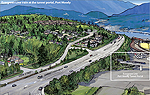
The Evergreen Line at the tunnel portal, Port Moody |
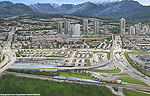
Coquitlam Centre Station. |
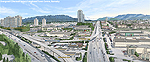
Lougheed town centre. |
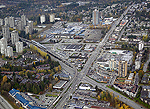
An aerial view of Lougheed town centre. |
| Finland Pendolino Tilting Trains, | ||

Pendolino trains are being marketed as the flagship of an integrated rail network, bringing with them improvements in services on secondary routes. |
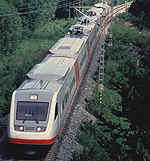
The Pendolino S 220 trainset. |
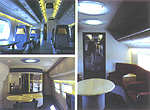
Interior arrangements of the Pendolino S 220 trainset. |
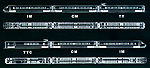
Pendolino S 220 trainset composition. |
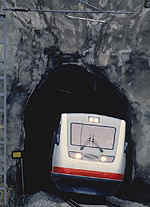
The Pendolino S220 represents the third generation of the Italian-designed and developed variant of tilting train. |
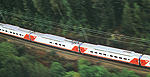
The high speed network offers some of Finland's finest views. |
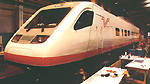
A power car being fitted out at Oy Transtech's plant in Oulu. |
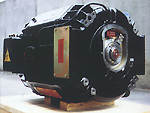
The Fiat-Parizzi traction motor. |
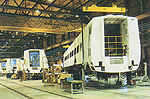
Intermediate coaches under construction at Fiat's plant in Savigliano. |
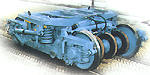
The Pendolino S 220 trainset carrying bogie. |
||
| Florida High-Speed Rail | ||
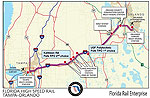
The first phase of the Florida HSR will connect Tampa and Orlando. |
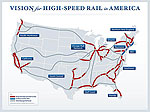
On 28 January 2010, the federal government committed to award $8bn for HSR projects across the US from ARRA. |
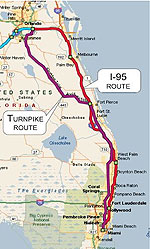
Phase 2 is being planned to run alongside Florida’s Turnpike or the I-95. |
| Frankfurt-Köln | ||

The Frankfurt-Cologne line is seen as the third vital link in Germany's ICE network, after the Nuremburg-Hannover, and Hannover-Berlin routes. |
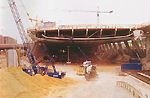
Work on the new interchange station at Frankfurt Airport. |
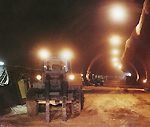
Work on the Limburg Tunnel, one of the toughest sections of the new route. |
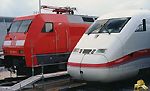
The forerunner of the latest ICE developments - an ICE-2 unit (right). |
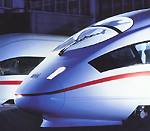
ICE-3 units on display. |
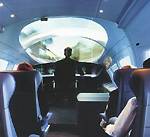
Passengers even have a dramatic forward view from the ICE-3's leading coach. |
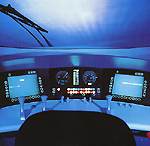
In-cab video displays shows drivers information on the train's progress. |
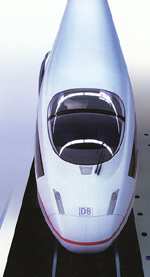
The futuristic, aerodynamic ICE-3 units. |

Coupled pairs of ICE3 sets can carry over 800 passengers between Köln Hbf to Frankfurt Airport in under an hour. |
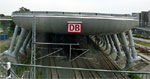
The new line and Frankfurt(M) Flughafen Fernbahnhof were built between the autobahn and the airport. |
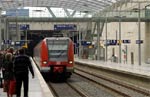
Not on the Neubaustrecke itself, the Köln/Bonn Airport station is considered part of the project. |

ICE services from the north and west feed onto the Neubaustrecke south of Köln. |
| Gare du Nord, Paris | ||
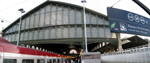
Gare du Nord station as seen from the Thalys platform. |
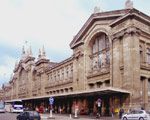
The front of Gare du Nord railway station. |
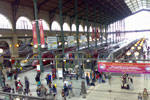
Gare Du Nord interiors. |
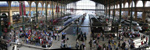
Panoramic view of the Gare du Nord arrival hall. |
||
| Germany InterCity Express | ||

Germany was some way behind its main European compatriots when it came to developing a network of high-speed railway lines, but now, with its InterCity Express (ICE) concept, it has been quickly making up for lost time. |

With a clear screen separating passengers from the driver ICE 3 gives passengers a clear impression of speed. |
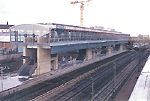
The DM250m InterCity station at Laatzen nearing completion. |

Interior of the BSmz 803 second class car complete with telephone, typing machine, fascimile, and photcopier. |
Man-machine interface of the Hannover electronic interlocking. |
A AVmz 801 first class car with two saloon modules and one compartment module with only three seats per seat row. |
ICE-T electric multiple-unit train set. |
An NS-owned ICE3 at Mannheim, near the start of one of the earliest NBS sections, the 100km to Stuttgart. |
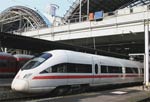
The tilt-equipped ICE-T can make best use of older track formations. Class 411 at Frankfurt (Main) Hbf. |

Also served by Regional and S-Bahn trains, the Köln/Bonn airport line and station were part of the Köln-Frankfurt NBS project. |
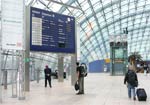
ICE services dominate at Frankfurt Airport's new station. The Fernbahnhof. Regional and S-Bahn services use the earlier low-level station. |
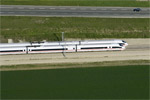
An ICE3 parallel high-speed run was part of the opening publicity for the Nürnberg-Ingolstadt NBS in 2006. |
| Gold Coast Rapid Transit System | ||
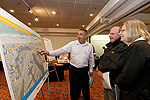
Surfer's Paradise Community Information Session held between 31 August and 4 September 2010. |

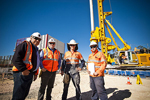
Sod turn event at Graffith University Hospital. |
Gold Coast University Hospital Station shell construction. |
| Haramain High Speed Rail Project | ||

The Haramain project will connect Mecca and Madinah in Saudi Arabia, via Jeddah and Rabigh. |

With a high volume of pilgrims visiting Mecca, as well as the number of citizens living in the area, a new form of transport was required, so the Haramain rail project was conceived. |
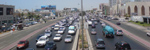
The Haramain rail link is expected to ease congestion in busy areas of Saudi Arabia. |
| Hefei-Fuzhou High-Speed Railway Line | ||

The Hefei-Fuzhou rail route connects Central China to southeast China. |

The Anhui section of the Hefei-Fuzhou high-speed railway line will have the longest river rail bridge, at 52km, spanning the Yangtze River. |
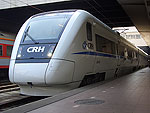
A CRH1 train at Fuzhou Railway Station. |
| High Speed 1 | ||
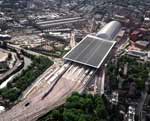
The roof of the classic St Pancras station has been extended for its new international and domestic role. |

Direct Eurostar services to Paris and Brussels now use the main train shed at St Pancras International. |
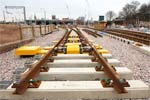
The track layout at the entrance to St Pancras has been remodelled to allow it to curve over the East Coast Main Line. |
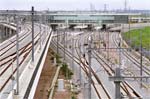
Ebbsfleet International is a new intermediate station serving the Thames Gateway commercial regeneration area. |
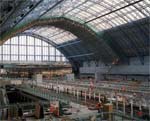
Engineers have completely reconstructed the interior of St Pancras station with new platforms, and renovated the arched 1868 Barlow roof. |
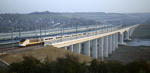
The sweeping viaduct over the River Medway in Kent is one of most impressive structures on the new high-speed line. |
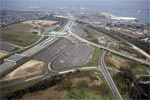
Park and ride facilities are a valuable means of persuading North Kent passengers to use High Speed 1 for both international and domestic services. |
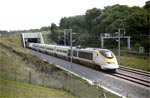
Journey times from the UK to mainland Europe have been slashed. |
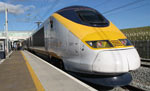
In December 2009, Ebbsfleet International added domestic 140mph (225km/h) 'Javelin' services to those by international Eurostars on HS1. |

The new low-level platforms at St Pancras are part of the extensive rail interchange adjoining or very close to the HS1 Eurostar terminus area. |
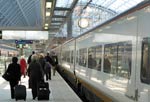
Within weeks of St Pancras becoming the London HS1 terminus, passenger bookings were showing substantial increases over past levels. |
|
| High Speed Rail Operations | ||
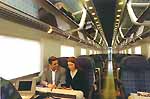
The functional interior of an ETR 500 compartment. |
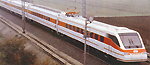
Fiat Ferroviaria (now Alstom) supplied the dual-voltage (3kV DC/25kV AC) ETR480 trains. Their tilting capacity is used to best advantage on classic lines with frequent curves. |
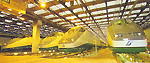
Both the ETR 500 trainsets and Pendolino trains are the rolling stock for the Eurostar Italia Service. |
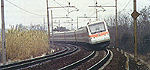
The ETR 460 Pendolino tackles a curve on the Italian State Railways network. |
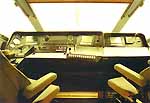
The driver's cab of an ETR 500 high-speed train. |
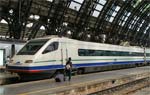
Now joined by hauled stock under the Cisalpino brand, ETR470 tilting trains link northern Italy with Switzerland. |
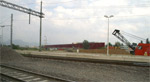
As here east of Milan, some 'TAV' lines follow alignments of conventional railways. |
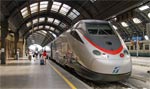
ETR500 sets are the mainstay of domestic Eurostar Italia services. |
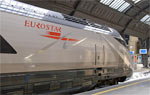
Branding for Eurostar Italia Alta Velocità. |

ETR485 tilting sets work the limited stop Milan-Rome T-Biz services aimed at the business market. |
||
| HSL Zuid | ||
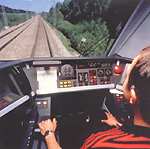
The new line will be the first to incorporate what is expected to become the international-standard ERTMS signalling. |

This diagram shows the U-shaped concrete trackbed design, aimed at substantially reducing noise. |
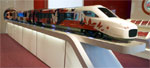
Model of the Ansaldobreda sets for HSL Zuid. |

Like Benelux services, high speed Amsterdam-Brussels will be a joint Dutch-Belgian operation. |
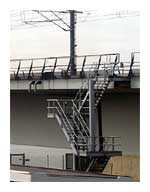
Like the whole route, the Hollandsch Diep crossing features passenger evacuation exits. |

For busy locations like Dordrecht, freight paths will be increased by passenger capacity shifting to HSL Zuid. |
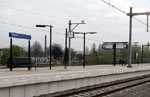
Featuring a new dedicated platform for HSL services, Breda is part of the HSL service pattern. |
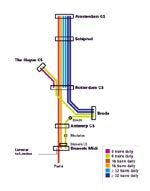
A layout of the HLS Zuid route map. |
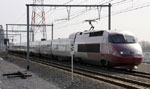
An upgrade programme is due for Thalys sets on Paris-Brussels-Amsterdam services prior to their transfer to HSL Zuid and the Belgian high-speed lines. |

Now rebranded as part of Hispeed, the joint Dutch-Belgian Benelux service may survive in some form after the new lines open. |
||
| Kuala Lumpur Airport Express | ||
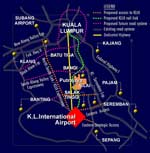
The route of the Kuala Lumpur Express Rail Link. |
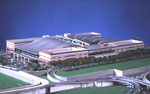
The new terminal at KL Sentral in the heart of Kuala Lumpur. |

The interior of one of the new ERL trains. |

A cable laid between the rails transmits signalling data. |
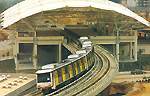
Kuala Lumpur's commuter rail network offers an intensive service, with which the new airport express trains connect. |
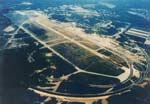
Siemens' test track at Wildenrath, Germany, saw extensive proving trials for KL's newest trains. |
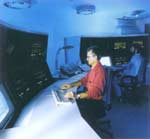
The control centre uses electronic interlocking to ensure the continuity of the signalling system. |
||
| LGV Est Européen | ||
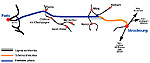
LGV Est Europeen map. |
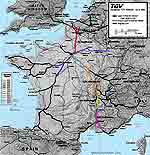
TGV network map. |
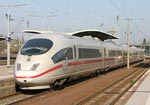
Deutsche Bahn ICE3 stock will become a familiar sight on TGV Est. |
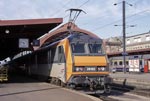
Although linked to Paris with TGV services and with station improvements under the project, Strasbourg remains over 100km from the end of the new LGV. |
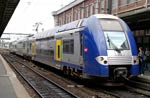
Regional services by units like the TER 2N-NG will be increased to feed TGV Est and make up for reduced through-services for some destinations. |
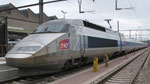
The bulk of LGV Est services are operated by TGV Réseau formations. |
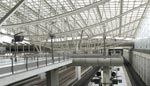
LGV Est is connected with the Jonction Est LGV east of Paris serving Marne-la-Vallée and Charles de Gaulle airport (pictured). |
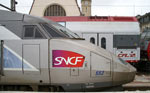
An LGV Est Paris service at Luxembourg City – the Grand Duchy was one of the line's sources of funding. |
|
| Lisbon-Porto High-Speed Line | ||
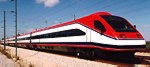
The top speed is set to rise from 180km/h to 220km/h as work is progressed on upgrading the entire line for higher speeds. |
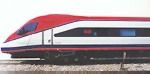
The Alfa Pendular's aerodynamic front end is designed by Giugiaro. |
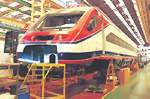
Bodyshells under construction at Fiat's Savigliano factory. |
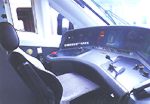
The ergonomic cab features a 'wrap-around' driver's instrument display. |
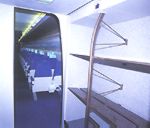
Luggage racks are provided at each carriage end. |
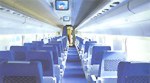
A view showing the video screens which transmit in-journey information and entertainment. |
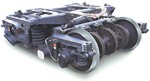
Bogies are interchangeable between motor and trailer vehicles. |
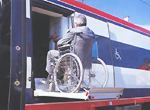
An integral fold-out lift can help passengers with access to wheelchair spaces. |
|
| Lyon-Turin Base Route | ||
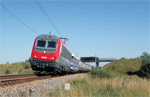
Passenger and freight traffic will use the new base tunnel to reach Italy via a new direct route. |

Tunnel boring for the 53.1km base tunnel will take five-and-a-half years, with 17 machines working from different points. |
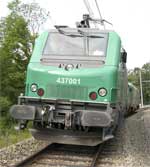
Locomotives from both Italy and France will use the route when it opens at the end of the next decade. |

The construction plan of the tunnel with access points marked. |

‘Railway motorway’ rail vehicles transporting lorries are expected to account for up to 10 million tonnes of freight traffic on the new route. |
|
| Mokpo High-Speed Railway | ||

A second line is being added to the Korea Train Express network. |
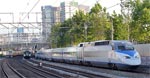
The first section of the route will share tracks with the Seoul-Busan high-speed services. |
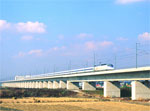
A total of 230km of new railway will be built to reach the port city of Mokpo. |
A new high-speed train – the HSL-350X – is being developed in Korea to run alongside the Alstom built TGV style units on the Seoul-Busan line. |
||
| N700 Shinkansen | ||
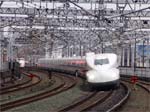
The N700 is the latest development in Japanese high-speed trains. |
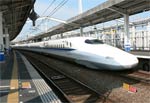
The front of the N700 has been designed using airplane technology to produce a dynamic and highly aerodynamic nose. |
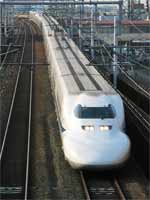
The N700 is based on the earlier 700 series trains. The main differences are the nose design, bogie skirts and lighting position. |

Older ‘Bullet Trains’ are where the grass roots of the N700 lie. |
||
| Nuremberg-Munich High-Speed Line | ||
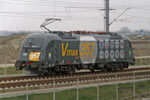
Before revenue services began, Siemens OBB 1216.050 set a locomotive world speed record on the Munich-Ingolstadt NBS (seen on Netherlands HSL Zuid). |
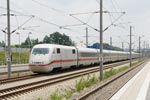
As near the two intermediate stations, the NBS is bundled with the A9 autobahn to constrain environmental impact – Allersberg (Rothsee). |
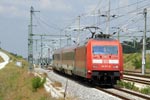
Germany's fastest regional train is the Class 101-powered 200km/h Nuremburg-Munich service. |

To encourage commuter use, RB and RE services provide an hourly service between Nuremburg and Allersberg's park & ride station. |
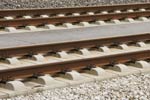
Slab track helps reduce noise levels on most of the NBS section. |
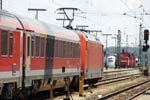
Traffic levels increase south of Ingolstadt (pictured) on the ABS section towards Munich. |
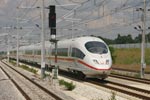
Greater journey time reductions between Munich and Berlin will follow when VDE projects north of Nuremburg are completed. |
||
| Oslo Airport (Gardermoen) Rail Link | ||
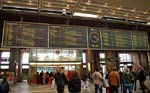
Norway's busiest station, Oslo Sentralstasjon, is the city terminus for Flytoget non-stop services from Gardermoen Airport. |
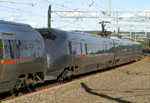
Single and two three (to be increased to four) car formations of dedicated BM71 stock operate Flytoget services. |
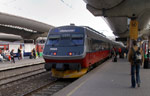
Ten minutes slower and less expensive, NSB services like this one from Oslo to Lillehammer provide competition with Flytoget for Gardermoen business. |

Alternate Flytoget services call at the junction and interchange station at Lillestrøm. |
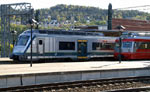
The Oslo S-Lillestrøm section is Norway's busiest main line, handling suburban, regional and intercity traffic as well as Flytoget. |
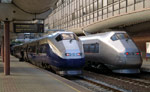
Flytoget's BM71 (right) and NSB's initially troublesome four-car tilt-equipped BM73 EMUs (left) were both built by Adtranz Strømmen. |

Alternate services proceed west from Oslo S to serve the city centre with limited stops to current western Flytoget terminus at Asker. |
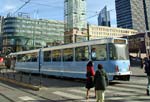
For onward travel in the city, tram services and the central bus station are immediately outside Oslo S, plus an adjoining T-bane (metro) station. |
|
| Perpignan-Figueres | ||
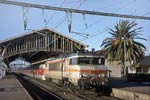
The new route will diverge from an existing line west from Perpignan station. |
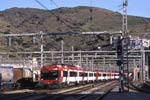
The slower classic route via Cerbère-Portbou with its change of gauge is bypassed by the new Perpignan-Figueres 1,435mm line. |
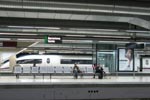
AVE stock seems unlikely to connect with the new infrastructure through the Pyrenees until at least 2012. |
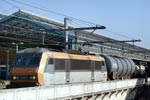
Motive power for freight as far south as Figueres is likely to provided mainly by SNCF. |

As the French LGV is years from completion west of Montpellier, Perpignan-Figueres will initially be an isolated high-speed operation. |
|
| Queensland High-Speed Line | ||
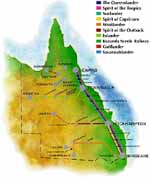
The Queensland Rail map. |
The streamlined new trains are the leaders in a new era in Australian rail travel. |

Two six-car tilting trains are being supplied by a consortium led by Evans Deakin Industries. |

With a speed of 170km/h and a gauge of 1,067mm, Queensland Rail claims the trainsets to be the fastest narrow-gauge trains in the world. |

The spacious, air-conditioned coaches have video screens at each seat, with individual audio control panels, which offer passengers a range of entertainment. |
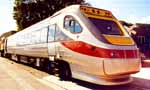
Queensland Rail's new tilting trains have cut seven hours off the journey time between Brisbane and Cairns. |
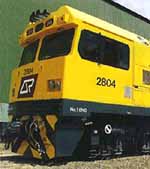
QR has bought 50 new 2800 Class locomotives from Goninan. |

The ABB Electric Intercity Express plies between Brisbane and Rockhampton (600km). |
|
| Rail Runner Albuquerque-New Mexico Express Rail | ||
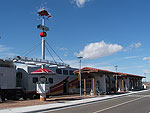
The Rail Runner at Belen Station. |
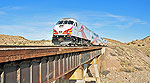
Rail Runner at Waldo Canyon between Albuquerque and Santa Fe. |

Rail Runner at Albuquerque NM. |
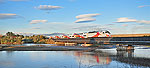
The RailRunner in Valencia County crossing the Rio Grande. |
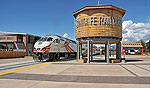
The Rail Runner at Santa Fe Railyard. |
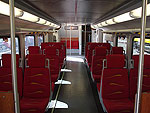
Interiors of the Rail Runner. |
| Saudi Landbridge Project | ||
The Saudi Landbridge Project will use new high-speed tracks to create the first rail link between the Red Sea and the Gulf. |
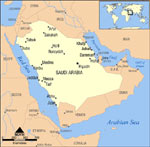
The new rail lines created through the Saudi Landbridge Project will allow cargo freight to be imported from East Asian Countries to Saudi Arabia. |

With the construction of the Jeddah–Riyadh rail link the time taken for passenger transport will be six hours, cutting the previous bus journey time nearly in half. |
| Shanghai-Hangzhou Maglev | ||
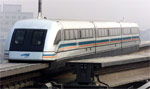
Shanghai is home to the world's only commercial high-speed maglev line. |
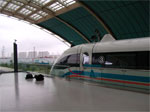
The Shanghai maglev has been used as the template for the Shanghai-Hangzhou intercity route. |

The new route will be the fastest commercial maglev route in the world, with trains capable of 430km/h. |

Maglev presents a modern face to passengers in Shanghai. |
||
| Shinkansen | ||
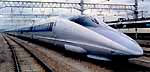
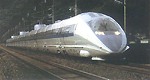
The ultra-streamlined JR500-Series train running on the Shinkansen network. |
JR Central's series 300 Nozomi, has a maximum operating speed of 270km/h and takes only two hours 30 minutes between Tokyo and Shin-Osaka. |
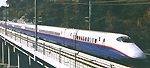
The E2 train was operational on the Shinkansen network early in 1998. |
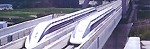
A Maglev test train reached a speed of 550km/h. Maglev transport intends to achieve operating speeds of 500km/h. |
The superconducting Maglev high-speed vehicles have been fitted with aerodynamic brake panels. |

The JR West series 500 trainsets operating on the Shinkansen network have regained the high-speed train speed record. |
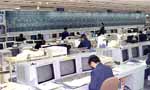
The Tokaido-Sanyo Shinkansen general control centre. |
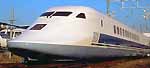
The unusual cusp-nosed design was part of the 300X development project aimed at minimising noise. |

Another of the 300X series trains with aerodynamic styling and a smooth, quiet body. |
| Speedrail | ||
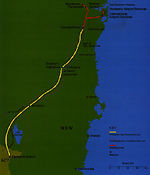
Speedrail map. |

A computer montage of a Speedrail trainset at Sydney Central station. |
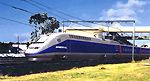
An artist's impression of the Speedrail trainset at speed. |

Nine trains, each comprising eight vehicles, will use their 320km/h capability on the new purpose-built sections of the route. |
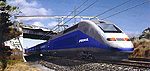
Alstom's involvement includes the design and construction of the trains. |
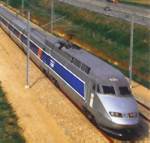
French TGV Reseau technology was at the heart of the Speedrail project. |
| Stuttgart 21 Project | ||
Presently a terminus, Stuttgart is a focal point in Germany's rail network. |
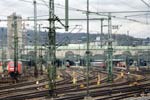
Redeveloping the Stuttgart approaches will contribute to financing the Stuttgart 21 project. |
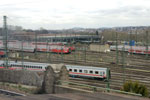
This yard is part of the 100ha of railway land that will be put to other uses. |
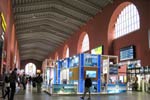
Turned through 90°, sub-surface main line platforms will parallel the current concourse orientation. |

Carrying north-south S-Bahn services, a heavy rail tunnel already passes beneath the Hbf at this point. |
Main line will run east-west beneath ground immediately north of the present concourse. |

The distinctive stone terminus building will be integrated with the development. |

With new lines and no reversals, most Stuttgart-routed services will markedly accelerate. |

Stadtbahn light rail tracks and stations will need relocation and replacement. |
Presently on an S-Bahn spur, Stuttgart's airport will gain a new station and join the ICE network. |
||
| Swiss Tilting Trains | ||
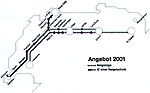
The Tilting Train Network route. |
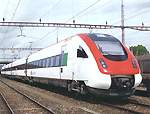
SBB has committed itself to a long-term vision of rail travel in Switzerland, entailing major efficiency improvements over the system as operated in the final years of the 20th century. This includes half-hourly services in each direction on all significant routes. |

This reduced-length early production Swiss Tilting Train unit is pictured on a test run. |
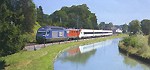
Two locomotives including the latest Lok 2000 haul one of the new Tilting trainsets through Swiss countryside prior to testing. |
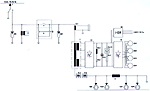
Flow chart of the ICN electrification power system supply. |
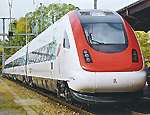
The ICN tilting train is the latest showpiece of Swiss railway technology. |
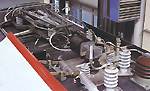
The pantograph of an ICN unit, which collects the 15kV overhead current manufactured by Adtranz. |
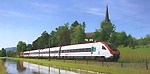
An ICN unit is towed past typical Swiss scenery while on delivery from Adtranz. |
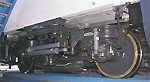
Close-up of the ICN train's bogie, fitted with the new tilting mechanism manufactured by Fiat-SIG. |
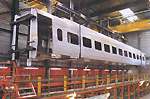
Switzerland's new ICN tilting trains being built at one of the Adtranz assembly workshops. |
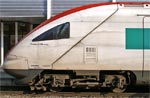
The ICN is styled by Italian design house Pininfarina. |
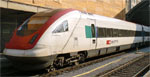
ICN sets frequently run as coupled pairs, as seen at St Gallen. |
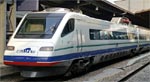
The Cisalpino consortium operates a different style of tilting train on international services. |
||
| Taiwan | ||
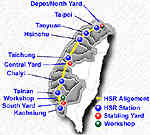
The Taiwan High Speed route. |

Schematic track laying features. |
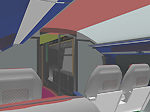
An artists impression of the plush interior of the new high-speed trains. |
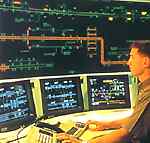
The trains will be controlled from the most modern and technologically advanced signalling centre. |

The first new Taiwan high speed train, built by Kawasaki. |
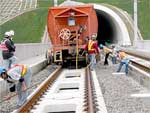
Pre-fabricated slab track has been employed throughout. |
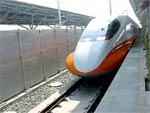
Japanese technology was chosen for the new trains. |

Stations are built to withstand trains passing at 350km/h. |
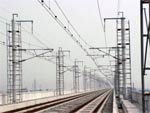
The sturdy overhead is capable of upgrading to 30kV AC. |
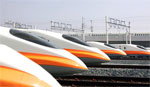
The fleet of 30 trains is now undergoing rigorous testing before the likely 2007 opening date. |
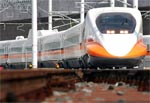
Trains will travel at 300km/h, cutting journey times from four hours to just 90 minutes. |
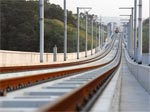
The undulating nature of the trackbed is clear to see in this view. |

Over 300km of the route is built on viaducts or in tunnels. |
||
| TGV | ||
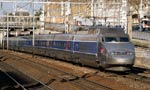
Originally orange liveried, a first-generation TGV set at Lyon, one end of the first LGV service opened in 1981. |
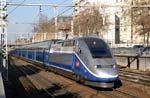
Double-deck TGV Duplex sets were a way of putting more capacity onto the LGV infrastructure. |
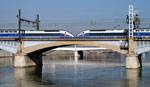
To cope with growing demand between Paris and Lyon, Duplex pairs are now used to provide over 1,000 seats per train. |
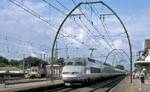
Seen in 1996, the classic route south of Bordeaux towards the Spanish border may be joined by an LGV by 2020. |
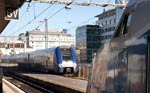
SNCF feeder services to LGV have benefited from stock renewal in recent years. |
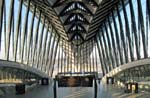
Gare de Saint-Exupéry TGV at Lyon Airport is one of several stations that has not enjoyed the same success as the network overall. |
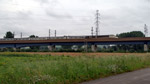
West of Lille, LGV Nord mainly handles Eurostar traffic for London via the Channel Tunnel. |

Passing beneath runways to serve Charles de Gaulle Airport, Interconnexion Est now links three LGV around the eastern edge of Paris. |
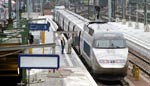
Opening Phase 1 in 2007, LGV Est attracted finance from neighbouring Luxembourg. |

With TGV Duplex on order and with the eastern extension due for a 2015 completion, earlier doubts about the success of TGV Est have been banished. |
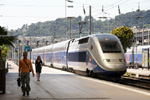
By the time Paris-Nice (pictured) is LGV throughout, the AGV is likely to be a mainstream part of French high-speed operations. |
|
| TGV Rhine-Rhone | ||

High speed trains will operate on the Eastern branch of the TGV Rhine-Rhone, including the TGV Duplex units. |

TGV Rhine-Rhone will enable massive reductions in journey times between major European cities in Germany, France, and Spain. |
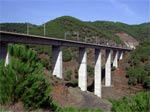
In total, 160 bridges and 12 viaducts will be built on the 140km alignment of TGV Rhine-Rhone. |

Around 40% of the new route will be in forests. Areas of population will get noise reduction barriers. |
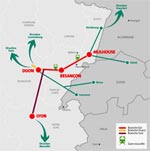
The eastern branch is the first of three lines that make up TGV Rhine-Rhone. |
|
| TGV South Korea | ||
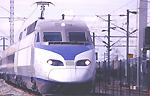
The trainsets are powered by 25kV 60Hz AC current, supplying 12 three-phase asynchronous traction motors. |
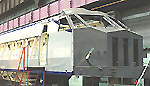
The body of a South Korean TGV power unit. |

A South Korean TGV trainset under construction. |
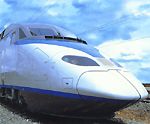
The aerodynamic nose of a South Korean TGV. |
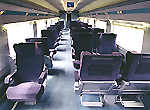
The second class interior of the South Korean TGV. |
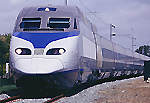
A brand new South Korean TGV. |
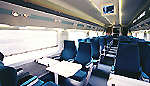
First class passengers enjoy luxurious and comfortable surroundings. |
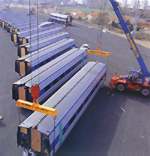
Delivery of the first 12 trainsets took place in March of 1998. |
|
| Thalys | ||

Brussels Midi is the focal point of Thalys operations, with frequent services to Amsterdam, Cologne and Paris. |

The renewal of Brussels Midi and the previously run-down surrounding area has contributed to the high-quality image of the Thalys international service. |
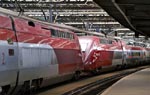
Thalys PBKA sets use TGV Duplex-style power cars and can carry 377 passengers. |
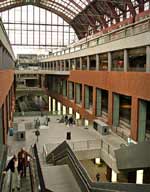
Opened in 2007, the new low-level at the rebuilt Antwerpen Centraal will allow high-speed trains to serve the city centre. |
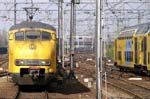
Delays with HSL Zuid and fitting compatible signalling equipment means that Thalys sets will use the congested Dutch classic routes for longer than projected. |
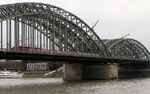
Thalys services to the eastern terminus of the service, Cologne (seen here), will be accelerated with completion of the high-speed line west of Aachen. |
| Tilting Trains | ||
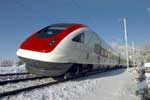
The Swiss ICN tilting train is allowing SBB to achieve its service targets. |
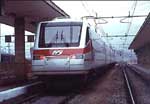
Italian railway FS was the first to introduce a regular tilting train service. |
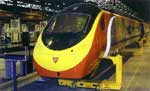
Virgin will introduce its Pendolino in June 2002. |
| Tren Urbano | ||
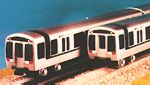
Original models of the planned Tren Urbano rolling stock. |
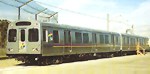
The first of the new trains began testing in December 1999. |
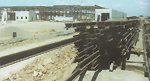
Tracklaying in progress opposite the maintenance depot at Las Lomas. |

Part of the test track under construction. |
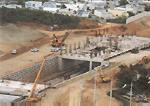
Building work underway at Martinez Nadal station, close to the site of the main maintenance depot. |
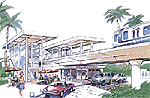
An artist's impression of one of Tren Urbano's elevated sections. |

Information, control and signalling systems will be integrated in a system installed by Matra Transportation International. |
||
| West Coast Main Line | ||
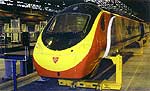
The new West Coast Pendolino under construction. |
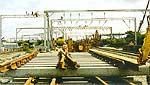
Track laying at Proof House, Birmingham. |
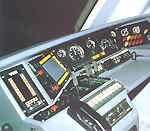
The sophisticated controls of the Pendolino trainsets. |
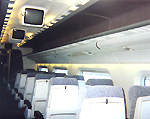
The Pendolino's aircraft-style features include onboard video. |
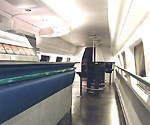
Each train has a shop rather than a traditional buffet, selling food and drink, magazines, CDs and headphones. |
The upgrading of old signalling equipment is a central feature of the West Coast modernisation programme. |
The new Proof House railway. |
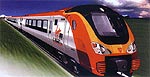
An artist's impression of the West Coast Main Line in 2003. |
|
| X2000 | ||
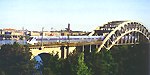
Each X2000 formation consists of two 4400hp power cars, powered at 15kV ac. Each unit can be made up of up to 16 intermediate vehicles with a maximum capacity of 1,600 passengers, but a typical train will only have five intermediate trailers. |

Sweden's X2000 fleet of tilting trains has been a major catalyst for the renewed interest in this type of technology. |
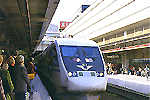
An X2000 tilting train pulls into station. |
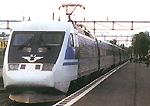
The new rolling stock will replace loco-hauled passenger trains within a few years. |
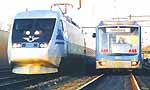
An X2000 train alongside a light rail Variotram at Gothenburg. |
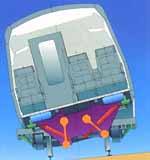
Active passenger car tilting technology. |

The front ends of X2000 trains are painted with a large area of white for high visibilty. |

The X2000 trains feature an aerodynamic bullet nose. |
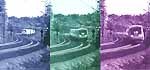
The tilting operation of an X2000 in sequence. |
| Zhengzhou-Xian High-Speed Railway | ||
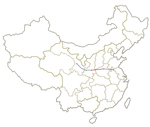
The Zhengzhou–Xi'an passenger dedicated line marked with red on the Xulan PDL from Xuzhou to Lanzhou. |
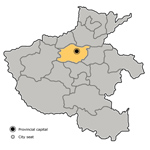
The location of Zhengzhou in the Henan province of China. |
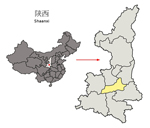
Location of Xi'an within the Shaanxi province of China. |