bvSys Bildverarbeitungssysteme - Visual Inspection Systems for Track Maintenance


|
benntec's automatic railway inspection systems combine precise error detection with high processing speeds. Imposing virtually no restrictions on scheduled rail traffic, these systems provide regular and economic track inspection. Damages are therefore discovered very early, making it possible to substantially extend the lifecycle of tracks through preventative measures. All systems feature:
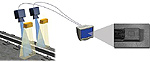
The systems can be installed individually or in combination on any type of carrier vehicle. The data gathered from all connected inspection systems is digitally stored in the central data acquisition unit (Zentrale Datenerfassung, ZDE). In the course of the recording process and upon completion of the trip, the inspection results can be analysed and documented summarily or separated by system. ProfileCheck: longitudinal track head measuringEfficient and precise, ProfileCheck detects corrugation and waves in track heads, delivering processing speeds of up to 160km/h. The system recognizes wave structures ranging from 10mm to 3,000mm in length down to the last 10µm - without deteriorating the results through self-movement and sensor vibration. During the same process phase, ProfileCheck also measures the cross profile of the track head and the gauge with 0.1mm or 1mm precision. Thanks to these exact measurements, the data obtained can also be utilized to precisely calculate the consistency of the wheel-track conicity. ProfileCheck's innovative and patented measuring process is based on the no-touch laser triangulation principle. The measuring data is recorded opto-electronically by a compact sensor head and can be viewed and analysed during the trip. RailCheck: surface track safety inspections at high speedsAt processing speeds of more than 210km/h, RailCheck inspects the entire surface track system for safety relevant inconsistencies. Defects on track are detected just as reliably as missing fasteners, sleeper and ballast defects. High-performance line cameras and laser distance sensors, which are installed vertically above the tracks, record detailed track conditions up to the gravel boundaries. The vertically angled track lighting guarantees optimum inspection results even in wet conditions. From the images generated, RailCheck compiles a transparent fault protocol online. HeadCheck: running edge damage detectionHeadCheck monitors an especially sensitive track area: the running edge. At processing speeds of up to 100km/h, HeadCheck detects even surface cracks in the running edge. With 0.1mm x 0.5mm pixel precision, the cameras record each and every detail of the surface structure. Special headspots provide precise lighting in the inspection area, so that even the smallest inconsistencies can be discovered. CrackCheck: ballastless track and concrete sleeper inspectionThe image analysis method utilized by CrackCheck is custom-designed for the inspection of concrete sleepers and ballastless track surface conditions. Two cameras provide images for each track with up to 0.4mm x 0.5mm pixel precision. This enables CrackCheck to detect cracks and run-offs in concrete particularly early. Thanks to early detection, further damage caused by encroaching humidity or loose fixtures can be effectively prevented. RailScan: visual rail track monitoring at high speedsWhether the goal is to monitor general track conditions or to enhance the performance of other testing systems, RailScan provides clear and contrast-rich colour images of the entire track environment even at very high speeds; including photos of above ground power lines, bridges, signal equipment, etc. VegetationCheck: controlling plant growth on tracksVegetationCheck generates basic data for the efficient utilization of herbicide trains simply and effectively. Supported by digital colour line cameras, the system automatically determines the level of vegetation on the tracks, track edges and track environment. During the analysis, an analytical image is created for each photo. In addition to growth information, it also shows the track location and other relevant parameters. Central data acquisition unit (Zentrale Datenerfassung, ZDE)The central data acquisition unit (Zentrale Datenerfassung, ZDE) stores data generated by all connected inspection systems, sorted by related information. Consequently, in addition to the analysis of individual systems, a complete visualization of the track can be compiled. ZDE's system architecture is open for the later installation of additional modules and interfaces with testing systems from third party manufacturers can also be implemented. At the centralized monitor workstation inside the measuring vehicle both, the testing process and the inspection results are visualized.  Contact Details Contact Details
bvSys Bildverarbeitungssysteme GmbH
Buschhöhe 2 Bremen D-28357 Germany Tel: +49 421 460461-0 Fax: +49 421 460461-20 Email: info@bvsys.de URL: www.bvsys.de |