|
Crow indian
Регистрация: 21.02.2009
Возраст: 41
Сообщений: 30,464
Поблагодарил: 398 раз(а)
Поблагодарили 6050 раз(а)
Репутация: 126141
|
Тема: White J.H. Jr. - Early American Locomotives
White J.H. Jr. - Early American Locomotives
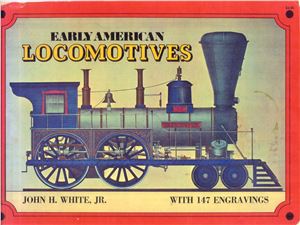
Dover Publications, Inc., New York, 1972. 148 p.
Finest locomotive engravings from early 19th century: historical (1804–1874), main line (after 1870), special, foreign, but mostly American domestic engines. Many types: grasshoppers, camel-backs, Moguls, Forneys, plus some famous ones — the General, Reuben Wells, Pennsylvania, more. Best source for a spectacular engine. 147 plates.
Скачать
Цитата:
1. Trevithick’s first locomotive. Penn-y-Darran, Wales, 1804.
2. Blenkinsop’s rack locomotive, Leeds, England, 1812.
3. Hedley’s Wylom Dilly, c. 1814.
4. John Stevens’ demonstration steam locomotive. Hoboken, 1825.
5. The Stourbridge Lion, first commercial locomotive in North America, 1829.
6. The Pride of Newcastle, built by Robert Stephenson and Co., 1828.
7. The Liverpool, built by Edward Bury of Liverpool, England, 1830,
8. Samson-class locomotive built by Robert Stephenson and Co. in 1830.
9. The Herald, Samson-class locomotive of the Baltimore and Susquehanna Railroad. 1831.
10. The Best Friend, West Point Foundry for the South Carolina Railroad, 1830.
11. The West Point, completed in 1831 for the South Carolina Railroad.
12. The De Witt Clinton, West Point Foundry for the Mohawk and Hudson Railroad, 1831.
13. Reconstruction of locomotive built by William T. James for the Baltimore and Ohio Railroad, 1831.
14. The Experiment, West Point Foundry for the Mohawk and Hudson Railroad, 1832.
15. A standard Norris locomotive of about 1840.
16. The Sandusky, first locomotive built by Thomas Rogers of Paterson, New Jersey, 1837.
17. Campbell's eight wheeler completed in 1837 for Philadelphia, Germantown and Norristown Railroad.
18. The Hercules, Eastwick and Harrison's improvement of Campbell's plan, 1836-1837.
19. The Andrew Jackson, Ross Winans’ grasshopper, built in 1836 and remodeled in 1892 to represent the Atlantic.
20. The Mozeppo, an improvement of the grasshopper, known as the “crab,” 1838.
21. i he "mud digger,” an eight-wheel version of the crab, built in 1841 and 1842.
22. The Cumberland, a more powerful form of mud digger Winans devised for the В & 0,1845.
23. Camden and Amboy’s John Stevens based on an English design. 1849.
24. The fllinois, a high-speed express locomotive built in 1852 by James Millholland.
25. The General, built in 1855 by Rogers for the Western and Atlantic Railroad.
26. The Phantom, a wood-burning locomotive built in 1857 by William Mason, Taunton, Massachusetts.
27. Standard eight wheeler typical of its maker, the Rogers Locomotive and Machine Works, c. 1865.
28. The Pennsylvania, a heavy pusher engine built in 1863 by the Philadelphia and Reading Railroad.
29. The Reuben Wells, a ten-wheel tank engine, built for the Madison and Indianapolis Railroad in 1868.
30. The Janus, patterned on a British patent of R. F. Fairlie. built in 1869-1870 for the t Central Pacific Railroad by Mason
Machine Works.
31. The Consolidation, a new style of freight locomotive introduced by the Baldwin works in 1866.
32. The Sampson, a six-wheel tank locomotive built by Union Iron Works, San Francisco, 1867.
33. The America, built by Grant Locomotive Works of Paterson, New Jersey, for the Paris Exposition of 1867.
34. The John B. Turner, constructed in shops of the Chicago and North Western Railway in 1867.
35. The General Darcy and the N. Perry, built in shops of the New Jersey Railroad and Transportation Company in 1868
and 1867 respectively.
36. New Jersey Railroad and Transportation Co.’s No. 44,1870.
37. New Jersey Railroad and Transportation Co.’s No. 143,1870.
38. Pittsburgh, Fort Wayne and Chicago eight wheeler, c. 1869.
39. Boston and Albany’s 242, built by Wilson Eddy, 1874.
40. Baldwin American, Baldwin Locomotive Works, Philadelphia, 1871,
41. Side elevation section of the Baldwin American, 1871.
42. Grant American. Grant Locomotive Works, Paterson, New Jersey, 1873,
43. Baldwin Mogul, Baldwin Locomotive Works, Philadelphia, 1872.
44. Baltimore and Ohio Railroad Mogul, No. 600, В & О Shops. Baltimore, 1875.
45. Boston, Concord and Montreal Railroad Mogul. Mi. Washington, Manchester Locomotive Works. Manchester.
New Hampshire, 1879,
46. Philadelphia and Reading Railroad Consolidation, No. 415, Baldwin Locomotive Works, Philadelphia, 1880.
47. Pennsylvania Railroad Consolidation, No. 400, Pennsylvania Shops, Altoona, Pennsylvania, 1885,
48. Lehigh Valley Railroad. No. 82, Bee, Lancaster, Pennsylvania, 1867.
49. Lehigh Valley Railroad Twelve Wheeler, Champion, Lehigh Valley Shops, Weatherly. Pennsylvania. 1882.
50. Central Pacific Railroad Twelve Wheeler, No. 229, Central Pacific Shops, Sacramento, 1882,
51. Pennsylvania Railroad American, No. 10, Pennsylvania Shops, Altoona, Pennsylvania. 1881.
52. Philadelphia and Reading Railroad American. No. 41 1, P & R Shops, Reading, Pennsylvania, 1880.
53. St. Louis and San Francisco Railroad American, Copt. C. W. Rogers, Rogers Locomotive Works, Paterson, New Jersey, 1880.
54. Long Island Railroad American, No. 83, Rogers Locomotive Works, Paterson, New Jersey, 1882.
55. New York, Susquehanna and Western Railroad Mogul, No. 35. Rogers Locomotive Works, Paterson, New Jersey, 1884.
56. New York, New Haven and Hartford Railroad American, No. 106. New Haven Shops. New Haven, Connecticut, 1882.
57. Michigan Central Railroad Mogul, No. 269. Schenectady Locomotive Works, Schenectady. New York, 1886.
58. Ohio and Mississippi Railway American, No. 53, rebuilt at the О & M Shops. Vincennes. Indiana, 1888.
59. Pennsylvania Railroad American, No. 1222, Pennsylvania Shops. Altoona, Pennsylvania, 1888.
60. Lake Shore and Michigan Southern Railway American, No. 220, Brooks Locomotive Works, Dunkirk, New York, 1888.
61. Lake Shore and Michigan Southern Railway American, No. 195, Schenectady Locomotive Works, Schenectady,
New York, 1886.
62. Chicago, Milwaukee and St, Paul Railroad. No. 796, Schenectady Locomotive Works, Schenectady, New York, 1889.
63. Northern Pacific Railroad Consolidation, No. 10,000, Baldwin Locomotive Works, Philadelphia, 1889.
64. Baltimore and Ohio Railroad American, No. 859, Baldwin Locmotive Works, Philadelphia, 1893.
65. New York, Lake Erie and Western Railway Decapod, No. 805, Baldwin Locomotive Works, Philadelphia, 1893.
66. Philadelphia and Reading Railroad Columbia, No. 6 94,Baldwin Locomotive Works. Philadelphia. 1893.
67. Baltimore and Ohio Railroad American, No. 858, Baldwin Locomotive Works, Philadelphia, 1893.
Baltimore and Ohio Railroad American, No. 887, Baldwin Locomotive Works, Philadelphia. 1893.
Baltimore and Ohio Railroad Consolidation, No. 1223, Baldwin Locomotive Works, Philadelphia. 1893.
68. Baltimore and Ohio Railroad Ten Wheeler, No, 1342, Baldwin Locomotive Works. Philadelphia, 1893.
Central Railroad of New Jersey American. No. 450, Baldwin Locomotive Works, Philadelphia, 1893.
Norfolk and Western Railroad Consolidation, No. 330, Baldwin Locomotive Works, Philadelphia. 1893.
69. Baltimore and Ohio South Western Railway Ten Wheeler, No. 123, Baldwin Locomotive Works, Philadelphia. 1893.
70. Lima Northern Railroad Mogul, No, 61, Baldwin Locomotive Works, Philadelphia, 1893,
71. Lake Shore and Michigan Southern Railway Ten Wheeler, No. 600, Brooks Locomotive Works, Dunkirk, New York, 1893.
72. Cincinnati, Hamilton and Dayton Railroad American, No. 210, Brooks Locomotive Works, Dunkirk, New York, 1893.
73. Great Northern Railway Mastodon. No. 410, Brooks Locomotive Works. Dunkirk, New York, 1893.
74. Great Northern Railway Consolidation, No. 515, Brooks Locomotive Works. Dunkirk, New York, 1893.
75. Lake Shore and Michigan Southern Railway American, No. 599, Brooks Locomotive Works, Dunkirk, New York, 1893.
76. Great Northern Railway Ten Wheeler, No. 650, Brooks Locomotive Works, Dunkirk, New York, 1893.
77. Great Northern Railway Mogul, No. 351, Brooks Locomotive Works, Dunkirk, New York. 1893.
78. Canadian Pacific Railway Ten Wheeler, No. 626, Canadian Pacific Shops, Montreal, 1893.
79. New York Central and Hudson River Railroad American, No. 999,1892.
80. Old Colony Railroad American, No. 256, Old Colony Shops, Boston, 1893,
81. Terre Haute and Indianapolis Railroad (Vandalia Line) Ten Wheeler, No. 1450, Pittsburg Locomotive Works, Pittsburg, 1893.
82. Chicago, Milwaukee and St. Paul Railway Pacific, No. 830, Rhode Island Locomotive Works, Providence, 1893.
83. New York, New Haven and Hartford Railroad American, No. 254, Rhode Island Locomotive Works, Providence. 1893.
84. Minneapolis, St. Paul and Sault Ste. Marie Railroad (Soo Line) Consolidation, No. 400, Rhode Island Locomotive
Works, Providence, 1893.
85. Chesapeake and Ohio Railroad Consolidation, No. 350, Richmond Locomotive Works, Richmond, 1893.
86. Chicago, Burlington and Quincy Railroad American, No. 550, Rogers Locomotive Works, Paterson, New Jersey, 1893.
87. Charleston and Savannah Railway (Plant System) Ten Wheeler, No. 100, Rogers Locomotive Works, Paterson,
New Jersey, 1893.
88. Chicago and North Western Railway Ten Wheeler, No. 400, Schenectady Locomotive Works. Schenectady, New York, 1893.
89. Duluth and Iron Range Railroad Twelve Wheeler, No. 60, Schenectady Locomotive Works, Schenectady, New York, 1893.
90. Mohawk and Malone Railroad Consolidation, No. 61, Schenectady Locomotive Works, Schenectady, New York, 1893.
91. Canada Southern Railroad Fontaine Locomotive, Grant Locomotive Works, Paterson, New Jersey, 1881.
92. Philadelphia and Reading Railroad (Bound Brook Line), No. 507, Baldwin Locomotive Works, Philadelphia, 1880.
93. Central Pacific Railroad Prairie Tank Locomotive, No. 236, Central Pacific Shops, Sacramento, California, 1882.
94. Atchison, Topeka and Santa Fe Railroad Consolidation, Uncle Dick, Baldwin Locomotive Works, Philadelphia, 1878.
95. Billerica and Bedford Railroad Forney, Ariel, Hinkley Locomotive Works, Boston, 1877.
96. New York Elevated Railroad Forney, No. 39, Baldwin Locomotive Works, Philadelphia, 1878.
97. New York and Harlem Railroad Forney, No. 26. Schenectady Locomotive Works, Schenectady, New York, 1876,
98* Denver, South Park and Pacific Railroad Mason double truck, Brecfcenridge, Mason Machine Works, Taunton,
Massachusetts, 1879,
99. Providence, Warren and Bristol Railroad Mason double truck, Pokanoket, Mason Machine Works, Taunton,
Massachusetts, 1885,
100. Providence, Warren and Bristol Railroad, Annavvomscuft, Taunton Locomotive Manufacturing Company, Taunton,
Massachusetts, 1887.
101. Forney locomotive for unknown railroad, Brooks Locomotive Works, Dunkirk, New York, c. 1885.
102. Indianapolis and Evansville Railway Forney, Rhode Island Locomotive Works, Providence* 1880.
103. Saginaw Bay and North Western Railroad 0-4-2, /ohn C. Durgin* H. K, Porter and Co., Pittsburgh, 1884.
104. Central Railroad of New Jersey, No, 196, Grant Locomotive Works* Paterson, New Jersey, 1872.
105. Illinois Central Railroad Ten Wheel Double-Ender, No. 213, Rogers Locomotive Works, Paterson, New Jersey* 1880,
106. Longfellow Mining Co, (Arizona) 0-4-0T* Coronado, H. K. Porter and Co,* Pittsburg, 1880.
107. Steel mill service Q-4-0T* Pittsburg Locomotive Works, Pittsburg* 1893.
108. New Mexico Railway and Coal Со. 2-4-2T, No. 13361, Baldwin Locomotive Works, Philadelphia, 1893.
109. Mine locomotive 0-4-0* Dickson Manufacturing Co.* Scranton* Pennsylvania* c. 1885.
110. Baltimore and Potomac Railroad* No, 22* Baldwin Locomotive Works, Philadelphia* 1873.
111. Prince of Grand Para Railroad (Brazil) rack locomotive, Gur/сю, Baldwin Locomotive Works* Philadelphia, 1886.
112. Pole road locomotive* Perdido* Adams and Price* Nashville* 1884.
113. Hardwick and Woodbury Railroad Shay geared locomotive* No. 450* Lima Locomotive Works, Lima* Ohio* 1893.
114. Haydenville Branch Railroad 0-4-0, No, 2, Rogers Locomotive Works, Paterson, New Jersey, 1879,
115. 0-4-0, No. 11, Cooke Locomotive and Machine Works, Paterson* New Jersey, c. 1885.
116. Georgia Railroad* No. 21, Rogers Locomotive Works* Paterson* New Jersey* 1877.
117. Chicago and North Western Railway, No. 140* Schenectady Locomotive Works* Schenectady, New York, 1893,
118. Great Northern Railway* No. 258, Brooks Locomotive Works* Dunkirk, New York, 1893.
119. Crescent City Railway (New Orleans) fireless locomotive, Theodore Scheffler* Paterson* New Jersey, 1876.
120. Central Railroad of New Jersey* Star, C.R.R.N.J, shops, Elizabethport, New Jersey, 1871.
121. London and North Western Railway, No. 503, Francis W. Webb, Crewe, England, 1884.
122. London and North Western Railway, No. 1301, London and North Western Shops, Crewe, England, 1889.
123. London and North Western Railway, Cornwall, 1847, and Nipper.
124. Great Northern Railway (England), No. 232, Great Northern Shops, Doncaster, England, 1885.
125. Caledonian Railway 4-4-0, No. t28, Neilson and Co., Glasgow, Scotland, c. 1881,
126. Southeastern Railway six-wheel goods engine. No. 285, Sharp, Stewart and Co,, Manchester, England, c. 1882.
127. London, Brighton and South Coast Railway Terrier, Brighton, c, 1882.
128. Northeastern Railway, No. 947, Neilson and Co., Glasgow, Scotland, 1874.
129. Great Southern and Western Railway of Ireland, No. 35, Great Southern and Western Shops, 1879,
130. Mersey River Tunnel Railway, No, 1,Beyer. Peacock and Co., Manchester, England, 1886.
131. Experimental locomotive, James Toleman, Hawthorne, Leslie and Co,, Newcastle. England. 1892.
132. Western Railway of France, No. 3535. Compagnie de Fives-Lille, c. 1885.
133. Wurtemburg State Railroad 2-4-0, Esslingen Machine Works, Esslingen, Germany, c. 1875.
134. Swiss Northeastern Railroad 0-4-0, No. 98, Esslingen Machine Works, Esslingen, Germany, 1874.
135. Swiss compensating lever locomotive, Swiss Locomotive Works, Winterthur, Switzerland, 1878.
136. Villa Real and Villa Regoa Tramway (Portugal) 0-6-0-0-6-0. Swiss Locomotive Works, Winterthur, Switzerland, c. 1878.
137. New Zealand Railway Columbia, Washington, Rogers Locomotive Works, Paterson, New Jersey, 1877.
138. New Zealand Railway Prairie, Baldwin Locomotive Works, Philadelphia. 1885.
139. Mejia and Arequipa Railway (Peru) steam inspection car, La Joya, Rogers Locomotive Works. Paterson, New Jersey, 1869.
140. Paulista Railroad (Brazil) Consolidation, No. 17, Dubs and Co., Glasgow, Scotland, 1884.
141. Dom Pedro II Railroad (Brazil) Decapod. Baldwin Locomotive Works, Philadelphia, 1885.
142. Mejia and Arequipa Railway (Peru) Mogul, No, 750,Danforth, Cooke and Company, Paterson, New Jersey, 1871.
143. N'uevitas and Puerto Principe Railway (Cuba) Ten Wheeler, No. 7, Rogers Locomotive Works, Paterson, New Jersey. 1874.
144. Leopoldina Railway (Brazil) Mogul, Antonio Corlos, Rogers Locomotive Works, Paterson, New Jersey, 1878.
145. Barao de Araucana Railway (Brazil) Mogul, Santo Maria Magdalena, Rogers Locomotive Works, Paterson, New Jersey, 1878.
146. Desempeno, Rogers Locomotive Works, Paterson, New Jersey, 1875,
147. Matanzas Railroad (Cuba), No. 32, Rogers Locomotive Works, Paterson, New Jersey, 1878.
|
Цитата:
This volume presents a collection of reproductions of the more decorative locomotive engravings published during the late nineteenth century, u'ith emphasis on American locomotives. We will not offer a formal history in these pages, but a list of references is included for those seeking more information on the development of the railway engine.
The illustrations are drawn almost entirely from the engineering trade press, most particularly from the Railroad Gazette and Engineering, both of which produced folio-size collections of the better plates appearing in their respective pages. The Railroad Gazelle’s collection, first published in 1883 under the title Recenl Locomotives, treated both domestic and foreign engines; it is from the greatly enlarged second edition of 1886 that we have reproduced so many of the plates in the present volume. Matthias N. Forney [1835-1908], editor of the Gazette when this book was produced, was a respected expert on railroad machinery, who had worked as a locomotive designer as a young man. During these years he obtained patents for a peculiar style of tank locomotive that came to bear his name, and therefore the extended space devoted to this design in Recent Locomotives is not difficult to understand. After 1870, the year in which Forney became associate editor of the Gazette, his rise in railway engineering circles was rapid; he was soon an officer in several national engineering societies. His Catechism the Locomotive Engine [1874] went through many editions and became the basic American handbook on that subject, ’he present volume contains several reproductions from the Catechism and from a historical catalog Forney prepared in 1886 for the Rogers Locomotive Works; both of these works are now rare.
The other primary source for the present illustrations was produced by the British journal, Engineering. Entitled A Record of The Transportation Exhibits at the World’s Columbian Exposition of 1893, this 779-page tome presented in pictures and text a very full account of the transportation machinery exhibits gathered at Chicago lo celebrate the four-hundredth anniversary of Columbus' first landing. As it happened, the fair opened a year late, but no matter—it was a stupendous attraction that drew thousands of visitors and exhibitors to Chicago’s lake front. Among the exhibitors were locomotive manufacturers, the Baltimore and Ohio Railroad and a few foreign railways. !’he manufacturers, obviously interested in showing their latest wares, featured engines known as compound locomotives because they used the steam twice before exhausting it to the atmosphere. Great fuel economies were claimed for these locomotives, but the additional machinery necessary cancelled the savings. However, the design, essentially a European development, was just gaining favor in the United States when the fair opened, and each builder was anxious to show off his particular type of compounding.
The Baldwin Locomotive Works, as might be expected from the leading American manufacturer, had the largest exhibit, consisting of sixteen engines. The Brooks Works of Dunkirk. New York, showed eight, while most of the other major builders were content to send only one or two machines. Several tiny industrial locomotives of the H. K. Porter Company were entered, though they must have seemed dwarfed alongside the giant main-line engines. The В & О Railroad took for itself the job of portraying the locomotive's historical development through a series of original and full-size wooden models, which were so skillfully done that they fooled "even the very elect." Some of the engravings dutifully made of the replicas for Engineering's book are included in our first part. Historical Locomotives. In all, 62 locomotives were shown at the Columbian Exposition.
fames Dredge (1840-19061. the author of this heroic volume on the exhibition, was something of a hero himself, at least to the world of engineering. Coming from a family of engineers, he first worked under the great British locomotive expert Daniel K. Clark. In 1866 he joined Zehra Colburn, the American journalist who founded Engineering magazine in London, and after Colburn’s suicide in 1870, Dredge became a joint owner of the magazine. Dredge showed a particular interest in the world’s fairs so prevalent during the last century, filling the pages of Engineering with descriptions of the wonders to be seen in Vienna 1873, Philadelphia 1876, Paris 1879 and elsewhere. In 1893 he was appointed British Commissioner to the World’s Columbian Exposition, and this event he chronicled most completely, as already noted. Many honors came to Dredge late in his life, including two Legion of Honor awards.
We have reproduced engravings from several other technical publications in addition to the sources already noted. The temptation was present to introduce materials from the popular papers of the period, such as Harpers, or the colorful prints of Currier and Ives, but these views are generally incorrect or imaginary, charming as they may be. For the sake of accuracy, therefore, we preferred to confine our presentation to those materials available in the engineering press.
Engravings were the only practical form of printed illustration before the introduction of the cheap halftone process in the 189Q's, Hundreds of artisans were employed throughout the land preparing line cuts for newspaper, magazine, book and catalog illustrations. These illustrations might be cut or engraved on wood, copper, or steel—the finer, more detailed drawings usually being done on metal plates. Some were drawn from nature or the artist's imagination, but much of the work was copied directly from photographs. This was more convenient than traveling to the prototype and more accurate than working from a sketch. The artist may have been only a copyist, but the precision of his images reflects a fine drafting skill, particularly in illustrations of machinery. An example of an engraving that agrees exactly with the surviving photograph is given.
Because we expect this book to be of interest to the artist, a few remarks on the finish and painting of locomotives are included here. The cheap locomotive prints which are available today as decorator items are sometimes mechanically accurate, many being reproduced from the originals, but the colors are often grotesque misrepresentations of the actual finishes. Sometimes the coloring is undoubtedly inspired by the garishly decorated locomotives seen on tourist railways or television dramas; sometimes it can be blamed on the printers' indifference. But in nearly all cases there is too much color. Even at the high point of locomotive decoration in the 1850*s, a relatively small part of the locomotive was painted; most of the machinery was polished metal, while the dome and cylinder covers, together with most small fittings, were bright brass. The boiler was covered in russia iron, a shiny rust-resistant sheet metal which came in many hues ranging from brown to blue, but was commonly a silver grey hue. Red paint was often used on the wheels, cowcatcher and cab, or just on the wheels with the cab and cowcatcher painted green. Sometimes the cab was in a natural wood finish of walnut, oak or cherry. The striping and ornamentation were delicate and finely shaded, and never done in a clumsy, circus-wagon style that is too often employed in modern imitations of the original livery.
It was only from about 1845 to 1870 that this highly elaborate style of painting was in fashion; bright colors appear to have been used previously, but the general decorative treatment was more restrained. Actually there is relatively little information available on the subject of color until the late 1840's when locomotive builders began to produce full-color lithographs of their products, which clearly document the desire for more ornamental machines. However, highly finished locomotives fell from favor during the 1860's, primarily because of cost; another factor was the introduction of coal burning and its sooty smoke which soon covered the engine’s brightwork with a stubborn grime, During the next two decades the brightly finished locomotive vanished from the American scene, replaced by the business-like engine with more and more of its exterior painted black. Gone were the elaborate architectural features, much of the brass, and all of the bright paint. By the 1890's some mads were eliminating (he lustre of the russia iron in favor of painted black sheet metal coverings. Only the connecting rods and a few other incidental bright steel or brass accessories, such as the bell and whistle, offered any contrast to the sombre black machine.
This book has been arranged in four sections in an effort to divide the locomotives into logical groupings by dale, type or place of service. The division is somewhat arbitrary, and some machines might logically fit in two or more categories, but the arrangement should at least help to emphasize the major classifications for those not well acquainted with the subject. In addition to the earliest locomotives, the historical chapter also includes some machines whose design was antique even for their date of construction; the Eddy Clock is a case in point. The second chapter encompasses typical main-line freight and passenger engines for the years 1870 to 1895. The oddities, industrial and switching engines, are dealt with in the third chapter, which also might have included some of the machines shown in Chapter 1, as mentioned in the captions. The last chapter indicates what was going on elsewhere in the world. The export engines, it might be noted, are almost entirely standard American designs with necessary modifications for overseas service.
Because our presentation is confined to engravings it logically ends in the 1890’s when the widespread practice of that art died.
The system used to classify the locomotives in these pages is easily explained. The basic classification for locomotives is by wheel arrangement. Since the beginnings of steam railroads, an indication of the number of wheels has been the commonest method of communication between locomotive men; such a simple description as “ten wheeler" conveys a clear picture of the general arrangement and even the approximate size and type of service of the locomotive to anyone familiar with the subject. Errors are possible, however, for a ten wheeler could could mean an engine with four leading and six driving wheels (4-6-0) or an engine with ten driving wheels (0-10-0) or even a machine with two leading and eight driving wheels. (2-8-0) although the term is commonly understood to mean (he first-mentioned type. To avoid such misunderstanding the wheel arrangement classes were formalized into a three-number system by a New York Central mechanical official, Frederic M. Whyte (1865—1941), in 1900.
The first figure in the three-number symbol indicates the number of leading wheels, the second figure the number of driving wheels and the final figure the number of trailing wheels. Using the ten wheeler as an example, if we had four leading wheels, six driving wheels and no trailing wheels, the Whyte symbol would be 4-6-0.
In addition to wheel counting, certain types of locomotives also acquired class names, which are used interchangeably with the Whyte symbols. The more common names are listed below, including those which were developed in the twentieth century and are not therefore represented in the present volume.
|
Последний раз редактировалось Admin; 03.11.2014 в 18:04.
|







 03.11.2014, 17:43


 Похожие темы


 Почта
Почта


