Industry Summary
Although there has been much political manoeuvring over the rail industry in the past, it remains one of the best possible transport solutions for the modern world. The rail network can transport both passengers and freight quickly and safely over large distances and only produce a fraction of the carbon emissions that would be produced if cars or lorries were used for the same purpose.
UK rail industry expansions
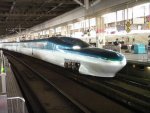
The rail network can transport both passengers and freight quickly and safely over large distances and only produce a fraction of the carbon emissions that would be produced if cars or lorries were used.
Rail will therefore play a big part in future transport infrastructure in the UK, as it is regarded as one of the more sustainable transport solutions. In April 2007 a £2.4bn programme of rail expansion was announced by Network Rail over the next two years to include over 900 projects.
Platforms will be lengthened, new platforms added, new tracks laid, line speeds raised and capacity added with major re-signalling work. John Armitt, the Chief Executive of Network Rail, said: "The railway is thriving. Demand for rail continues to grow.
"Three million people use the railways each day, more than at any time in the past 60 years, and we're not standing still waiting for the big infrastructure projects to be delivered. We are doing something about it now by moving forward with hundreds of small schemes dotted around the country that will add capacity and ease crowding."
Talking to individuals who work in the passenger and freight operations in the UK has highlighted a big problem with lack of capacity on the UK rail network. Hopefully, the new rail expansion programme will target some of the problems and allow the rail network to be more useful. Network Rail also seems to be committed to training, with £30m to be invested over five years in its advanced apprenticeship scheme to train new personnel.
UK rail franchises
One of the major passenger operators, GNER, had its £1.3bn East Coast franchise (from London to Edinburgh via York) taken away by the Department of Transport in December 2006 because it was struggling to keep up with the franchise payments (some analysts say their bid was £300m too high).
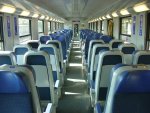
Rail will play a big part in future transport infrastructure in the UK, as it is regarded as one of the more sustainable transport solutions.
The company had fallen foul of lower ticket sales and higher electricity prices. It is believed the 7 July 2005 London bombings may have contributed to the lower ticket sales. GNER will continue to manage and hand over the franchise over a period of 18 months; it is not yet known if redundancies will follow.
Meanwhile, Virgin Rail was able to negotiate a new franchise deal with the government for the West Coast Main Line in late 2006, which included lucrative government subsidies. Virgin has also introduced ITS new Pendolino trains on the line, one of which was involved in an incident in February 2007, leading to 22 injuries and one death. The cause was believed to be faulty points but the investigation continues; whether ticket sales suffer remains to be seen. The West Coast line (London to Glasgow) is currently in the midst of a much needed £8bn modernisation scheme.
The freight sector is also not without its problems, with EWS struggling to fill contracts for its EWS Energy subsidiary due to lack of capacity, causing trains to be cancelled.