



 |

|
|
 17.01.2026, 05:41
|
#1 (ссылка) |
|
Crow indian


Регистрация: 21.02.2009
Возраст: 41
Сообщений: 30,470
Поблагодарил: 398 раз(а)
Поблагодарили 6057 раз(а)
Фотоальбомы:
2624 фото
Записей в дневнике: 911
Репутация: 126141
|
Тема: The emergence of diesel and electric locomotives on China's railwaysThe emergence of diesel and electric locomotives on China's railways P.V. KASHIN, Locomotive Engineering Bureau, branch of Russian Railways Today, the Chinese railway network is one of the largest in the world.: It is connected to the railways of Kazakhstan, Mongolia, Vietnam, North Korea and Russia. Therefore, before starting the story about the appearance of diesel and electric traction in China, it is worth giving general information about the history of the appearance of railways there and some of their features. The first attempts to build railways were of an advertising nature and did not arouse the interest of local officials. Moreover, the Chinese government was hostile to the appearance of a new type of transport on its territory. This continued until China's defeat in the First Sino-Japanese War (1894-1895). Realizing the need to have an extensive network of reliable and all—weather communication routes within the country, the Chinese government began to grant concessions for railway construction to foreign companies. By 1911, there were about 9,000 km of railways in China, mostly designed, built, owned and operated by foreign companies. During the era of the Republic of China, from 1912 to 1949, the development of the railway network in China slowed down due to a series of civil wars and the invasion of Japan during the Second Sino-Japanese War. One of the few exceptions was Northeast China (Manchuria), where in 1901 The Russian Empire opened traffic on the Chinese-Eastern Railway (CER). However, after Russia's defeat in the Russian-Japanese War (1904-1905), the Japanese gained control of the section of this railway south of Changchun. In 1935, the Japanese bought the northern part of the Sino-Eastern Railway from the Soviet Union, which became part of the National Railway of the puppet state of Manchukuo in the north of modern China. 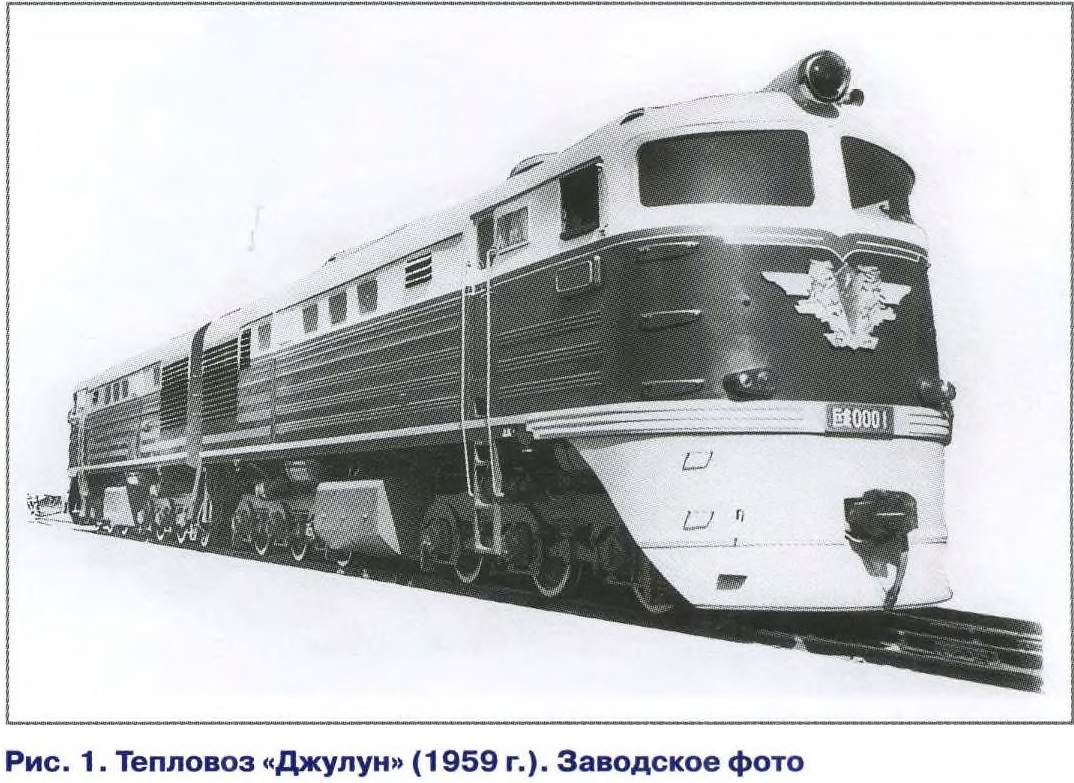 After the establishment of the People's Republic of China (PRC) in 1949, the new government under the leadership of Mao Zedong invested heavily in the development of Chinese railways. As of 2022, their length has reached 155 thousand km. Most of the lines have a standard gauge (1435 mm). In addition, there are lines with a gauge of 750 mm (3,600 km) and about 460 km of lines with a gauge of 1,000 mm. A Janney coupling is used on standard gauge rolling stock. On two- and multi—track sections, left-hand traffic is used (the same as in Russia on the Moscow-Ryazan line). Therefore, the driver's workplace in the cabin of a Chinese locomotive is located on the left, and the assistant's place is on the right along the way. Of course, the first locomotive traction on Chinese roads was steam locomotives. And it existed for quite a long period of time. For example, the QJ steam locomotive, based on the Soviet PV series steam locomotive, was produced until 1988. This article describes the origin of electric and diesel traction on the railways of China. I would also like to draw readers' attention to the fact that the designation of locomotives in China is the same as in most European and Asian countries. It consists of the series and the serial number of the locomotive in the series. The serial number of each locomotive is usually constant, i.e. it is retained from the moment it leaves the gates of the locomotive factory until decommissioning and disposal. Chronologically, we will begin our story with diesel locomotives, although their appearance on the steel highways of our southeastern neighbor overtook the appearance of the first electric locomotives by just a few months! "THE GREAT DRAGON" — "EAST WIND"In 1957, an agreement was signed with the Soviet Union on technical cooperation and assistance in the development of a diesel locomotive. Chinese specialists completed internships at locomotive factories in the USSR: they studied the design of diesel locomotives, diesel engines and their production technology. Subsequently, it was this experience and knowledge of specialists that played an important role in the construction of the first Chinese diesel locomotive. In addition, the Dalian Scientific Research Institute borrowed a Swiss-made diesel locomotive from the Qiqihar Machine-Building Plant, which it had previously purchased as a visual aid to study its design and operating principle. In May 1958, the Chinese Communist Party (CPC) approved the "new general line" proposed by Mao Zedong — the course of the "three red banners": the "great leap forward", the "people's commune" and the "new general line". Therefore, it was decided to finish all the work on the design and manufacture of an experimental diesel locomotive by October 1, i.e. by the Day of the Formation of the PRC. Due to the lack of experience and technology, Chinese locomotive builders could not start designing a complex machine from scratch. At that time, the USSR provided China with some drawings of the TEZ diesel locomotive and technical documentation for the 2D100 diesel engine. Despite the fact that the locomotive was created on the basis of Soviet technical documentation, the Chinese did not limit themselves to complete copying, but brought their own unique "notes" to the design. Work on the construction of the locomotive, which became China's first mainline freight locomotive with electric transmission, was carried out at the Dalian Locomotive Works. Even at the design stage, a competition was announced for the name of the new locomotive. The name "Great Dragon" won by a wide margin (Chinese Pinyin Julong, Rus. Juloon). The Great Dragon type diesel locomotive was a mainline diesel locomotive consisting of two single-turbine sections (11^0001 and |!U£0002) with a capacity of 2000 hp each, having the same design and using as a power plant a two-stroke inline diesel engine created according to the Soviet 2D100 type. On the afternoon of September 26, 1958 The Great Dragon made its first test run on the Shenyang—Dalian railway, covering a total of more than 60 km at a maximum speed of 50 km/h. On the Day of the Founding of the People's Republic of China, an exhibition was held at which the locomotive, along with other samples of railway equipment, was presented to visitors (Fig. 1). On December 29, 1963, locomotive No. 0003 was assembled at the Dalian Locomotive and Rolling Stock Plant, and in September 1964, locomotive No. 0004 was assembled. These locomotives were designated ND, where "N" and "D", respectively, stood for "diesel locomotive". They had a different shape of the driver's cabin compared to locomotives No. 0001 and 0002, which was unofficially nicknamed the "Crying Face" — "Crybaby" (Fig. 2). In August 1966, the Cultural Revolution began. In the spirit of the times, many locomotive series have received new designations and serial numbers. ND diesel locomotives became known as "East Wind" (JsR, pinyin: Dongfeng, Rus.: "Dongfeng") or abbreviated DF. It should be noted here that although they were sometimes called DF1 in the literature, in fact, the unit was not provided for in the designation of locomotives of this type. Until the beginning of the 21st century, all subsequent series of diesel locomotives directly produced in China (not imported) with electric power transmission received the designation "DF + serial number of the series". Serial production of DF (originally ND) diesel locomotives began in 1965. Prior to the suspension of production in 1972, the Dalian Locomotive and Rolling Stock Plant, Chengdu Locomotive and Rolling Stock Plant, Qishuyang Locomotive and Rolling Stock Plant, and Datong Locomotive Plant produced a total of 704 Dongfeng locomotives, including ND locomotives, but excluding the two prototype Great Dragon locomotives. At the same time, the locomotives of the Dalian and Chengdu plants had a common numbering in the range from 1201 to 1830 with "spaces". Apparently, the Chinese also adopted from the USSR the tradition of misleading potential "adversaries" by not quite sequentially numbering locomotives in the series. Starting from No. 1278, in order to improve the visibility of the locomotive crew, the front of the locomotive was changed and began to have five windows, which again made Dongfeng a little more similar to TEZ diesel locomotives (Fig. 3). The DF diesel locomotives of the Qishuyang Locomotive and Rolling Stock Plant, which it produced from 1970 to 1974, had serial numbers 2001 — 2094. The Datong Locomotive Plant produced only one prototype locomotive (No. 1232, formerly ND0032) in December 1965. Serial DF locomotives had a capacity of 1800 hp, were designed for a maximum speed of 100 km/h, had an axial formula of 30-30, a load of 21 tons per axle (coupling weight 126 tons), and a diameter of 1050 mm driving wheels. In parallel, two TE1G gas generator locomotives imported from the USSR were tested. At least one locomotive, No. 127, was left in China for trial operation. It is worth assuming that it was he who served as the prototype for creating a series of DF2 shunting and hauling diesel locomotives with a hood-type body (Fig. 4). In 1972, to meet the railways' need for diesel locomotives to operate passenger trains, the Dalian Locomotive and Rolling Stock Factory designed and manufactured passenger locomotives based on Dongfeng locomotives. Locomotives No. 1651 and 1657 were the first experimental passenger locomotives on the railways of China. The main change was to lower the gear ratio of the traction gearbox from 4.41 to 3.38, which increased the design speed of the locomotive from 100 to 120 km/h. According to the test results of the Dongfeng experimental diesel locomotives No. 1651 and 1657, in the same year 1972, the Dalian Locomotive and Rolling Stock Plant began mass production of mainline passenger locomotives designated Dongfeng 3 (DF3) (Fig. 5). By the time production ceased in 1974, 225 DF3 locomotives were produced. 0001 — 0225). In 1981, the Chengdu Locomotive and Rolling Stock Plant produced another locomotive of this type, No. 0226. With the introduction of the DF4 and ND2 diesel locomotives, all DF3 diesel locomotives were effectively converted into DF freight locomotives and assigned numbers 18xx and 21xx. Having reached a peak of 886 units by 1990, the number of DF diesel locomotives in operation began to decline. Currently, there are no operational DF or DF3 locomotives in the China Railways fleet. "SHAO SHAN"On December 28 of that same year, 1958—the year the first diesel locomotive appeared in China—the first Chinese electric locomotive also rolled out of the Zhuzhou factory. A series of important events preceded its introduction. First, as part of the Sino-Soviet cooperation program, Chinese specialists visited the Novocherkassk Electric Locomotive Plant and the All-Union Scientific Research and Design Institute of Electric Locomotive Engineering (VElNII), where they were able to learn about the latest scientific advances in electric locomotive construction. Second, while the initial plan was to establish production of 3 kV DC electric locomotives in China, after reviewing Soviet work on this topic, Chinese specialists opted for a 25 kV, 50 Hz AC system, which was just beginning to gain popularity in the USSR and France. Third, an electric locomotive manufacturing plant was built in Zhuzhou, using road repair shops, to produce electric locomotives. It received technical documentation for the then-most modern Soviet electric locomotive, the H6O (later the VL60). The locomotive was designated BYU^OOO! In 1959, it was sent to an exhibition in Beijing (Fig. 6). Only afterward did it begin testing. The series designation stood for six-axle locomotive ("6") with an ignitron rectifier ("U"), first modification. In March 1960, the second electric locomotive was manufactured. Problems with ignitron ignition, as well as the start of semiconductor device production in China, led the designers to consider using them on these electric locomotives. Chinese specialists also studied electric locomotives purchased from France, based on the CC 7100 locomotive. The speed record these locomotives set in 1955 attracted many foreign customers. Electric locomotives supplied to the USSR from France were designated the "F" series, while those in China were designated the 6U2. 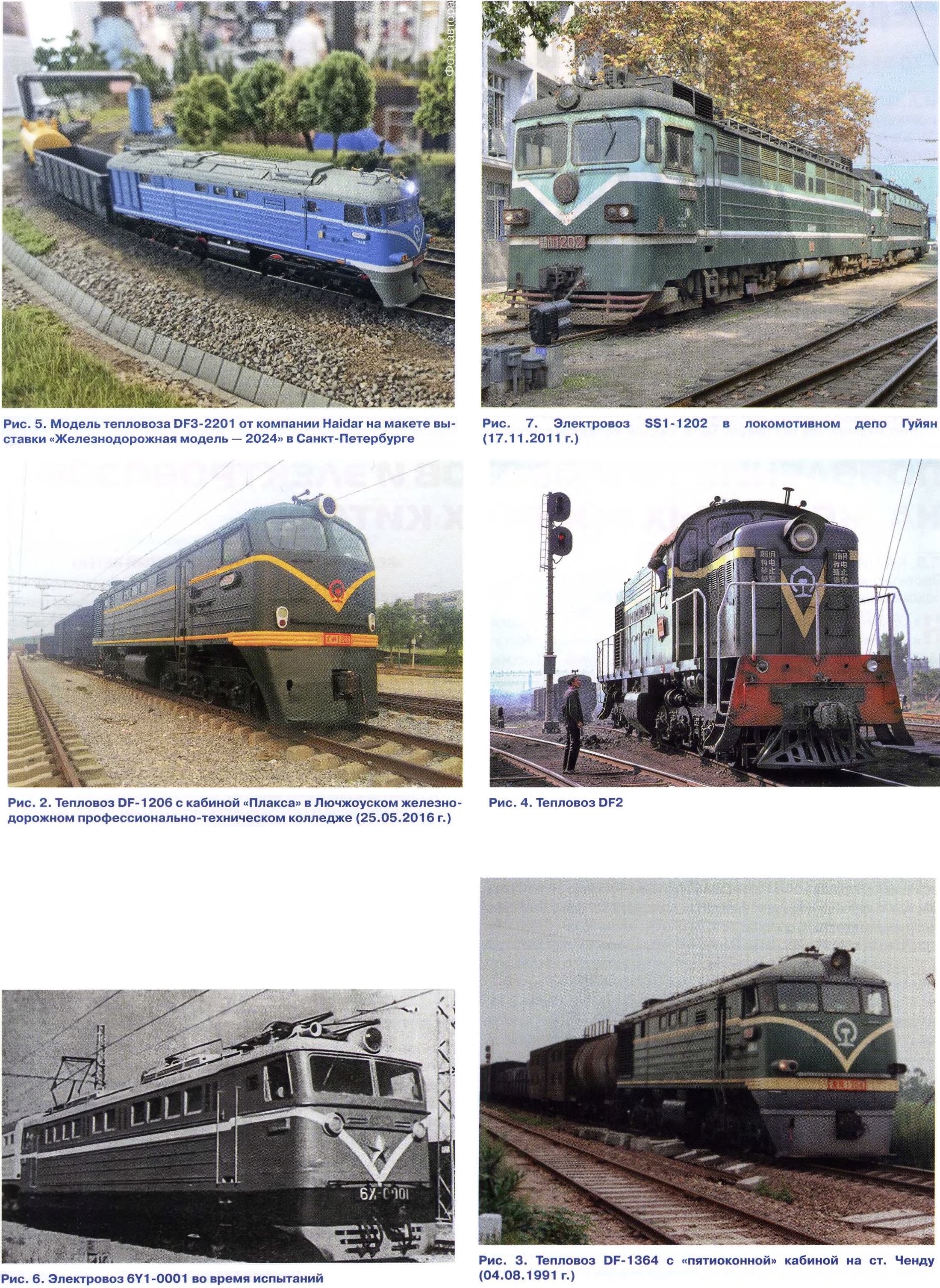 The design of the first 6Y electric locomotives was constantly modified and improved. Consequently, only seven locomotives, each very different from the other, were built over ten years. Small-scale production only began in 1969. In line with the changes taking place in the country during the Chinese Revolution, they received a new series designation—SS1 (ShaoShan, pinyin, Russian: Шаосхан), in honor of Mao Zedong's birthplace—the city of Shaoshan in China's Hunan Province. Over a 20-year period (1959–1979), 221 SS electric locomotives were produced, including the first 6UG. Serial production continued until 1988. A total of 826 SSr locomotives were built. These serial locomotives produced 5,600 hp (4,120 kW), were designed for a top speed of 90 km/h, had a 30-30 axle arrangement, a 23 t axle load (adhesive weight of 138 t), and a drive wheel diameter of 1,250 mm (Fig. 7). The SS1-1008 electric locomotive (former 6U-0008) opened service on July 1, 1975, on the country's first fully electrified mainline—the Baocheng Railway. During the 1970s and 1980s, SS1 electric locomotives were the mainstay of China Railways, thus laying the foundation for electric locomotive construction in the country. Electric locomotives were gradually phased out due to the end of their service life in the 2000s. Thus, it can be considered that both electric and diesel locomotive traction in China have, among other things, Soviet origins. It was the prototypes of Soviet electric and diesel locomotives that served as the foundation for the further development of locomotive construction in China. |

|
Цитировать 14 |
 Похожие темы
|
||||
| Тема | Автор | Раздел | Ответов | Последнее сообщение |
| = RW-Locomotive = Troubleshooting of VL85 electric locomotives | Admin | Article-RW | 0 | 10.12.2023 15:44 |
| = RW-Locomotive = Features of the electrical circuit of TEM18DM diesel locomotives equipped with ESUVT and PKEP-802B switch with electric drive | Admin | Article-RW | 0 | 10.12.2023 15:34 |
| To the driver about diesel locomotives TEM2, TEMZ and TEM18 | Admin | Article-RW | 0 | 21.11.2022 16:45 |
| Poltava TRZ: modernization of diesel locomotives | Admin | Article-RW | 0 | 14.11.2022 16:40 |
| Rheostatic brake for CME3 diesel locomotives | Admin | Article-RW | 0 | 25.09.2022 07:54 |
| Ответить в этой теме Перейти в раздел этой темы Translate to English |
| Здесь присутствуют: 1 (пользователей: 0 , гостей: 1) | |
|
|


 Почта
Почта


